

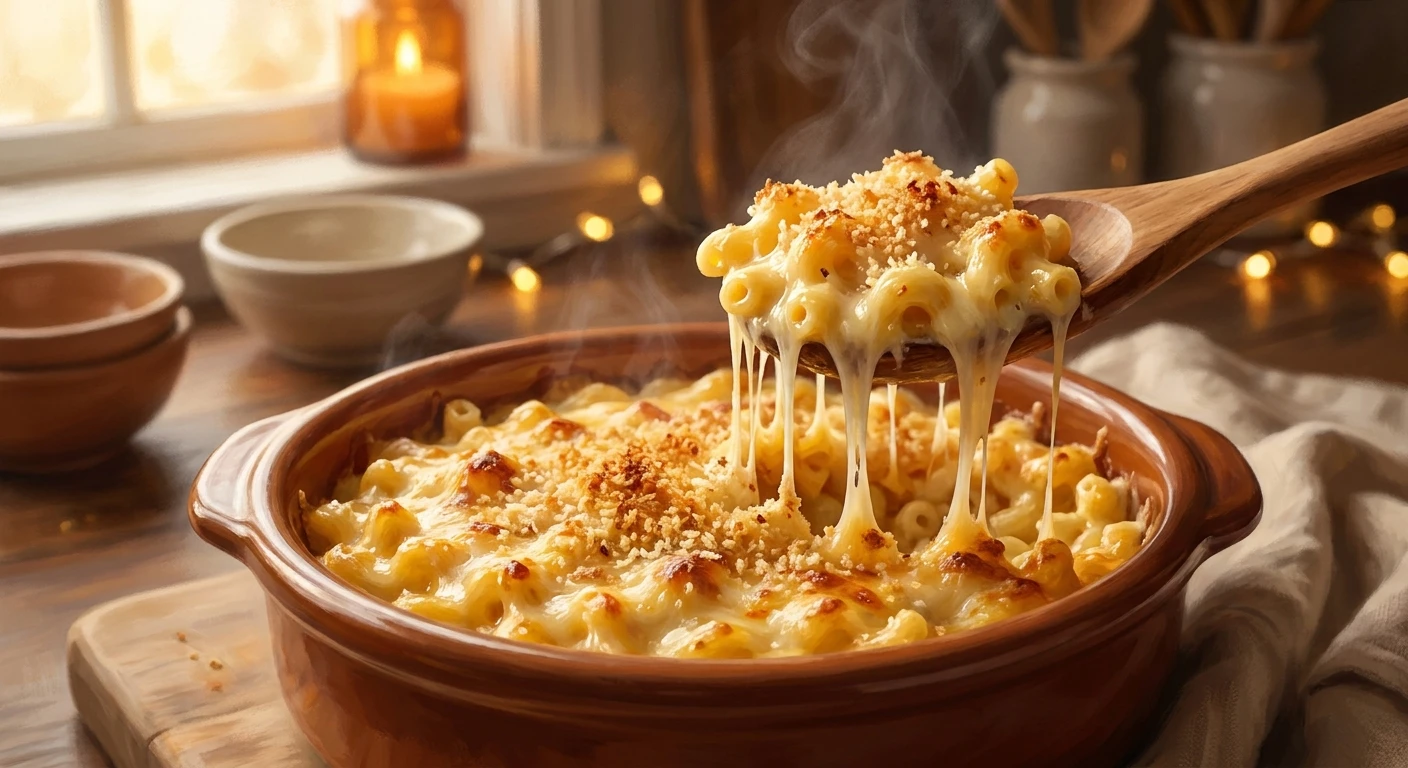
Why chunky chef mac and cheese is the Ultimate Comfort Food
I know exactly what you’re craving right now—a big, bubbling dish of chunky chef mac and cheese to make everything feel right. Listen, I totally get it. Sometimes you just need food that feels like a warm hug. I still vividly remember trying to perfect this exact American classic in my tiny apartment kitchen in Kyiv. It was a freezing winter evening, the snow was piling up against the windows, and we were dealing with rolling blackouts. I needed something ridiculously comforting. I managed to source some sharp cheddar and gruyere, got the gas stove going, and started whisking. The smell of the butter and flour toasting, the way the cheese melted into a perfectly smooth sauce—it was pure magic.
This isn’t just a basic pasta dish. Making the perfect cheese sauce is an art form. It is about understanding the balance of flavors, mastering the melt, and getting that crispy, golden crust on top while keeping the inside luxuriously creamy. Forget about the boxed stuff. We are making something that will have your friends and family begging for the recipe. Grab your favorite whisk, put on some good music, and let me walk you through the absolute best way to build this masterpiece from scratch.
Read also: Classic Old Fashioned Swiss Steak Recipe; Crispy Mozzarella Cheese Balls: The Ultimate Snack Recipe.
So, why does this specific method work so incredibly well? It all comes down to controlling your ingredients and treating them with respect. You get a massive payoff with two primary benefits: an outrageously creamy center that never dries out, and a buttery, crispy panko topping that gives you the perfect textural contrast in every single bite. Think about biting into a crispy crust, only to be met with sharp, tangy, melted goodness underneath.
Before we start cooking, you need to understand your cheese options. The blend you choose dictates the entire flavor profile of the dish.
| Cheese Type | Meltability Score | Flavor Profile |
|---|---|---|
| Sharp Cheddar | High | Bold, classic, deeply tangy |
| Gruyere | Very High | Nutty, earthy, sophisticated |
| Parmesan | Low (Use as accent) | Salty, umami-rich, dry |
To guarantee success, you absolutely must follow these non-negotiable rules:
- Always grate your own cheese: Pre-shredded cheese in bags is coated with anti-caking agents that ruin the smooth texture of your sauce. Buy the blocks and use a box grater.
- Undercook your pasta: Boil your noodles for two minutes less than the package directions. They will continue to cook in the cheese sauce while baking in the oven.
- Warm your dairy: Pouring freezing cold milk into a hot roux is a one-way ticket to Lumpsville. Warm your milk and cream slightly before whisking them in.
Follow those three steps, and you are already ahead of 90% of home cooks trying to make this dish.
The Origins of Baked Pasta
Have you ever wondered who first decided to mix cheese and pasta and bake it? The concept actually goes way back to medieval Europe. Early cookbooks from the 14th century feature recipes for pasta dishes layered with grated cheese and melted butter. But the version we recognize today, featuring a rich, creamy sauce, started taking shape much later. Thomas Jefferson famously encountered macaroni in Paris and loved it so much he brought pasta machines back to the US. He served a dish called “macaroni pie” at state dinners, cementing its status as a premium comfort dish rather than just peasant food.
Evolution of the Creamy Roux
The real game-changer was the introduction of the béchamel sauce. French culinary techniques heavily influenced how we build sauces today. A basic béchamel—butter and flour cooked together, then whisked with milk—became the perfect vehicle for massive amounts of cheese. Once you add cheese to a béchamel, it legally becomes a Mornay sauce. This technique allowed cooks to suspend the cheese in a stable emulsion, meaning it stayed creamy and gooey rather than separating into a greasy, clumpy mess. This classical foundation is exactly what makes our recipe so rich and dependable.
The Modern State of Comfort Food
Here we are in 2026, and food trends have completely circled back to deep nostalgia. People are tired of overly complicated, deconstructed meals. We want hearty, honest food that makes us feel good. But our standards have evolved. We are no longer satisfied with processed cheese blocks. Today’s home cooks demand real, high-quality ingredients. We combine old-school French sauce techniques with sharp, artisan cheeses and modern textural elements like toasted panko. It is the ultimate fusion of rustic comfort and refined culinary execution, creating a dish that feels both familiar and incredibly luxurious.
The Chemistry of Emulsion
Okay, let me nerd out for a second because understanding the science makes you a better cook. When you make a cheese sauce, you are creating an emulsion. Cheese is essentially a matrix of dairy fat, water, and milk proteins. When you heat it too quickly or get it too hot, the protein matrix tightens up and squeezes out all the fat. That is why badly made sauces turn greasy and grainy. By using a starch-based roux, the starch molecules swell up and physically block the milk proteins from clumping together. This creates a stable environment where the fat and water can coexist peacefully. You are essentially building a microscopic net that holds the melted cheese in a perfectly smooth state.
Maillard Reaction on the Crust
Now, let’s talk about the top layer. Why do we bake it? The answer is the Maillard reaction. This is the chemical reaction between amino acids and reducing sugars that gives browned food its distinctive flavor. When you bake the dish, the exposed pasta edges, the cheese on top, and the buttery breadcrumbs undergo this reaction. It creates hundreds of new, complex flavor compounds that you just cannot get on a stovetop.
- The roux gelatinizes at around 150°F (65°C), thickening the liquid.
- Starch acts as a physical barrier to prevent protein coagulation.
- The Maillard reaction thrives at temperatures above 285°F (140°C), which is why we bake it at a high heat at the end.
- Mustard powder acts as a natural emulsifier and flavor enhancer, providing acidity to cut through the heavy dairy fat.
Step 1: Prep the Pasta
Get a massive pot of water boiling. Salt it heavily—it should taste like the sea. Drop in your macaroni or cavatappi and set a timer. You want to boil it for exactly two minutes less than the box says for al dente. Drain it, rinse lightly with cool water to stop the cooking, and toss it with a tiny drizzle of olive oil so it does not stick together into a giant block.
Step 2: Grate the Dairy Gold
Do not skip arm day. Grab your blocks of sharp cheddar and gruyere and get grating. You need about four cups total. Yes, it takes a few minutes, but pre-shredded cheese is your enemy here. Keep the grated cheese in a bowl. Pro tip: grate an extra half cup of cheddar to save exclusively for the topping later.
Step 3: Master the Roux
In a large Dutch oven or heavy-bottomed pot, melt a stick of unsalted butter over medium heat. Once it is bubbling, sprinkle in an equal amount of all-purpose flour. Grab your whisk and stir constantly. You want to cook this for about two minutes until it smells slightly nutty and looks like wet sand. Do not let it turn brown.
Step 4: Whisk the Béchamel
Slowly pour in your warmed whole milk and heavy cream while whisking furiously. This is where the magic happens. Keep whisking until the mixture comes to a gentle simmer and thickens up beautifully. It should coat the back of a spoon. Stir in your salt, black pepper, garlic powder, and a generous pinch of dry mustard powder.
Step 5: Fold in the Cheese
Turn the heat completely off. This is crucial! If the sauce is boiling when you add the cheese, it will break. Gradually grab handfuls of your freshly grated cheese and whisk them into the hot liquid. Watch as it melts into a glossy, velvety pool of pure joy. Taste it now and adjust the salt if necessary.
Step 6: Layering the Dish
Pour your undercooked pasta into the cheese sauce and fold it together gently until every single noodle is coated. Pour half of this glorious mixture into a greased 9×13 baking dish. Sprinkle a thin layer of cheese, then add the rest of the pasta. Top it evenly with that reserved cheddar, and finish by scattering butter-toasted panko breadcrumbs over the entire surface.
Step 7: Bake to Golden Perfection
Slide the dish into an oven preheated to 350°F (175°C). Bake it uncovered for about 25 to 30 minutes. You are looking for the edges to be violently bubbling and the top to be a beautiful golden brown. If the top needs more color, hit it with the broiler for exactly two minutes, but do not take your eyes off it! Let it rest for 10 minutes before diving in so the sauce can set up.
Myth: You can just use a bag of pre-shredded cheese to save time.
Reality: Pre-shredded cheese is coated with potato starch and natamycin to prevent it from clumping in the bag. These powders prevent the cheese from melting smoothly, resulting in a grainy, separated sauce that feels sandy in your mouth.
Myth: You need super expensive, aged cheeses for a good flavor.
Reality: While a nice gruyere is great, you can make an absolutely killer dish using standard block sharp cheddar and a little bit of mozzarella for stretch. The technique of making the roux matters far more than the price tag on the cheese.
Myth: You should cook the pasta completely soft before baking.
Reality: If you fully cook the pasta on the stove, it will absorb the liquid from your cheese sauce in the oven and turn into total mush. Always undercook it so it finishes cooking perfectly in the oven while retaining a slight bite.
Can I freeze this dish?
Yes, absolutely. Let it cool completely, wrap it tightly in plastic wrap and then foil, and freeze for up to 3 months. Thaw it overnight in the fridge before baking.
What pasta shape is best?
Traditional elbow macaroni is classic, but cavatappi (corkscrews) or medium shells are actually better because their ridges and hollows grab and hold onto the thick cheese sauce perfectly.
How do I reheat leftovers without drying them out?
Splash a tablespoon of milk over the top, cover the dish with foil, and warm it gently in a 300°F oven until heated through. The steam will bring the creamy texture back to life.
Can I use milk instead of heavy cream?
You can use all whole milk if you want a lighter sauce, but avoiding skim or 2% is highly recommended. You need the milk fat for the sauce structure.
Why did my sauce break and get greasy?
You either got the pan too hot when you added the cheese, or you used pre-shredded cheese. Always take the pot off the heat before folding in your dairy.
Do I really need mustard powder?
Yes! It does not make it taste like a hot dog. Mustard powder acts as a natural emulsifier and provides a subtle tangy backbone that cuts through the rich fat.
Can I add protein like bacon or chicken?
Of course. Crispy chopped bacon, pulled pork, or shredded rotisserie chicken are incredible additions. Fold them in right before you transfer the mix to the baking dish.
There you have it—the ultimate guide to mastering comfort food in your own kitchen. This recipe is virtually foolproof if you follow the rules of the roux and respect your ingredients. Whether you are hosting a holiday dinner in 2026 or just need a cozy night in on a Tuesday, this dish will never let you down. Now, stop drooling over your screen, get into the kitchen, and start grating that cheese! Don’t forget to share this recipe with someone who desperately needs a good meal!



Leave a Reply