

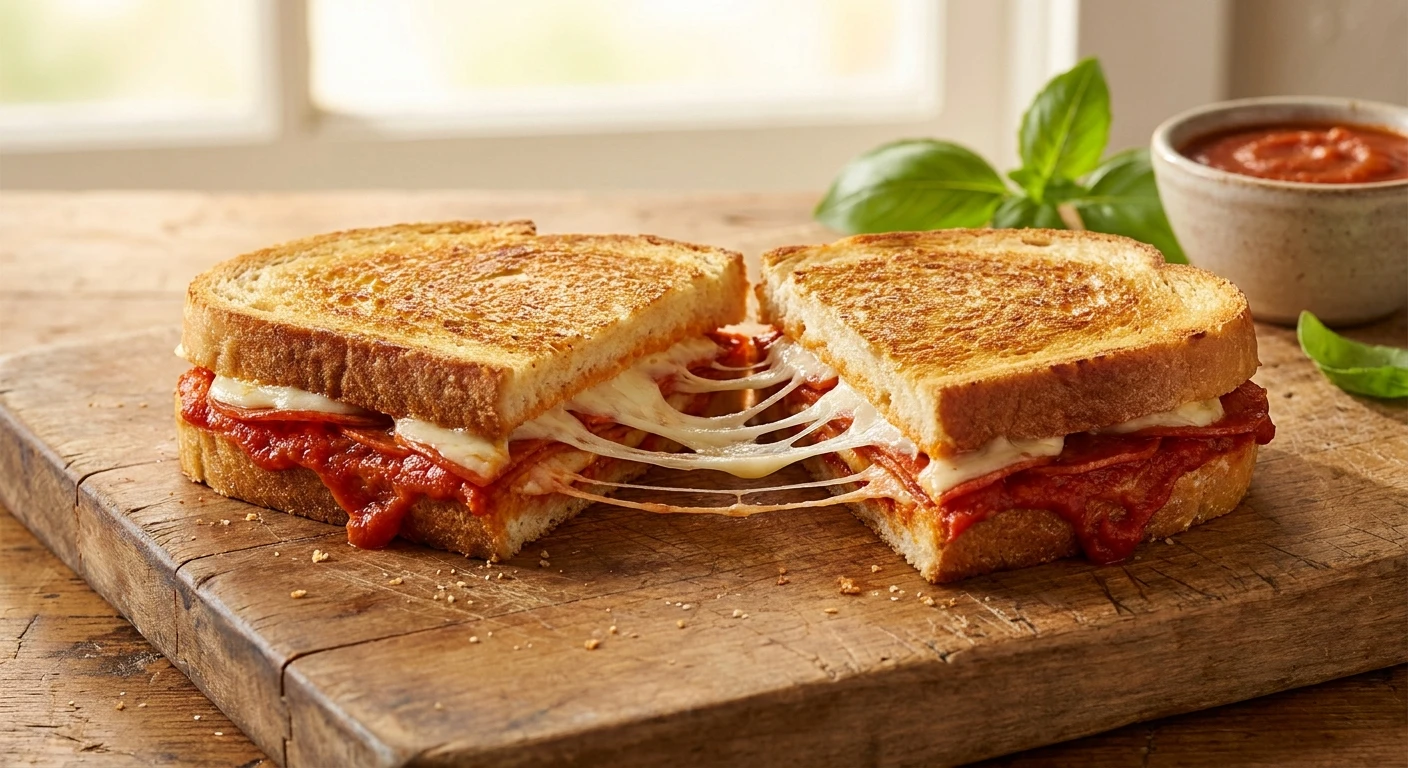
Why You Need a Pizza Sandwich Right Now
Listen, if you haven’t tried a homemade pizza sandwich yet, you are seriously missing out on the best lunch upgrade ever. We have all experienced those frustrating moments where we desperately crave a hot, cheesy, savory slice but simply do not want to deal with the hassle of ordering a whole pie or messing around with sticky yeast dough from scratch on a busy Tuesday afternoon. Back in my university days in Kyiv, wandering near the bustling Khreshchatyk street during the brutally freezing winter months, there was this tiny, unassuming food kiosk selling thick-cut toasted bread stuffed generously with rich, aromatic marinara, bubbling melted cheese, and incredibly spicy pepperoni. It was the absolute ultimate grab-and-go meal. Holding that warm, crispy pocket of joy wrapped tightly in aluminum foil completely changed my standard for street food forever. You essentially get the beautiful, buttery crunch of a classic grilled cheese combined with the soul-satisfying, complex flavor profile of an Italian-American classic. I am going to show you exactly how to recreate this specific culinary magic right in your own kitchen. We are talking about optimizing your bread choices, balancing your sauce-to-cheese ratios perfectly, and achieving that flawless, golden-brown crust without making a huge mess on your stove. Once you master this incredibly simple technique, your midday cravings will never be the same again. Grab your favorite skillet, and let us build something absolutely incredible together.
The anatomy of this spectacular creation requires a bit of thoughtful strategy. You cannot simply throw cold sauce on flimsy, thin sandwich bread and expect a magical outcome. A soggy bottom ruins the entire eating experience instantly. You desperately need structural integrity, a robust and bold flavor profile, and the correct thermal properties to melt the cheese thoroughly without burning the exterior crust to a crisp.
Read also: The Ultimate Crispy Bol Egg Roll Recipe; Crispy Mozzarella Cheese Balls: The Ultimate Snack Recipe.
When you thoughtfully blend the unmatched convenience of a handheld meal with the rich, savory satisfaction of traditional Italian-American classics, you get an absolutely unmatched value proposition. For instance, think deeply about your typical office lunches. Instead of packing sad, soggy cold cuts or relying on expensive delivery apps, you can easily prep these components at home and use the communal office sandwich press for a genuinely gourmet, hot meal experience. Or, consider the chaos of kids’ after-school snacks; preparing this hybrid treat is infinitely better than relying on highly processed frozen snacks because you have total control over the ingredient quality, sodium levels, and flavor variations.
Here is a detailed breakdown of the best combinations to get your creative juices flowing:
| Bread Type | Cheese Choice | Ideal Fillings |
|---|---|---|
| Rustic Sourdough | Low-moisture Mozzarella | Spicy pepperoni, fresh basil, hot honey |
| Crusty Ciabatta | Provolone & Parmesan | Italian sausage, sautéed bell peppers, onions |
| Thick Cut Brioche | Creamy Fontina | Roasted mushrooms, black olives, spinach |
| Garlic Texas Toast | Smoked Gouda | Shredded chicken, bacon bits, red onion |
To successfully build the ultimate foundational base for your meal, you absolutely must follow a very specific sequence of events. Ignore these golden rules, and you invite culinary disaster into your kitchen:
- Create the Fat Barrier: Always brush the outside of your bread with a generous mixture of softened butter and garlic powder. On the inside, lay down a thin slice of cheese first, absolutely no sauce yet. This initial layer of cheese acts as a waterproof seal, fiercely protecting the delicate crumb of the bread from the acidic tomato liquid.
- Control the Moisture: If you decide to use fresh mozzarella instead of the low-moisture block variety, you must pat it completely dry with several paper towels. Excess water will aggressively steam the inside of your bread instead of gently frying it, leading to a mushy texture.
- Manage the Heat: Always cook on a medium-low setting. High heat aggressively burns the outside before the internal ingredients have a chance to reach their optimal melting temperature. Extreme patience is your best friend here.
Origins of the Stuffed Bread
Human beings have been brilliantly stuffing dough with savory ingredients for centuries, across nearly every culture globally. The core concept shares undeniable culinary DNA with the classic Italian calzone and the crispy, fried panzerotti originating from the Puglia region. However, the specific iteration using pre-baked, sliced bread rather than raw, unfermented dough was essentially born out of pure, working-class utility. Mid-century families needed a reliable, quick way to use up leftover Sunday sauce and chunks of hard cheese without baking an entirely new, elaborate meal from scratch. By firmly pressing these rich, flavorful ingredients between two thick slices of rustic Italian loaf, they ingeniously created a portable, incredibly filling meal that required minimal prep time and almost zero cleanup.
Evolution into Fast Casual
During the vibrant decades of the 1980s and 1990s, the booming mall culture across North America drastically accelerated the immense popularity of commercial panini presses. Savvy cafe owners quickly realized they could comfortably charge premium, restaurant-level prices by simply rebranding a standard, homemade grilled cheese as a sophisticated, gourmet Italian melt. They aggressively added thick-cut pepperoni, swapped out basic cheddar for stringy mozzarella, and brilliantly began serving warm marinara on the side for dipping. This deconstructed, highly interactive approach made the concept incredibly popular with teenagers and busy shoppers alike, seamlessly transitioning it from a humble home-kitchen secret to a highly profitable, mainstream menu item at fast-casual dining chains worldwide.
Modern State in 2026
Fast forward to our current year, 2026, and the rapid, highly visual digital food landscape has completely reshaped exactly how we approach cooking at home. Viral, short-form social media platforms are currently flooded with extreme, visually stunning variations featuring wildly creative crusts, such as garlic-knot sandwich buns and massive, crispy cheese-crown skirts that extend far past the edges of the bread. The collective focus has entirely shifted toward securing high-quality, artisanal ingredients. Home cooks are absolutely no longer satisfied with basic, flimsy white bread and cheap ketchup; they are actively sourcing naturally fermented sourdough, imported San Marzano tomatoes, and authentic, dry-cured meats to elevate their everyday cooking routines to Michelin-star aesthetic levels.
The Maillard Reaction
Cooking at its core is just complex chemistry practically applied to human hunger. When you place that perfectly buttered piece of bread into a hot, heavy skillet, you immediately trigger the legendary Maillard reaction. This incredibly complex chemical process naturally occurs between specific amino acids and reducing sugars when they are exposed to direct heat above 285°F (140°C). It is vitally important to understand that this is not merely browning; it physically creates hundreds of entirely new, highly aromatic flavor compounds that give the toasted crust its distinctive savory, deeply roasted profile. If your pan is too cold, the reaction fails, and you get pale, extremely greasy bread. If it is too hot, the natural sugars carbonize rapidly and turn completely bitter. Hitting that exact thermal sweet spot is absolutely essential for achieving the perfect bite.
Emulsion and Cheese Melting Point
Cheese is essentially a delicate, temporary emulsion of dairy fat, water, and milk proteins. When it is gently heated, the tight protein matrix physically relaxes, allowing the trapped fat and water to flow freely together. Low-moisture, whole-milk mozzarella is almost universally preferred for this exact scientific reason. It naturally maintains a pH level right around 5.2, which happens to be the absolute optimal chemical range for extreme stretching without aggressively breaking the emulsion entirely. If you attempt to use an extensively aged cheese like extra-sharp cheddar or hard parmesan as your primary melter, the delicate fat tends to separate rapidly, leaving a tremendously greasy puddle that ruins the bread.
Here are some highly concrete, fascinating scientific facts to keep in mind while cooking:
- Traditional tomato sauce has a remarkably high acid content (measuring a low pH), which can actually physically inhibit certain sensitive cheeses from melting smoothly if they mix together too early in the heating process.
- Naturally fermented sourdough bread contains high levels of lactic acid bacteria, which aggressively strengthens the gluten network, making it far more mechanically resistant to becoming mushy from wet, sauce-heavy ingredients.
- Applying a very thin, even layer of full-fat mayonnaise instead of traditional butter on the exterior crumb actually yields a significantly more even, golden crust due directly to the exceptionally high smoke point of the emulsified egg and oil mixture.
Day 1: The Classic Pepperoni
Start your busy week off strong with the undisputed, heavyweight champion of the flavor world. Grab two incredibly thick slices of fresh sourdough. Carefully layer sharp provolone, a highly generous handful of cupping pepperoni slices, exactly two tablespoons of robust, garlic-heavy marinara, and top it all off with shredded mozzarella. Grill it on medium-low heat in a cast-iron skillet for exactly four minutes per side until perfectly golden and crispy.
Day 2: The Margherita Melt
Keep things feeling exceptionally fresh and purely vegetarian for your second day. Utilize a crusty, airy ciabatta roll. Skip the heavy, cooked red sauce entirely and instead use freshly cut, thick slices of ripe Roma tomatoes, vibrant whole fresh basil leaves, and dry-rubbed mozzarella. A heavy drizzle of thick, sweet balsamic glaze on the inside right before closing adds a massive, unexpected flavor punch.
Day 3: BBQ Chicken Crunch
Time to completely pivot the flavor profile to something southern-inspired. Mix roughly shredded, juicy rotisserie chicken with your absolute favorite sweet and smoky barbecue sauce. Add incredibly thinly sliced sharp red onions and thick slices of smoked gouda cheese. The rich gouda melts absolutely beautifully and pairs flawlessly with the tangy, aggressive barbecue notes.
Day 4: The Spicy Veggie
Load up on vital nutrients without sacrificing a single ounce of flavor. Quickly sauté fresh green bell peppers, white onions, and spicy jalapeños until they are completely soft and caramelized. Layer them generously between thick slices of hearty, seeded whole-grain bread with a highly spicy pepper jack cheese and a heavy smear of sweet roasted garlic paste.
Day 5: Four Cheese Garlic
This particular day is reserved for pure, unapologetic indulgence. Vigorously mix creamy whole-milk ricotta, salty grated parmesan, stretchy mozzarella, and sharp asiago together in a bowl. Spread a potent garlic and herb compound butter on both the absolute inside and outside of the bread. Cook it extremely slowly so the highly dense cheese mixture melts completely through to the dead center.
Day 6: Pesto and Mozzarella
A much lighter, incredibly vibrant option to ease into the weekend. Swap out the traditional red sauce for a bright, herbaceous basil and pine nut pesto. Add sweet roasted red peppers and incredibly thick slices of fresh mozzarella (meticulously patted dry, remember). Press it very firmly in a hot skillet with a heavy spatula to forcefully meld the diverse flavors together.
Day 7: The Breakfast Edition
Who exactly says you cannot have this glorious creation for breakfast? Use a much softer, sweeter brioche loaf. Add softly scrambled eggs, highly seasoned cooked breakfast sausage patties, and a mild, creamy cheddar. Serve it elegantly with a small side of warm, spicy marinara for dipping to keep the overarching theme alive and well.
Myth: You absolutely need a specialized, highly expensive, commercial-grade panini press taking up counter space to get decent results at home.
Reality: A heavy, well-seasoned cast-iron skillet paired with a standard metal spatula, or even a second, smaller heavy pan pressing down firmly on top, works absolutely perfectly and actually develops a far superior, more even crust due to the retained thermal mass.
Myth: This specific meal is basically just a regular, boring grilled cheese with a tiny bit of cheap ketchup thrown in.
Reality: The overarching flavor profile is entirely, fundamentally different due strictly to the specific Italian herbs like oregano and sweet basil, the savory cured meats, and the unique, highly stretchy melting characteristics of combined mozzarella and provolone cheeses.
Myth: Packed, portable versions will always inevitably become a terribly soggy, inedible mess by lunchtime.
Reality: If you intelligently build a proper, impenetrable moisture barrier using cheese directly against the bread and keep the wet sauce strictly isolated in the exact middle, the internal structure remains beautifully, surprisingly intact for many hours.
Myth: You have to use traditional red sauce inside the bread.
Reality: Serving the marinara entirely on the side as a dipping sauce is highly encouraged and keeps the bread maximally crispy.
Can I freeze these sandwiches?
Yes, absolutely. You can easily build them completely, wrap them extremely tightly in heavy-duty aluminum foil, and freeze them completely un-grilled. When you are finally ready, thaw them slightly at room temperature and grill them on very low heat to ensure the center warms through.
What is the best bread to use?
Thickly sliced sourdough and dense ciabatta are absolutely top tier because their highly sturdy, complex crumb structure handles wet, heavy ingredients beautifully without instantly collapsing.
Can I use an air fryer?
Absolutely, it works wonderfully. Fully assemble the meal, carefully secure the edges with wooden toothpicks, and air fry it at exactly 360°F for about 8 minutes, making sure to flip it precisely halfway through for even browning.
Why is my cheese not melting?
Your stovetop pan is highly likely way too hot. The exterior bread is rapidly toasting much faster than the gentle heat can physically penetrate the dense center. Simply lower the heat drastically and cover the pan with a tight lid.
Should I put the sauce inside or dip it?
Dipping absolutely provides the crispiest, most texturally satisfying experience by far, but securely putting a small, measured amount safely inside offers maximum convenience for eating while aggressively on the go.
Is butter or mayo better for the outside?
Full-fat mayonnaise mathematically creates a more even, gorgeous edge-to-edge crust because it spreads significantly easier and boasts a much higher smoke point, but high-quality butter undoubtedly offers a vastly superior, richer traditional flavor.
Can I make this fully vegan?
Most definitely. Simply utilize a high-quality, cashew-based or plant-based mozzarella alternative and heavily load up the interior with savory roasted vegetables and a robust, incredibly garlic-heavy tomato sauce.
To neatly wrap things up, successfully crafting the absolute ultimate, flavor-packed meal between two crispy slices of bread is a beautiful art form that literally anyone can master with a bit of patience. Whether you desperately want a quick, satisfying desk lunch or a massive, hearty weekend snack, this specific cooking technique delivers absolutely massive flavor with incredibly minimal effort. Go confidently grab some extremely high-quality ingredients, fire up your favorite trusty skillet, and boldly make your perfect, mouth-watering masterpiece today! Don’t wait—elevate your next meal right now.



Leave a Reply