

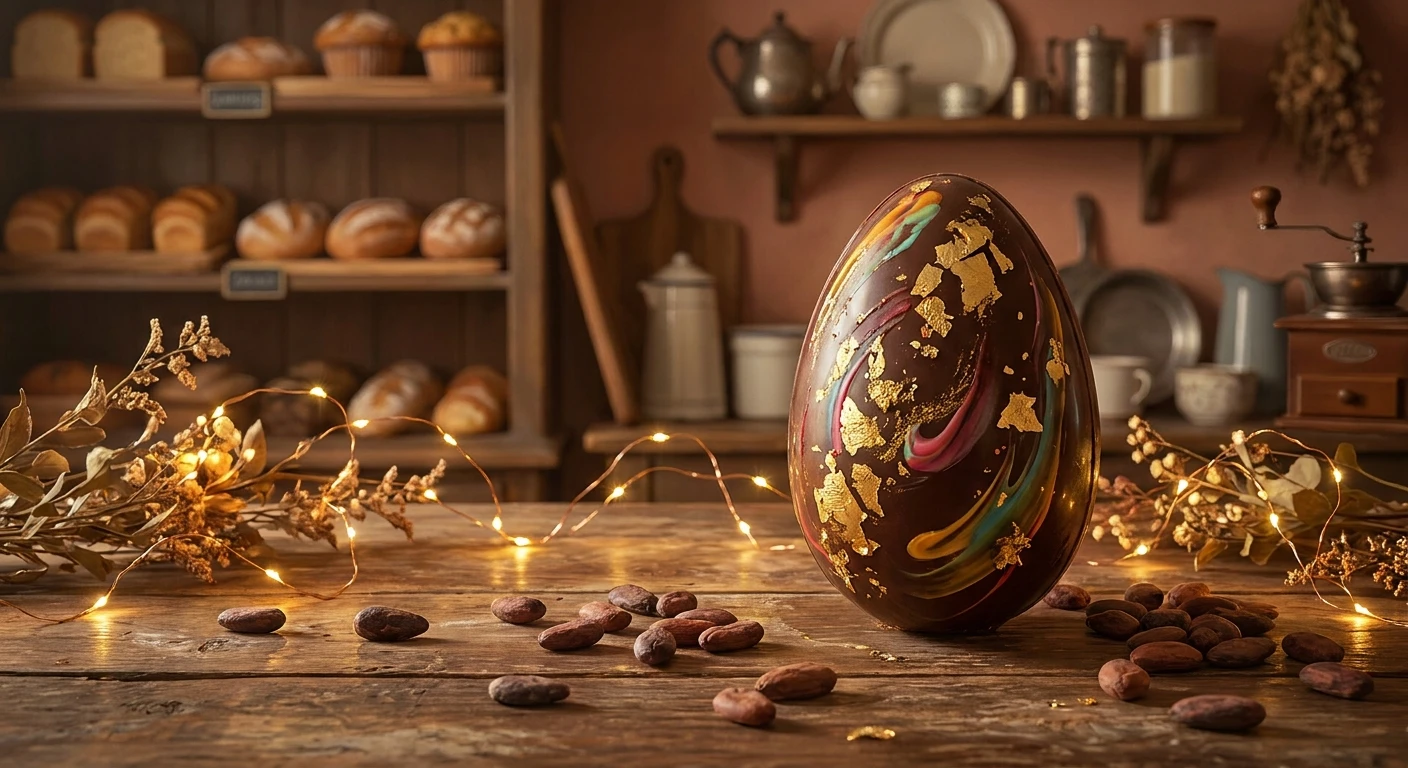
Mastering the Art of Chocolate Eggs
When you bite into perfectly crafted chocolate eggs, you instantly feel that familiar rush of pure childhood joy mixed with absolute culinary satisfaction. Listen, I was walking down a narrow cobblestone street near Rynok Square in Lviv just last week, and the local artisanal chocolatiers were already setting up their window displays. The rich smell of roasted cocoa literally stopped me in my tracks. It got me thinking about how we transitioned from our beautiful traditional Ukrainian wooden pysanky to these incredible edible masterpieces that everyone obsesses over.
I want to tell you the unfiltered truth about why these specific seasonal treats matter so much, how they are painstakingly engineered from bean to shell, and exactly how you can pick the absolute best ones on the market without getting ripped off. My grandmother always insisted that sweets shared with good friends taste infinitely better, so grab a strong cup of coffee, sit back, and read on. You are going to learn the exact structural science behind that satisfying crisp snap, the wild history that shaped our favorite holiday candies, and a very practical roadmap to enjoying them. Honestly, the sheer variety of these treats right now is completely overwhelming. You get hollow ones, thick cream-filled variations, and dense solid truffles that weigh as much as a small rock. I am sharing my personal blueprint for navigating this massive world of cocoa-based sweets so you never have to settle for subpar, waxy candy ever again.
Why exactly do we obsess over these oval-shaped treats year after year? The real appeal lies entirely in the sensory contrast between the hard, snappy outer shell and the surprise texture waiting inside. Think about an artisanal hazelnut praline filling or a super soft, bouncy marshmallow center. You get a textural dynamic that completely satisfies your craving in a way a flat bar simply cannot. I need to show you the actual value proposition here, because not all sweets are created equal. First, a high-quality hollow shell gives you the intensely satisfying snap of properly tempered cocoa butter. Second, a heavily filled version offers a dense, rich flavor profile that lingers on your palate for minutes.
Take a look at how different varieties stack up against each other:
| Type of Treat | Best Tasting Experience | Typical Cocoa Percentage |
|---|---|---|
| Hollow Milk Shell | Casual snacking and gifting for kids | 30% – 35% |
| Solid Dark Truffle Center | Sophisticated pairings with red wine or espresso | 65% – 85% |
| Cream-Filled White Cocoa | Extreme sweet tooth cravings and light teas | 25% – 28% |
You really need to know how to judge quality when you are standing in the store aisle. Here is exactly what you should do to guarantee a premium experience:
- Always check the ingredients label strictly for real cocoa butter. If you see palm oil or vegetable oil listed anywhere, put the box back on the shelf immediately.
- Look closely for a highly glossy, mirror-like finish on the surface. A dull, matte appearance usually means bad tempering or improper storage conditions.
- Listen carefully for a sharp, distinct snap when you break the shell in half. Good crystalline structure always sounds very crisp, never soft or muddy.
I remember buying a supposedly luxury brand last season for a ridiculous price, and it tasted exactly like sweetened plastic. I absolutely refuse to let that happen to you. Whether you buy them from a high-end boutique in Kyiv or a local neighborhood supermarket, understanding these three simple rules guarantees you actually get your money’s worth. Plus, wrapping your head around the different flavor profiles helps you pair them so much better with your daily drinks.
The Humble Luxury Origins
Long before we had bright foil-wrapped treats piled high in every single grocery store, the whole concept started as an extreme luxury. Back in the early 19th century, European confectioners started experimenting with solid cocoa paste. I have to be honest, those early versions were gritty, extremely hard to chew, and completely unlike the smooth, melting texture we know and love right now. Making them was a brutally laborious manual process. Sweets artisans literally poured raw, unrefined paste into heavy metal molds and just hoped for the best outcome. It was a highly exclusive, expensive item reserved strictly for the ultra-wealthy elite during lavish spring festivals. Regular people like us would never even see one, let alone eat one.
The Industrial Factory Evolution
Then came the late 1800s, and the entire candy landscape completely shifted. The invention of the heavy cocoa press allowed smart creators to extract pure butter from the roasted beans. This major technological leap led directly to much smoother, easily pourable liquids. Pioneers like John Cadbury and his rivals figured out how to manufacture hollow shells reliably, which dropped the overall production cost massively. Suddenly, you did not need to be a wealthy aristocrat to enjoy a beautiful seasonal treat. Makers started decorating them by hand with sweet marzipan flowers and incredibly intricate royal icing piping. By the mid-20th century, automated mass production techniques meant that foil-wrapped versions were available globally, completely democratizing the joy of these sweets.
The Modern State of Craft
Fast forward to 2026, and the entire confectionery industry has completely reinvented itself from the ground up. We are now seeing a massive, industry-wide shift toward highly sustainable bean sourcing and totally transparent single-origin products. Crazy as it sounds, modern chocolatiers are using advanced 3D printing technology to create hyper-realistic custom molds and incorporating wild exotic inclusions like freeze-dried passionfruit, toasted quinoa, or even pop rocks. Even the small independent makers right here in Ukraine are constantly pushing culinary boundaries, seamlessly blending traditional local ingredients like dark buckwheat honey and roasted Carpathian walnuts straight into the rich ganache centers. The modern treat is no longer just a cheap, throwaway holiday novelty; it is a legitimate canvas for high-end culinary art. It feels absolutely amazing to witness how a simple molded sweet evolved into such a globally respected, highly technical culinary discipline.
The Strict Chemistry of Tempering
Making flawless chocolate eggs is purely a matter of hard science. The main secret behind that perfect texture lies entirely in a chemical process called tempering. Cocoa butter naturally contains six completely different types of fat crystals, but only one specific type—Form V—actually gives you that beautiful shiny, snappy, melt-in-your-mouth finish. If you just recklessly melt a random bar in the microwave and pour it into a plastic mold, it will almost certainly cool into a streaky, pale, crumbly mess. You literally have to heat the mixture to precisely 45 degrees Celsius, cool it rapidly down to 27 degrees to encourage those specific Form V crystals to grow, and then very slightly warm it back up to 31 degrees. This highly precise thermal manipulation ensures all the fat molecules align perfectly. When you bite into a properly tempered shell, that sharp crack you hear is quite literally the physical sound of thousands of aligned microscopic crystals breaking all at once.
Structural Engineering in Molds
Creating a flawless, perfectly even hollow sphere is essentially a complex micro-engineering project. You cannot just dump liquid into a mold and walk away expecting a masterpiece. The viscosity and flow of the liquid must be exact down to the decimal point.
- Industrial makers use centrifugal force to coat the inside of rapidly spinning molds completely evenly, ensuring a perfectly uniform wall thickness that won’t collapse.
- Massive custom cooling tunnels must constantly maintain highly specific humidity levels to absolutely prevent any moisture from causing white sugar bloom on the glossy surface.
- The natural contraction rate of cooling cocoa butter is about two percent, which is the exact physical property that allows the hard shell to naturally pop and release from the rigid polycarbonate mold once it is fully crystallized.
- Intense micro-vibrations are aggressively applied to the molds immediately after pouring to forcefully drive any trapped microscopic air bubbles to the surface, preventing weak spots or ugly holes in the final structure.
Honestly, understanding this heavy science makes you appreciate the artisanal craft so much more. It is not just melting cheap candy; it is literally manipulating strict physics and complex chemistry to construct an edible architecture that is designed to melt exactly at human body temperature.
Are you completely ready to take this seriously? I have put together a highly direct, no-nonsense 7-day plan to drastically elevate your experience from casual mindless munching to expert-level tasting.
Day 1: Sourcing the Absolute Best Options
Go directly to a specialized, dedicated confectionery shop in your city. Skip the brightly lit standard grocery aisle completely today. Buy three distinctly different types: one intensely dark, one creamy milk, and one sweet white. Ask the clerk specific questions about the origin of the beans to see if they actually know their stuff.
Day 2: The Visual and Audio Quality Test
Unwrap your chosen treats very carefully. Examine the surface gloss under a bright light. Is it highly shiny like a fresh coat of paint? Break the dark one directly in half right near your ear. You actively want to hear a very sharp, loud snap. This simple test definitively proves the maker knew exactly how to temper properly.
Day 3: The Slow Melting Point Challenge
Take a small broken piece of the milk shell and place it directly flat on your tongue. Close your mouth and absolutely do not chew it. Let it melt completely naturally. Pay close attention to how the complex flavors evolve from the initial sugary sweetness to deep, rich dairy notes. Good quality always melts smoothly and evenly without ever leaving a gross waxy film behind.
Day 4: Masterful Beverage Pairing
Brew a very strong, hot cup of black coffee and pair it directly with the dark shell piece. The sharp bitterness of the dark roast perfectly cuts through the heavy richness of the fat. Afterward, try pairing the sweet white treat with a highly acidic, bright green tea to brilliantly balance out the extremely high sugar content.
Day 5: Setting Up Your DIY Molding Station
Buy a professional-grade, simple polycarbonate mold online. Get your hands on some high-quality professional couverture drops. Thoroughly clean your plastic mold with a soft microfiber cloth until it is completely spotless and squeaky clean. Any leftover dust or tiny water spots will completely ruin the final shiny finish.
Day 6: Executing the Tempering Process
Use the highly reliable seeding method. Melt roughly two-thirds of your couverture drops over a gentle double boiler. Remove the bowl from the heat completely and vigorously stir in the remaining raw, un-melted drops. Stir constantly and aggressively until the temperature drops down to exactly 31 degrees Celsius. Pour it swiftly into the clean mold.
Day 7: The Final Unmolding and Sharing
Pop the full mold directly into the fridge for about 20 minutes to set. If you did the math and temperatures right, the glossy shells will literally slide right out when you flip it over. Fill those beautiful halves with tiny marshmallows or salted nuts, quickly seal the raw edges together with a little leftover melted paste, and proudly share them with your closest friends.
There is so much ridiculous misinformation floating around out there. Let me clear up these annoying rumors right now so you know the truth.
Myth: White versions are absolutely not real chocolate and are entirely fake.
Reality: Premium, high-quality white types are absolutely real; they are carefully made with pure pressed cocoa butter, rich milk solids, and sugar. They just simply lack the dark, non-fat cocoa solids.
Myth: If a piece has weird white streaks on it, it is dangerously expired and you will get sick.
Reality: Those pale streaks are just harmless fat bloom or sugar bloom. The butter or sugar simply separated and rose to the surface due to wild temperature changes. It is totally safe to eat, though the mouthfeel might be slightly grainy.
Myth: Hollow ones are a total financial rip-off designed to steal your money.
Reality: Professional confectioners intentionally make them hollow because a giant, massive solid block of that size would be physically impossible to bite into without breaking your teeth, and visually unappealing. The empty hollow space deliberately allows for a delicate, satisfying snap and provides necessary room for hidden surprises inside.
Myth: You should always keep your premium sweets stored in the cold refrigerator.
Reality: The cold fridge introduces heavy moisture, rapidly causing severe sugar bloom. Always keep them comfortably in a cool, dark, and perfectly dry pantry instead.
Are chocolate eggs completely gluten-free?
Most pure, unflavored ones definitely are, but you absolutely must check the label closely for cross-contamination warnings or hidden crushed biscuit inclusions.
How long do they actually last before going bad?
A completely solid, unflavored piece can easily last well over a full year if strictly stored in a cool, dark place completely away from strong kitchen odors.
What is the absolute best way to melt them down?
Use a standard microwave in very short 15-second bursts, stirring frequently, or use a highly gentle double boiler on the stove to avoid accidentally burning the sensitive sugars.
Can I safely freeze them to eat later?
You definitely can, but you must wrap them incredibly tightly in multiple layers of plastic film to actively prevent gross condensation from forming when thawing them back out.
Why do some cheap brands taste exactly like wax?
Low-tier, cheap brands maliciously substitute expensive real butter with incredibly cheap hydrogenated vegetable oils, which directly results in a terrible, waxy mouthfeel that refuses to melt properly.
Are the dark options actually healthier for you?
Yes, dark options naturally possess significantly higher antioxidant levels and feature way less refined sugar than their overly sweet milk-based varieties.
Can strict vegans actually eat them safely?
Absolutely, yes. A massive number of forward-thinking brands now offer incredible plant-based options brilliantly made with creamy oat milk or rice milk alternatives.
How do you successfully fix bloomed, streaky shells?
You honestly cannot fix the ruined physical appearance easily without fully re-tempering the whole batch, but you can definitely chop them all up and seamlessly use them as chunks for baking rich cookies.
Do higher percentages mean better overall quality?
Not necessarily. A high percentage simply indicates a much higher ratio of raw mass to sugar. True quality is determined entirely by the bean origin and the maker’s specific roasting techniques.
Can dogs safely eat even a small piece?
Absolutely not. Cocoa contains a potent compound called theobromine, which is highly toxic and extremely dangerous to dogs even in incredibly tiny amounts.
There you absolutely go! You are now fully and completely equipped with all the necessary knowledge to confidently hunt down, properly taste, and even successfully make the very best chocolate eggs on the planet. Stop waiting around—go out there, use these highly specific tips, and grab a truly premium treat right now!
Leave a Reply