
The Secret to Perfect Rigatoni Boscaiola
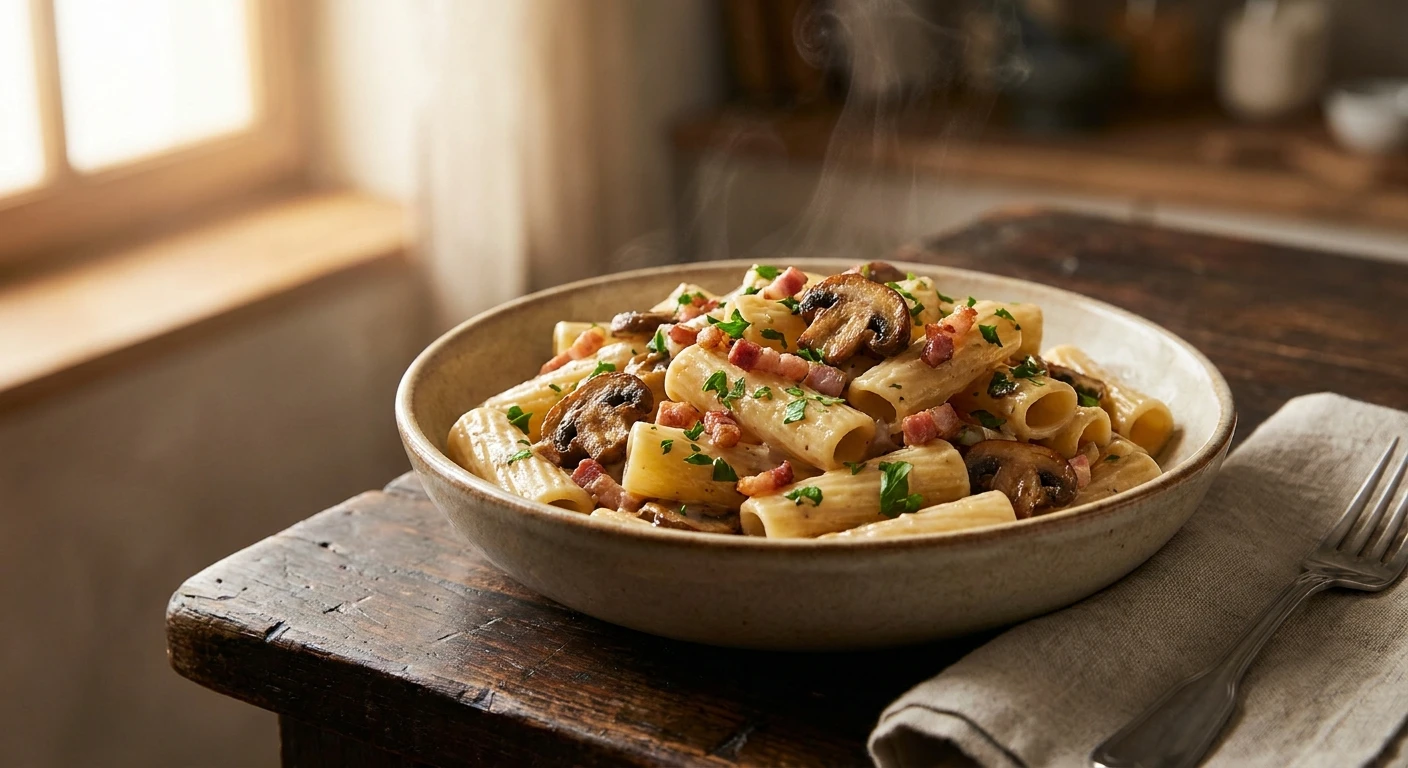
You won’t believe how incredibly easy it is to make a restaurant-quality rigatoni boscaiola right in your own kitchen. This rich, earthy pasta dish combines caramelized mushrooms, crispy pancetta, and a luxurious creamy tomato sauce to create a flavor profile that hits all the absolute best comfort food notes. Back in Kyiv, long before I became obsessed with mastering the nuances of SEO, I used to frequent a tiny, hidden Italian trattoria near the Golden Gate. The head chef there, an expat straight out of Tuscany, eventually handed me his grandmother’s strictly guarded family recipe. I vividly remember sitting there on a freezing January evening, eating a steaming, aromatic bowl of this woodsman’s pasta, and realizing that exceptional food possesses a completely universal language. Now, it’s 2026, and I still make this exact, soul-warming dish every single Sunday without fail. Listen, I am telling you straight up—this is the exact meal you cook when you want to impress someone special without sweating over a hot stove for five exhausting hours. The way the thick sauce clings to the heavy ridges of the pasta, the sharp aroma of freshly crushed garlic hitting hot oil, the satisfying salty crunch of cured pork; it all comes together in less than thirty minutes. Grab a pan, and let me show you exactly how to execute this masterpiece flawlessly.
Why This Pasta Dish Will Change Your Weekly Routine
Look, if you want a hearty dish that perfectly balances salt, rich fat, and deep earthiness, this is your holy grail. The pure magic happens entirely in the skillet. When you understand the fundamentals of a traditional Italian sauce, you stop relying on those sad, overpriced jars from the supermarket. Let’s break down exactly what makes this recipe structurally superior to your standard weeknight dinners.
First, think about the immense value proposition here. You save a tremendous amount of money making this at home. A decent bowl of this pasta at an authentic Italian bistro will easily run you around $25 to $30 a plate. Making it from scratch? It averages out to about $5 per serving. Furthermore, you have absolute control over the sodium levels and the quality of the fats being used. Here is a breakdown of the three absolute core pillars of this recipe:
- Perfect Sauce Adhesion: The large, hollow tubes and grooved exterior of the pasta act like a vacuum, sucking up the cream and trapping small bits of meat and mushroom inside.
- Unbeatable Umami Balance: The natural glutamates in the tomatoes combine with the inosinates in the pork to create a savory explosion on your palate.
- Rapid Execution: The entire cooking process, from chopping your first aromatic to plating the final dish, occurs in the exact time it takes to boil a large pot of water and cook the noodles.
| Primary Ingredient | Role in the Dish | Best Reliable Substitute |
|---|---|---|
| Wild or Cremini Mushrooms | Provides the deep, earthy, ‘woodsman’ base flavor. | Porcini powder or standard white button mushrooms. |
| Italian Pancetta | Adds crispy texture and salty, rendered pork fat. | Thick-cut smoked bacon or guanciale. |
| Heavy Cream | Acts as the luxurious binder that smooths out the acidity. | Mascarpone cheese or full-fat coconut milk (for dairy-free). |
Once you nail the interaction between these ingredients, your confidence in the kitchen will skyrocket. The heavy cream tempers the sharpness of the crushed tomatoes, while the rendered pork fat provides a glossy, restaurant-quality sheen to the final plate.
Origins of the Woodsman
To really appreciate what you are eating, you need to understand where it came from. The word ‘boscaiola’ quite literally translates to ‘woodsman-style’ or ‘forester-style’ in Italian. It originated in the rugged, mountainous regions of Italy, specifically the Apennine mountains stretching across Tuscany and Emilia-Romagna. Historically, this wasn’t a fancy restaurant dish; it was rustic, peasant food designed to provide massive amounts of caloric energy for men working long, grueling hours chopping wood in the cold, damp forests. Foragers would gather whatever wild fungi they could find—typically porcini or chanterelles—and combine them with preserved, cured meats that could survive without refrigeration.
The Evolution of the Dish
As the centuries passed and transportation improved, the recipe slowly made its way down from the isolated mountains into the bustling valleys and major metropolitan centers like Florence and Rome. Originally, tomatoes were entirely absent from the recipe, as they hadn’t yet been introduced to Europe. The earliest versions were essentially just oil, garlic, and wild mushrooms. However, as the ingredient availability expanded, cooks began experimenting. The introduction of tomatoes brought a necessary acidity that brightened up the heavy fats. Later on, the addition of heavy cream smoothed out the entire profile, creating what is now affectionately known in modern culinary circles as a ‘pink sauce’ or ‘salsa rosa’.
Modern State of the Recipe
In 2026, the global culinary landscape has embraced this hearty classic, but it has definitely seen some wild interpretations. High-end dining establishments attempt to deconstruct it, serving truffle foams and modernist, spherified tomato essences. But honestly, the classic, straightforward home-cooked version remains vastly superior. The beauty of the dish lies in its unpretentious, comforting roots. While you can find variations across Campania using local sausages instead of pancetta, the fundamental soul of the recipe—that deep connection to the forest floor and rustic preservation techniques—remains completely intact and celebrated worldwide.
The Chemistry of the Sauce
Cooking is just edible chemistry, and understanding the science behind this recipe guarantees you will never end up with a broken, greasy, or watery sauce. When we build the flavor base, we are heavily relying on the Maillard reaction. This is the chemical reaction between amino acids and reducing sugars that gives browned food its distinctive, highly desirable flavor. When you drop cold pancetta into a cold pan and slowly raise the heat, you allow the fat cells to slowly rupture and render out into a liquid state without burning the actual meat proteins. This liquid fat then becomes the supreme cooking medium for your mushrooms, transferring the pork flavor directly into the cellular structure of the fungi.
Starch Release and Emulsification
The single biggest mistake home cooks make is dumping their pasta water down the drain. From a scientific standpoint, that cloudy, salty water is liquid gold. As the pasta boils, the granules of flour absorb water, swell, and eventually burst, releasing amylose and amylopectin starches directly into the boiling liquid. When you transfer that starchy water into your hot pan containing the cream and pork fat, you trigger a powerful physical process called emulsification.
- Fat and Water Binding: The starches act as microscopic bridges, forcefully binding the watery tomato juices and the heavy pork fats together so they don’t separate on the plate.
- Umami Synergy: Combining tomatoes (rich in glutamate) with meat (rich in inosinate) amplifies the savory taste receptors on your tongue exponentially, a fact proven by modern food science.
- Gluten Structuring: Cooking the pasta just shy of al dente in the water, and finishing it directly in the sauce, allows the gluten network to absorb the sauce’s liquid rather than just plain tap water.
- Thermal Tempering: Slowly adding the hot pasta water to the cold heavy cream prevents the dairy proteins from violently coagulating and curdling when introduced to the acidic tomatoes.
Step 1: Prep the Aromatics
Before you turn on a single burner, get your ingredients ready. Mince three cloves of fresh garlic, finely chop half a yellow onion, and slice your mushrooms uniformly. Consistency in slicing ensures everything cooks at the exact same rate. Have your heavy cream measured out and sitting on the counter to take the chill off.
Step 2: Render the Fat
Place your diced pancetta into a large, cold, heavy-bottomed skillet—preferably stainless steel or cast iron. Turn the heat to medium-low. Slowly rendering the fat takes about seven to eight minutes. You want the bits to be deeply golden and crispy, but not hard like rocks. Once done, use a slotted spoon to remove the meat, leaving that glorious liquid fat in the pan.
Step 3: Caramelize the Mushrooms
Turn the heat up to medium-high. Drop your sliced mushrooms directly into the hot pork fat. Do not stir them immediately! Let them sit untouched for at least two minutes to develop a dark, roasted crust. Once they shrink and brown, add your minced onions and garlic, sautéing until translucent and fragrant.
Step 4: Build the Liquid Base
Pour in a splash of dry white wine to deglaze the pan, scraping up all the sticky, browned fond from the bottom. Let the alcohol entirely evaporate. Pour in your crushed tomatoes and let the mixture simmer vigorously for about ten minutes so the raw tomato flavor cooks out completely.
Step 5: Boil the Pasta
While the sauce simmers, bring a massive pot of aggressively salted water to a rolling boil. Drop your pasta and set a timer for precisely two minutes less than whatever the box instructions dictate. You want it quite firm because it will finish cooking in the hot skillet.
Step 6: The Emulsion Process
Lower the heat on your sauce skillet. Stir in the heavy cream slowly, watching the sauce turn a beautiful, vibrant pink. Scoop out a full cup of that starchy boiling water and set it aside. Drain the pasta and immediately toss it directly into the bubbling pink sauce along with the crispy pancetta.
Step 7: Garnish and Serve
Toss everything aggressively in the pan. If the sauce looks too thick or sticky, splash in small amounts of the reserved starchy water until it turns glossy and coats the noodles perfectly. Take it off the heat, stir in a handful of freshly grated Parmigiano-Reggiano and chopped flat-leaf parsley. Serve immediately on warmed plates.
Myths About Italian Cooking
Myth: You need to hunt down outrageously expensive wild truffles or imported porcinis to make this dish taste authentic.
Reality: Standard, easily accessible cremini or baby bella mushrooms from your local grocery store work flawlessly when they are properly caramelized in pork fat.
Myth: A true, traditional boscaiola is exclusively a rich, heavy, entirely cream-based white sauce with no tomatoes whatsoever.
Reality: While white versions absolutely exist, the most widely accepted and popular authentic versions across Italy utilize a touch of tomato passata to cut through the extreme richness of the dairy.
Myth: You must strictly use long noodles like spaghetti or fettuccine for creamy sauces.
Reality: Short, tubular shapes like rigatoni or penne are vastly superior here because their large hollow centers physically catch and hold the chunky bits of meat and vegetables.
Can I freeze the leftovers?
Yes, you technically can, but be highly aware that dairy-heavy cream sauces have a strong tendency to split and become grainy when thawed. If you must reheat it, do it very slowly on the stovetop with a splash of fresh milk, never in the microwave on high heat.
What is a good vegetarian substitute?
Simply skip the meat entirely. To replace that deep, smoky, savory flavor, add a teaspoon of high-quality smoked paprika or a pinch of smoked sea salt when sautéing your mushrooms. You can also add a splash of soy sauce for extra umami.
Can I use chicken breast instead?
Sure, you can add diced chicken breast for extra lean protein, but you will completely lose the authentic, fatty flavor profile that the cured pork provides. If using chicken, compensate by adding a little extra olive oil and salt.
How long does it last in the fridge?
Stored in a high-quality airtight container, it will stay fresh and safe to eat for up to three days. The pasta will continue to absorb the liquid over time, so you will definitely need to add a splash of water when reheating.
Do I absolutely have to use wine?
No, you do not. A high-quality chicken or vegetable broth works perfectly fine for deglazing the pan. However, the white wine provides a very specific, sharp acidity that balances the heavy cream beautifully.
What side dish goes best with this?
Because this main course is incredibly heavy and rich, you need contrast. Serve it alongside a very simple, peppery arugula salad dressed with nothing more than sharp lemon juice, extra virgin olive oil, and shaved parmesan.
Is this dish considered spicy?
Not traditionally, no. It is savory and earthy. However, if you personally enjoy a little bit of background heat, tossing in a half teaspoon of crushed red pepper flakes right when you sauté the garlic is a fantastic modification.
There you have it. You now possess the exact knowledge and scientific understanding required to execute a flawless, restaurant-tier meal right at home. Go grab a heavy skillet, crank up the heat, and start cooking. Make sure to share your beautiful, steaming culinary masterpiece with me in the comments below!
Leave a Reply