

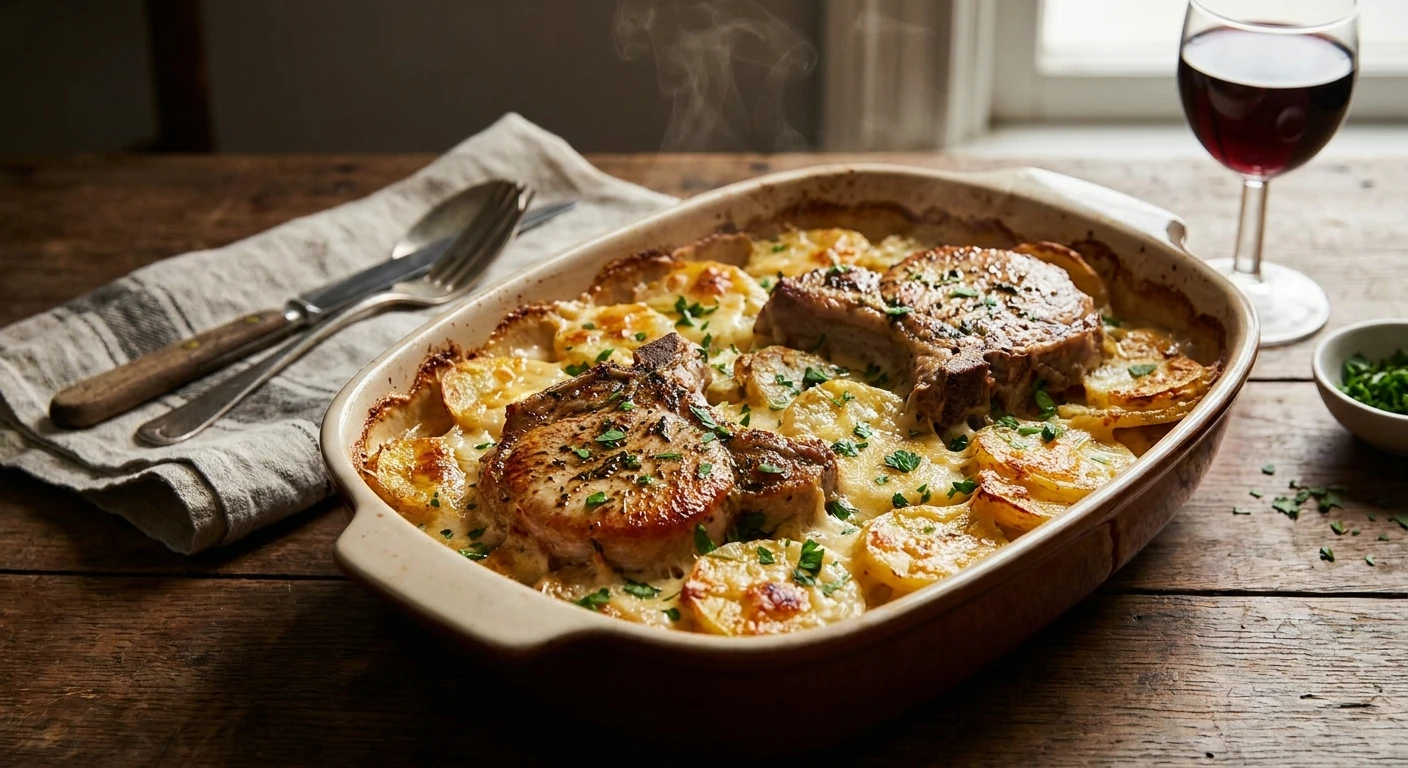
Mastering the Classic Pork Chop Supreme Recipe
Finding the perfect pork chop supreme recipe fundamentally changes how you approach weeknight dinners and weekend comfort food. Look, cooking pork correctly often frustrates home chefs because the meat dries out incredibly fast under high heat. This specific casserole method solves that problem entirely by combining the meat with a moisture-rich environment of sliced potatoes and a heavy cream-based sauce. The starch from the potatoes acts as a thermal buffer, shielding the protein from the harsh, direct heat of the oven. Instead of chewing on tough, overcooked meat, you get a tender, sliceable protein that absorbs the savory, aromatic qualities of thyme, garlic, and rich dairy. The concept relies on layering ingredients so that the natural juices from the seared chops render directly down into the starchy root vegetables beneath them. We are mapping out the exact mechanics of heat transfer, the historical background of the casserole craze, and a foolproof, step-by-step assembly process that guarantees your baking dish comes out of the oven bubbling, golden-brown, and perfectly cooked every single time. Factual precision with your ingredient ratios is the secret to making this rustic staple work.
Core Fundamentals of the Supreme Bake
Constructing this dish correctly offers a massive value proposition for your weekly meal planning: it drastically reduces active cooking time while maximizing flavor synthesis. By combining your primary protein and your complex carbohydrates in one single baking vessel, the pork fat renders slowly and flavors the entire dish organically. Think about a standard pan-fried chop; you lose all those beautiful pan drippings unless you take the time to build a separate gravy. In a supreme preparation, the bed of potatoes acts as a natural sponge for those drippings. A second major benefit is the protective nature of the cream sauce. The dairy acts as a thermal blanket, regulating the temperature around the meat and preventing moisture loss during the prolonged oven exposure necessary to soften raw root vegetables. Choosing the right components is critical.
Read also: Classic Old Fashioned Swiss Steak Recipe; Best slow cooker butter chicken with jar sauce.
| Potato Variety | Starch Content | Baking Result in Casserole |
|---|---|---|
| Russet | High | Absorbs sauce heavily, breaks down slightly for a thicker base. |
| Yukon Gold | Medium | Holds structural shape perfectly, yields a buttery and creamy texture. |
| Red Potatoes | Low | Remains very firm, absorbs much less liquid, requires longer baking. |
To execute the technique properly, you must follow these non-negotiable preparation basics:
- Searing the protein: You must trigger a hard crust formation on the meat in a cast-iron skillet before it ever touches the baking dish.
- Uniform vegetable slicing: The potatoes must be sliced to a precise 1/8-inch thickness using a mandoline to ensure even heat distribution and simultaneous cooking times.
- Tempering the dairy: The cream sauce requires gentle heating and whisking so the dairy proteins do not curdle when introduced to the intense heat of the oven environment.
Origins of the Supreme Concept
The term “supreme” in classical French culinary terminology historically referred to a premium, high-quality cut of poultry, usually the breast with the first wing joint attached. However, mid-20th-century North American casserole culture co-opted the phrase to describe savory dishes smothered in rich, cream-based sauces. Integrating seared pork with scalloped potatoes emerged as a highly economical strategy to stretch meat rations. Families utilized affordable, long-lasting root vegetables and dairy to create a high-calorie, intensely filling meal designed to sustain agricultural and industrial workers after long shifts.
Evolution in Home Kitchens
During the post-war economic boom in the 1950s, the mass production of canned condensed soups radically altered how home cooks approached meal prep. Rather than constructing a traditional, labor-intensive béchamel or velouté sauce from scratch, cooks began utilizing condensed cream of mushroom or cream of celery soup to shortcut the process. This specific industrial adaptation standardized the flavor profile of the dish across the continent and solidified it as a definitive weeknight staple. It shifted the meal from a complex Sunday dinner requiring hours of stove management to an accessible, quick-prep meal suitable for busy weekday schedules.
Modern State of the Dish
Today, the culinary pendulum has decisively swung back toward scratch cooking and whole ingredients. Contemporary variations of the casserole emphasize fresh, robust components, entirely replacing processed canned soups with heavy cream, fresh herbs like thyme and rosemary, slow-caramelized onions, and artisan cheeses such as Gruyère or aged sharp cheddar. Furthermore, modern chefs prioritize sourcing heritage pork breeds, such as Duroc or Berkshire. These specific breeds contain significantly more intramuscular fat (marbling), which guarantees the final bake remains succulent and flavorful even after 45 minutes in a hot oven.
The Maillard Reaction in Pork
Before the meat enters the oven, it requires an aggressive, high-heat sear. This fundamental process is driven by the Maillard reaction, a complex chemical cascade between amino acids and reducing sugars that activates rapidly at temperatures around 300°F (150°C). Browning the exterior of the chop absolutely does not “seal in the juices,” which is a widespread misunderstanding of kitchen physics. Rather, the intense heat creates hundreds of brand-new, complex flavor compounds. As the casserole bakes, these savory compounds dissolve directly into the bubbling cream sauce, building a deep, rich, foundational flavor backbone that elevates the entire dish.
Starch Gelatinization Dynamics
The textural success of the potatoes relies entirely on starch gelatinization. As the raw potato slices heat up submerged in the dairy sauce, their tightly packed starch granules absorb the surrounding water and swell. At approximately 150°F (66°C), these granules physically burst, releasing long amylose molecules that naturally thicken the surrounding liquid without the need for excess flour.
- Calcium present in the heavy cream naturally inhibits potato softening, meaning the casserole requires a slightly longer baking duration than boiling potatoes in pure water.
- The ratio of amylose to amylopectin in your chosen potato dictates whether the sauce becomes a thick gravy or remains a thin broth.
- Introducing acidic ingredients, such as a splash of dry white wine to deglaze the pan, can further delay starch breakdown and requires precise temperature management.
- Allowing the casserole to rest for at least 10 minutes post-bake is mandatory; it allows the gelatinized starches to set, preventing the hot sauce from instantly splitting or running thin when plated.
Step 1: Precision Ingredient Selection
Your shopping list dictates the final quality. Procure bone-in center-cut pork chops cut to exactly 1-inch thickness. Thinner cuts will inevitably overcook and dry out before the potatoes soften. Gather fresh Yukon Gold potatoes, high-fat heavy cream, whole garlic cloves, and fresh sprigs of thyme.
Step 2: Structural Potato Preparation
Wash, peel, and slice the potatoes with mechanical consistency. Using a mandoline slicer is highly recommended over a chef’s knife. Aim for a uniform thickness of exactly 1/8 inch. This mathematical precision guarantees every single slice cooks at the exact same rate, preventing pockets of crunchy, raw potato.
Step 3: Executing the Sear
Preheat a heavy cast-iron skillet over medium-high heat until the surface lightly smokes. Aggressively season both sides of the chops with coarse kosher salt and freshly ground black pepper. Sear the meat for exactly two to three minutes per side until a dark golden-brown crust forms. Remove the meat from the skillet immediately to prevent internal cooking.
Step 4: Constructing the Aromatic Sauce
Lower the heat on the same skillet and utilize the leftover rendered pork fat. Sauté minced garlic until translucent, about one minute. Deglaze the hot pan with a splash of chicken broth, using a wooden spoon to scrape up every browned bit (the fond) from the bottom. Whisk in the heavy cream and fresh thyme, allowing it to simmer and reduce for three minutes.
Step 5: The Strategic Layering Process
Lightly butter a standard 9×13 glass or ceramic baking dish. Shingle the thinly sliced potatoes in tight, overlapping layers across the bottom. Slowly pour the hot, seasoned cream sauce evenly over the entire starch layer, pressing down gently with a spatula to ensure every potato slice is submerged and coated in the liquid.
Step 6: Assembling and Controlled Baking
Place the seared chops directly on top of the cream-soaked potatoes. Cover the entire baking dish tightly with heavy-duty aluminum foil. This traps the steam, forcing the potatoes to cook rapidly. Bake in a preheated oven at 375°F (190°C) for precisely 40 minutes.
Step 7: The Final Caramelization Phase
Remove the baking dish from the oven and carefully peel back the foil to avoid steam burns. Return the uncovered dish to the oven for a final 15 minutes. This crucial final step evaporates excess surface moisture, allowing the cream sauce to bubble thickly and creating a beautifully browned, gratin-like crust along the edges of the potatoes.
Myths vs. Kitchen Reality
Myth: You must pre-boil the potatoes before adding them to the baking dish to ensure they get soft.
Reality: Slicing the potatoes thinly enough with a mandoline allows them to cook perfectly from raw directly in the hot cream sauce, absorbing maximum flavor without turning into mush.
Myth: Boneless cuts work just as well as bone-in cuts for long casserole bakes.
Reality: The bone physically insulates the surrounding meat, significantly slowing down heat transfer and drastically reducing the risk of a dry, tough texture during a 55-minute total bake time.
Myth: Processed canned soup is strictly necessary to achieve the correct, thick sauce consistency.
Reality: The natural reduction of heavy cream combined with the complex starches released by the raw potatoes naturally thickens the sauce into a rich gravy without relying on ultra-processed additives.
Myth: Wet-marinating the meat for hours beforehand improves the final casserole.
Reality: A wet marinade introduces surface moisture that actively inhibits the Maillard reaction during the searing phase. A simple dry brine with salt yields a vastly superior crust and better flavor integration.
What internal temperature should the pork reach?
The meat is safe and perfectly juicy to consume when a digital meat thermometer registers an internal temperature of 145°F (63°C), followed by a mandatory three-minute resting period outside the oven.
Can I freeze this baked casserole for later?
Freezing is not recommended. Dairy-based potato dishes undergo structural changes when frozen; the emulsion breaks, causing the sauce to separate and become highly grainy upon reheating. It is best consumed fresh or kept refrigerated for up to three days.
Why did my cream sauce curdle in the oven?
High ambient heat or the introduction of high-acidity ingredients can cause sensitive dairy proteins to rapidly coagulate. Utilizing high-fat heavy cream rather than low-fat milk, and baking at a moderate 375°F (190°C), prevents the sauce from splitting.
Are sweet potatoes an acceptable substitute?
Yes, but you must account for chemistry changes. Sweet potatoes contain significantly higher natural sugar levels and will caramelize much faster, requiring closer monitoring to prevent burning the top layer.
Should I keep the dish covered the entire time?
No. Covering the dish for the first 40 minutes retains the steam necessary to cook the dense potatoes. Uncovering it for the final 15 minutes is required to provide color and evaporate excess liquid.
What side dishes pair well with this heavy meal?
Because the main dish is incredibly rich in fats and starches, you need acidic and bitter contrasts. Steamed green beans, roasted asparagus with lemon, or a crisp arugula salad with a sharp mustard vinaigrette cut through the dish’s heavy profile perfectly.
Can I use whole milk instead of heavy cream?
Whole milk can function if you manually thicken it first by building a flour-and-butter roux on the stove. If you simply pour raw skim or whole milk over the potatoes, it will result in a watery, split sauce that fails to coat the ingredients.
Mastering this specific technique guarantees a rich, satisfying, structurally sound dinner every single time you cook. Stop settling for dry meat and watery vegetables. Take control of your kitchen heat dynamics, respect the starch science, and elevate your evening meals by heading to the grocery store to try this pork chop supreme recipe tonight!



Leave a Reply