

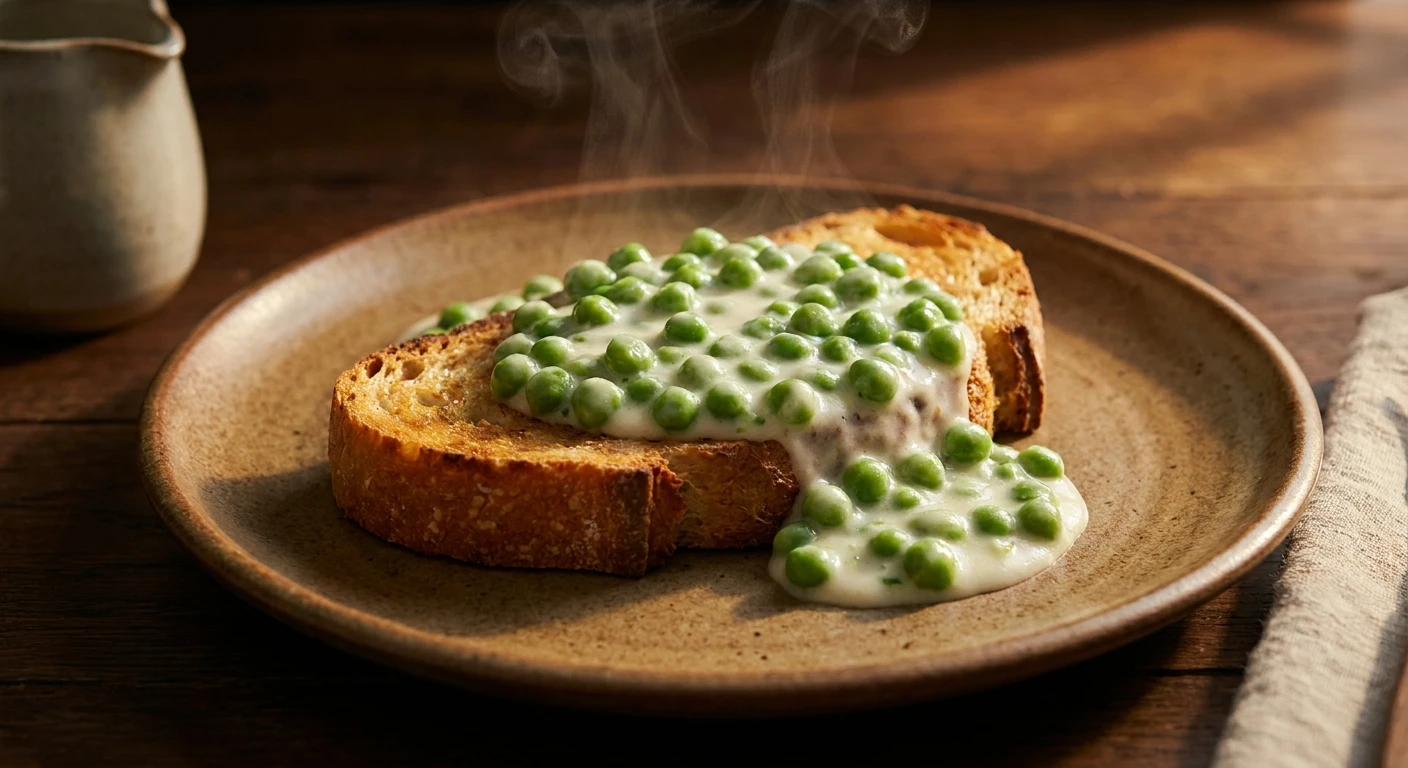
Why Cream Peas on Toast Remains the Ultimate Comfort Food
Think about the most reliable, budget-friendly comfort food in existence, and you will inevitably land on cream peas on toast. This classic dish combines simple pantry staples into a rich, satisfying meal that transcends generations and economic shifts. You might initially view it as a humble relic of the past, but the combination of a velvety béchamel sauce, vibrant green peas, and a sturdy, crunchy slice of toasted artisan bread creates a textural contrast that effortlessly stands the test of time. Whether you need a rapid weeknight dinner after a long day of work or a nostalgic weekend breakfast, mastering this simple yet highly effective recipe provides a solid culinary foundation for any home cook. The true beauty of this meal lies in its sheer accessibility. Flour, butter, milk, and sweet peas are items typically stocked in any standard kitchen, meaning a hearty, warming meal is always just ten to fifteen minutes away. Beyond its absolute convenience, the dish acts as a brilliant blank canvas for culinary creativity. By understanding the core mechanics of sauce-making, starch gelatinization, and bread selection, you can elevate a highly economical plate into a genuinely satisfying, gourmet-level culinary experience. The following breakdown explains exactly how to perfect the technique, the nutritional science behind the sauce, and the fascinating, resilient history of this enduring household staple.
The core appeal of this dish comes down to three specific, measurable benefits: extreme cost-effectiveness, rapid preparation time, and a surprisingly high fiber content that keeps you full for hours. Building the perfect plate requires understanding how each component interacts on a physical level. You want a sauce that clings to the peas without turning into a heavy, gluey paste, and bread that supports the moisture without disintegrating immediately into mush upon contact.
Read also: The Ultimate Crispy Bol Egg Roll Recipe; Best slow cooker butter chicken with jar sauce.
Here is a detailed breakdown of the primary components, their specific function in the architecture of the dish, and modern alternatives if you want to switch things up for dietary reasons:
| Ingredient | Culinary Function | Modern Alternative |
|---|---|---|
| Sweet Green Peas | Provides natural sweetness, bulk, and a high-fiber nutritional baseline. | Edamame beans or chopped asparagus tips for a different texture. |
| Butter and Flour | Forms the essential roux base, thickening the liquid through starch gelatinization. | Olive oil mixed with cornstarch or arrowroot powder for gluten-free diets. |
| Whole Milk | Delivers the necessary creamy mouthfeel and liquid volume for the sauce. | Unsweetened oat milk or cashew milk for a dairy-free, vegan profile. |
To execute this dish flawlessly every single time, you must master three distinct phases of preparation:
- Select the right bread: You absolutely need a sturdy foundation. Sourdough, thick-cut dark rye, or traditional rustic Texas toast provide the necessary structural integrity to hold up against a heavy cream sauce. Flimsy sandwich bread will collapse instantly.
- Master the roux: The precise combination of melted fat and wheat starch dictates the final texture of your meal. Cooking the flour sufficiently in the butter removes the raw, chalky wheat flavor, setting the perfect stage for a silky, velvety sauce that coats the palate gracefully.
- Season aggressively: Peas and dairy milk are both naturally sweet ingredients. Balancing this inherent sweetness requires ample kosher salt, freshly cracked black pepper, and perhaps a pinch of cayenne pepper, garlic powder, or freshly grated nutmeg for savory depth.
The value proposition here is truly massive. For example, feeding a family of four with this exact recipe costs mere dollars, serving as an inflation-proof meal that never sacrifices warmth or satisfaction. Another stellar example is its utility for quick, high-energy lunches; when working from home, you can whip up a fresh, piping-hot batch in the exact time it takes to toast the bread and set the table. It proves definitively that satisfying, hot meals do not require premium luxury ingredients, specialized equipment, or hours of exhausting kitchen labor.
The Humble Origins
The overarching concept of serving creamed vegetables over cooked carbohydrates dates back centuries in European culinary traditions, but the specific iteration of sweet peas in a white sauce served over toast gained massive traction during times of severe economic hardship in North America and Britain. During the Great Depression and both World Wars, fresh meat and premium proteins were heavily rationed, heavily taxed, or entirely unavailable to the average family. Home cooks desperately needed to maximize caloric intake and provide highly filling, morale-boosting meals using whatever shelf-stable or garden-fresh ingredients were available to them. Flour, farm milk, and garden peas fit the bill perfectly. The dish provided essential carbohydrates, satisfying fats, and enough vegetable matter to keep manual laborers and large families energized without breaking the already strained household budget.
Evolution Through the Decades
As the mid-20th century approached, the rapid industrialization of the global food supply chain fundamentally altered how this dish was prepared and perceived. The widespread commercial availability of canned vegetables and pre-sliced supermarket bread in the 1950s turned this from a scratch-made, garden-fresh meal into the ultimate symbol of mid-century convenience food. Diners, cafeterias, and hospital kitchens across North America eagerly added it to their rotating menus, often serving it as a cheap side dish or an economical vegetarian entree. It quickly became a nostalgic staple in school lunch programs and military mess halls, heavily relied upon for its bulk, cheap ingredient cost, and ease of mass production for hundreds of people at a time.
The Modern State of Creamed Veggies
Today, the dish occupies a unique and beloved space in the contemporary culinary landscape. While its popularity is still largely driven by childhood nostalgia, a new, enthusiastic wave of home cooks is actively upgrading the basic formula. Instead of relying on mushy canned vegetables and processed, ultra-soft white bread, modern iterations feature crisp-tender, flash-frozen sweet peas, artisanal, naturally fermented sourdough loaves, and complex sauces infused with roasted garlic, caramelized shallots, or sharp pecorino romano cheese. This ongoing evolution beautifully demonstrates how a fundamentally sound, historically grounded recipe can easily adapt to contemporary gourmet tastes while retaining the comforting, unpretentious soul of its original form.
The Science of the Roux
At the absolute heart of this dish is a classic French béchamel sauce, which relies entirely on the fascinating science of starch gelatinization. When you melt butter and immediately whisk in all-purpose flour, the liquid fat effectively coats the individual starch granules from the wheat. This protective fat coating is absolutely crucial; it prevents the starch from clumping together immediately into tough lumps when your milk is introduced. As you pour in the dairy and apply sustained heat, the starch granules absorb the surrounding liquid, swell up significantly, and eventually burst at around 150 to 175 degrees Fahrenheit. This bursting action releases amylose and amylopectin polymers directly into the liquid milk, creating a microscopic, sponge-like web that traps water molecules and thickens the entire sauce into a smooth, velvety texture that coats the back of a wooden spoon perfectly.
Nutritional Breakdown of Legumes
While often treated merely as a colorful vegetable, peas are technically legumes, bringing a highly robust nutritional profile to an otherwise carbohydrate and fat-heavy dish. They contain a highly favorable ratio of dietary fiber and plant-based protein. This fiber slows down overall digestion and prevents the rapid blood sugar spikes typically associated with eating white bread, effectively balancing the glycemic load of the toast.
Here are the core scientific facts regarding the biological and chemical components of your meal:
- Gelatinization threshold: Wheat flour strictly requires sustained, even heat above 160 degrees Fahrenheit to properly thicken milk, necessitating a gentle, controlled simmer rather than a violent, rolling boil.
- Pea protein structures: Green peas contain approximately 5 grams of high-quality plant protein per standard cup, consisting largely of globulins and albumins, making them highly digestible and excellent for muscle recovery.
- Maillard reaction: Toasting the bread in an oven or toaster triggers the Maillard reaction, a complex chemical interaction between amino acids and reducing sugars that creates the deep, savory, roasted flavors absolutely necessary to contrast the mild, milky sauce.
- Thermal degradation: Boiling peas for too long breaks down their delicate cellular walls and actively destroys their chlorophyll content, resulting in a tragically mushy texture and an unappetizing, dull olive-green color.
The preparation of this meal is exceptionally fast, but precise timing is everything. Here is the exact, foolproof step-by-step sequence to ensure your bread is hot, fragrant, and crispy exactly when the cream sauce reaches its absolute peak consistency.
Step 1: Toasting the Bread Perfectly
Begin by selecting a thick-cut, high-quality artisan loaf. Place your generous slices in a standard toaster or directly under an oven broiler. You want a deep, robust golden-brown crust. A light, pale toasting will inevitably result in a soggy, unappealing mess once the heavy, wet sauce hits the plate. If you are using an oven broiler, lightly brush both sides of the bread with extra virgin olive oil or melted butter to guarantee a superior, waterproof crunch.
Step 2: Melting the Fat Base
Place a heavy-bottomed saucepan over medium heat on your stove. Add two full tablespoons of unsalted butter. Allow the butter to melt completely until the white foaming actively subsides, which physically indicates that the excess water content naturally found in the butter has successfully evaporated. This leaves pure, concentrated milk fat ready to efficiently coat your flour particles.
Step 3: Whisking the Flour
Sprinkle two exactly leveled tablespoons of all-purpose flour evenly over the bubbling melted butter. Whisk immediately, vigorously, and continuously. You are cooking this roux for about one to two full minutes until it smells faintly nutty, reminiscent of baked pie crust. Do not under any circumstances let it turn brown; you want to maintain a “white roux” to keep the final sauce bright, pure, and visually appealing.
Step 4: Incorporating the Dairy
Gradually pour in one full cup of cold or room-temperature whole milk. Pouring the milk in a slow, steady stream while whisking aggressively with your other hand is the ultimate secret to a perfectly lump-free sauce. The natural temperature contrast between the hot, bubbling roux and the cooler milk actually helps separate the coated starch granules evenly before they have a chance to swell.
Step 5: Simmering for Thickness
Continue whisking the mixture rhythmically as you bring the liquid up to a gentle, bubbling simmer. Do not boil it violently, as whole dairy can easily scorch on the bottom of the pan, ruining the flavor entirely. Within three to five minutes, the sauce will thicken enough to heavily coat the back of a spoon. Season generously with kosher salt and black pepper right at this stage so the flavors meld properly.
Step 6: Folding in the Peas
Immediately reduce the stovetop heat to its lowest possible setting. Add one generous cup of thoroughly thawed frozen peas. You are not actively cooking the peas here; you are simply warming them through in the hot liquid. Stir everything gently for about two minutes. Overheating them at this final stage will ruin their bright, spring-green color and satisfying, pop-like crisp texture.
Step 7: Plating and Garnishing
Place your hot, aggressively crispy toast on a slightly warmed ceramic plate. Ladle the thick, creamy pea mixture generously over the top of the bread, deliberately allowing it to spill beautifully over the crusty edges. Garnish the dish immediately with fresh chopped parsley, a bright dash of smoked paprika, or an extra heavy crack of fresh black pepper, and serve immediately before the bread begins to soften.
Myth: This dish must always be made with canned peas for authenticity.
Reality: While historically accurate for mid-century diner versions, canned peas often yield a muddy, unappetizing color and a deeply mushy texture. Frozen sweet peas are vastly superior in every metric, retaining their structural integrity, bright visual color, and natural plant sugars perfectly.
Myth: The sauce strictly requires heavy whipping cream to be good.
Reality: A traditional, well-executed béchamel utilizes regular whole milk. The actual thickening power comes entirely from the flour-and-butter roux base, meaning heavy cream is completely unnecessary and often makes the resulting dish far too rich, heavy, and cloying to finish.
Myth: It is inherently a bland, uninspired, depressing meal.
Reality: A poorly seasoned, under-salted sauce is indeed bland, but when properly aggressively salted and enhanced with fresh black pepper, a pinch of ground nutmeg, or even sharp cheddar cheese, the flavor profile becomes incredibly complex, savory, and deeply satisfying.
Myth: Making a white cream sauce from scratch takes way too much time.
Reality: The entire physical process of melting butter, making a roux, and thickening the milk takes roughly five to seven minutes total. It is frequently much faster than waiting for a large pot of water to boil for dry pasta.
Can I use frozen peas directly from the freezer?
Yes, you can, but it is vastly better to rinse them briefly under warm running water in a colander for thirty seconds first. This removes exterior ice crystals and prevents the freezing cold peas from dropping the temperature of your hot sauce too drastically and breaking the emulsion.
What specific bread works best for this recipe?
Sourdough, thick-cut dark rye, or dense Texas toast are universally ideal. You absolutely need a bread with a strong, highly baked crust and a dense, tight inner crumb to firmly hold the liquid moisture without instantly turning into a wet sponge.
Is this classic dish gluten-free?
Traditionally, no, because it relies heavily on wheat flour and regular bread. However, you can incredibly easily make it 100 percent gluten-free by simply swapping the all-purpose wheat flour for a high-quality 1-to-1 gluten-free baking blend and serving the finished sauce over toasted gluten-free bread.
Can I make it vegan or dairy-free?
Absolutely. You just need to swap the traditional dairy butter for a high-quality plant-based butter block, and use an unsweetened, completely unflavored oat milk or soy milk for the liquid base. Oat milk provides the best creamy texture among plant milks.
Does creamed peas and toast reheat well the next day?
The sauce itself can thicken significantly when stored in the cold fridge overnight. To reheat it successfully, place it in a small saucepan over low heat and aggressively whisk in a fresh splash of milk to restore the original creamy consistency. You must always toast entirely fresh bread, as old toast cannot be salvaged.
What extra proteins pair well with this meal?
High-quality canned tuna, freshly shredded cooked chicken breast, crumbled crispy bacon, or thickly sliced hard-boiled eggs are all incredibly classic, protein-heavy additions that blend seamlessly into the sauce without disrupting the core flavor profile.
Why did my sauce turn out lumpy and weird?
Lumps almost always occur if the cold milk is dumped into the pan far too quickly or if the whisking action is not aggressive and constant enough. If stubborn lumps do form, you can simply pass the entire sauce through a fine-mesh metal sieve before adding the delicate peas to save the meal.
In conclusion, mastering cream peas on toast equips you with a highly versatile, lightning-fast culinary technique that effectively satisfies both the household budget and the most demanding palate. Gather your butter, flour, milk, and sweet peas right now, and confidently upgrade your weeknight dining repertoire today!



Leave a Reply