

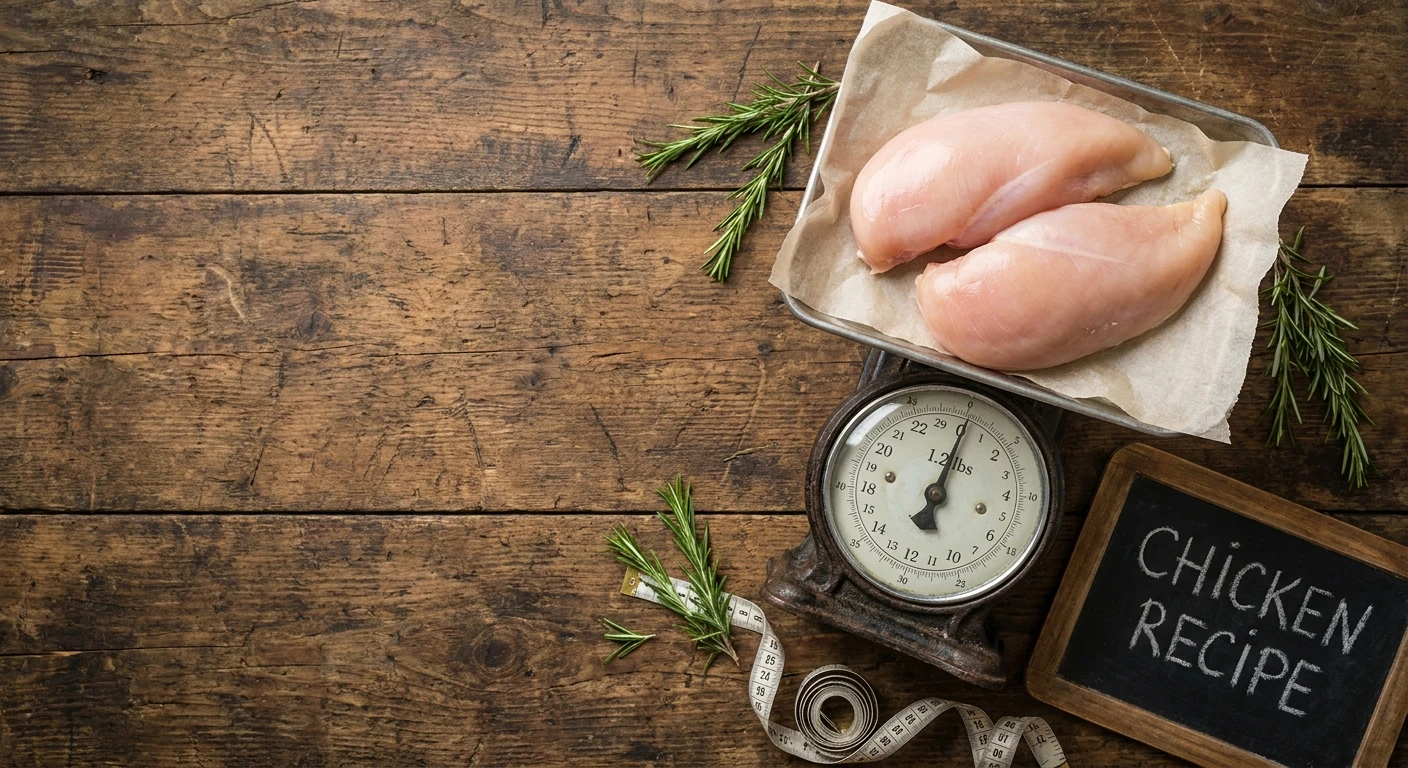
Figuring Out Exactly how many chicken breasts is 1 lb
If you are standing in the middle of a crowded grocery store aisle frantically googling how many chicken breasts is 1 lb, you are definitely not the only person doing this today. Trying to cook from specific international recipes can be an absolute headache when you are used to the metric system, or when you just grab a package from the meat counter without checking the sticker weight. My thesis is simple: understanding precise meat weights by visual count will save you serious money, prevent accidental overeating, and make your weekly meal prep completely effortless.
I still vividly remember walking through the bustling, noisy aisles of Zhytniy Market in Kyiv, trying to buy exactly one pound of poultry for a classic American recipe I desperately wanted to test out. The local butchers looked at me like I had lost my mind when I asked for “a pound.” “Just give it to me in grams or point to the piece you want!” one older vendor laughed, wiping his hands on an apron. In Ukraine, we tend to eyeball everything, or we strictly use kilograms for our kitchen math. But realizing the average weight of a single piece completely fixed my cooking calculations. Today, I am going to walk you through exactly what a pound of poultry actually looks like, so you never have to second guess your shopping list again. We will break down commercial sizing, healthy portions, and how moisture content changes everything you thought you knew about meat weight.
Read also: Guide: how many cups of rice for 2 people exactly; Classic Old Fashioned Swiss Steak Recipe.
The Core Breakdown of Poultry Weights
Let us get right to the hard numbers. So, exactly how many pieces make up a single pound? The answer highly depends on the size and breed of the bird, but generally speaking, a standard, commercially raised chicken yields breasts that weigh between 6 to 8 ounces each. Since there are exactly 16 ounces in one pound, you are typically looking at about two standard-sized pieces to hit that one-pound mark perfectly.
However, if you prefer to shop at an organic farm or buy premium free-range meat, the pieces are often much smaller, weighing closer to 4 or 5 ounces. In that specific scenario, you might need three or even four pieces to tip the one-pound scale. On the flip side, some massive, conventionally raised chickens have heavily enhanced breasts tipping the scales at 10 to 12 ounces each, meaning just one and a half pieces will entirely fulfill your one-pound recipe requirement.
Here is a detailed, easy-to-read look at the sizing breakdown so you can shop smarter:
| Breast Size Category | Average Weight per Piece (oz) | Pieces Needed for 1 lb |
|---|---|---|
| Small (Free-Range/Organic Heritage) | 4 – 5 oz | 3 – 4 pieces |
| Medium (Standard Commercial Grocer) | 6 – 8 oz | 2 pieces |
| Large (Jumbo/Enhanced Processed) | 10 – 12 oz | 1.5 pieces |
Knowing this brings incredible value to your everyday meal planning. First, you get exact portion control. If you know a medium piece is 8 ounces, you can split it perfectly down the middle for two 4-ounce meals. Second, it tremendously helps with budgeting. Buying jumbo packs often costs significantly less per pound, and knowing you only need one and a half pieces for a family dinner prevents unnecessary food waste.
Here is exactly how you can gauge your meat volume at home without using a digital kitchen scale:
- Look at the palm of your hand. A piece roughly the size and thickness of an average adult palm is about 4 to 5 ounces.
- Check the packaging label for the total net weight and divide it by the number of pieces inside. If a 2-pound pack has exactly four pieces, they are 8 ounces each.
- Use a standard measuring cup. Chopped raw poultry that fills a standard one-cup measure usually weighs around 5 to 6 ounces depending on how tightly you pack it.
The History of Poultry Sizing
Origins of Commercial Breeding
Fifty years ago, answering this sizing question was much easier and far more consistent. In the mid-20th century, chickens were significantly smaller across the board. Farms primarily raised heritage breeds that grew at a highly natural, slower pace. A standard piece of breast meat from these older birds rarely exceeded 4 or 5 ounces. You would always need three or four of them just to make up a single pound. The meat was notably denser, richer in natural flavor, and the portion sizes naturally aligned with what dietitians and health experts actually recommend today.
The Evolution of Market Demands
As fast food franchises and massive supermarket chains exploded in popularity during the 1970s and 1980s, consumer demand drastically shifted. People wanted much more white meat, and they wanted it incredibly cheap. The agricultural industry quickly responded by selectively breeding chickens that grew exponentially faster and developed much larger pectoral muscles. This era completely changed the math for home cooks everywhere. Suddenly, classic recipes written in the 1960s calling for “four chicken breasts” resulted in massive, overflowing pans of food because the average sizes had essentially doubled in a few decades. Cooks had to start adjusting their visual estimates entirely.
Modern State of Supermarket Meat
Now, as we casually navigate grocery stores, the variety is quite staggering. The modern poultry industry offers everything from hyper-plumped jumbo pieces to small, artisanal organic heritage cuts. We have essentially split the consumer market in two completely different directions. One side focuses strictly on rapid growth and maximum yield, producing those 12-ounce giants where a single piece almost equals a full pound. The other side, heavily driven by the organic and free-range movements, has deliberately reverted to historical sizes. This vast discrepancy is exactly why knowing the origin of your meat is crucial for accurate recipe preparation today.
The Science Behind Meat Weight
Protein Density and Muscle Mass
Understanding what actually makes up that one-pound measurement requires a quick, fascinating look at muscle science. Raw poultry is predominantly composed of water, protein, and a very small amount of fat. The dense pectoral muscles of a chicken are biologically designed for short, powerful bursts of movement, though domestic birds rarely actually use them for flight. This lack of strenuous use results in the incredibly tender white meat we love to eat. When you toss a piece of raw meat onto a scale, you are essentially weighing roughly 75% water, 20% protein, and 5% lipids and natural carbohydrates. When you apply heat and cook it, the muscle fibers violently contract and expel a massive portion of that resting water. This scientific reaction means your one pound of raw meat will typically yield only about 11 to 12 ounces of actual cooked meat.
Water Retention and Plumping
You also need to heavily account for a highly controversial industry practice called “plumping.” Many commercial processors actively inject raw meat with a heavy solution of saltwater, chicken broth, or sometimes seaweed extract to instantly enhance flavor and artificially increase the weight of the product before it ever hits the retail shelves. This artificially inflates the size and costs you more money per pound for what is essentially just water.
Here are some fascinating scientific facts about poultry weight and density:
- Enhanced or heavily plumped meat can contain up to 15% added artificial water weight right out of the package.
- A raw 8-ounce piece will inevitably shrink by roughly 25% during the cooking process solely due to moisture evaporation and minor fat rendering.
- Freezing does not change the true weight of the meat, but aggressive ice crystal formation can severely damage cellular walls, leading to much greater moisture loss when thawed and cooked.
- The core protein content remains constant regardless of total water loss; a pound of raw meat provides about 100 grams of pure protein, whether it shrinks drastically during cooking or not.
7-Day Meal Plan Using One Pound of Chicken
If you have exactly one pound of meat (which we now know is roughly two standard supermarket pieces), you can stretch it incredibly well if you are smart about volume. Here is a step-by-step 7-day plan showing how to maximize this exact amount for delicious, single-serving daily lunches.
Day 1: Classic Shredded Tacos
Start your week by poaching the entire pound of meat in heavily seasoned broth. Once fully cooked and cooled, shred it completely with two forks. Take exactly one-seventh of the shredded meat (about 1.5 cooked ounces) and use it to generously fill two small corn tortillas. Top with fresh pico de gallo, a squeeze of lime, and chopped cilantro for a light, punchy Monday lunch.
Day 2: Greek Salad Protein Boost
Take your next pre-cooked portion and toss it cold into a massive bowl of crunchy cucumbers, ripe tomatoes, sharp red onions, and briny feta cheese. The incredibly high water content of the fresh vegetables makes the small portion of meat feel incredibly satisfying without weighing you down for the afternoon.
Day 3: Quick Asian Stir-Fry
For this day, mix your shredded portion with a massive handful of bright green broccoli florets and crisp snap peas. Sauté them incredibly quickly in a blazing hot pan with low-sodium soy sauce, fresh minced ginger, and a dash of toasted sesame oil. Serve it proudly over a half cup of steamed jasmine rice.
Day 4: Hearty Chicken Noodle Soup
Boil some high-quality, rich chicken stock and add chopped carrots, celery, and hearty egg noodles. Drop in your daily portion of the cooked meat right at the very end just to warm it gently through. This brilliant method stretches the protein beautifully across a large, filling volume of hot liquid.
Day 5: Spicy Buffalo Wrap
Toss your shredded portion in a spoonful of fiery, buttery buffalo sauce until fully coated. Wrap it tightly in a soft whole wheat tortilla along with crisp romaine lettuce and a heavy drizzle of chunky blue cheese dressing. It delivers bold, aggressive flavors that completely mask the smaller protein portion.
Day 6: Pesto Pasta Toss
Boil a solid handful of al dente penne pasta. Drain it well and mix vigorously with a heaping tablespoon of fresh basil pesto, blistered cherry tomatoes, and your daily allocation of meat. The incredibly rich fats in the olive oil and pine nuts make the meal highly satiating and deeply flavorful.
Day 7: Chicken and Quinoa Bowl
Finish off your perfectly prepped meat by mixing it into a bowl of warm, fluffy quinoa, roasted sweet potatoes, and a bright squeeze of fresh lemon juice. This grain bowl is intensely dense, highly nutritious, and the absolute perfect way to use up the very last bits of your one-pound prep.
Busted: Common Myths About Meat Weights
Myth: A single chicken breast is always a standard, medically approved single serving size.
Reality: A standard nutritional serving of meat is actually only 3 to 4 ounces. Since many modern commercial pieces heavily weigh 8 to 12 ounces, eating a whole one often means you are consuming two or three actual servings in one sitting without even realizing it.
Myth: Cooking meat makes it significantly heavier because it absorbs cooking oils and butter from the pan.
Reality: Meat actually loses about 25% of its total weight during cooking solely due to intense water evaporation. The highly minimal amount of oil absorbed does not even come close to offsetting the massive moisture loss.
Myth: You can perfectly guess a pound just by carefully looking at the packaging size in the store.
Reality: Retail packaging is highly deceptive by design. Processors use excessively thick plastic trays and massive absorbent pads that add serious bulk to the presentation. Always read the numerical weight label rather than relying on visual volume.
Frequently Asked Questions
How many chicken breasts is 1 lb if they are completely frozen?
It is exactly the same as raw. Freezing locks in existing cellular moisture but does not add actual weight unless the meat is heavily glazed in a thick layer of protective ice. You still usually need about two medium pieces.
How much does a cooked pound of chicken actually weigh?
If you start with exactly one raw pound, it will weigh roughly 11 to 12 ounces after cooking due to unavoidable moisture loss and fat rendering.
Do the bones count towards the total packaged weight?
Absolutely yes. If you buy bone-in cuts, the heavy bone makes up about 20% of the total scale weight. You will realistically need roughly 1.25 pounds of bone-in meat just to get a true pound of edible flesh.
How many cups of shredded meat is in one pound?
One pound of raw meat generally yields about 2.5 to 3 cups of cooked, shredded meat depending entirely on how finely you tear it apart.
Is it financially cheaper to buy jumbo breasts?
Often, yes. Jumbo family packs usually feature a noticeably lower price per pound, making them highly cost-effective if you are entirely willing to slice and portion them yourself at home.
Does organic meat weigh less on average?
The individual pieces usually weigh significantly less (typically 4-5 ounces) because the birds grow at normal, natural rates without any growth-enhancing commercial feed.
How many grams is exactly one pound?
One pound is precisely equal to 453.59 grams. This mathematical conversion is incredibly crucial if you are translating recipes between the metric and imperial systems.
Wrapping Up Your Kitchen Math
Mastering basic kitchen measurements completely changes how you approach daily cooking. Now that you intimately know exactly how many chicken breasts is 1 lb, you can eagerly navigate the bustling grocery store with total confidence. Whether you are buying massive jumbo cuts on a budget or investing in small organic heritage pieces, you possess the exact formula needed to get your portions absolutely right every single time. As we navigate the complex food trends and rising grocery costs of 2026, being fiercely smart about portion control and minimizing food waste is undeniably smarter than ever. Stop randomly guessing at the meat counter, start accurately measuring, and fiercely take control of your weekly meal prep today! Hit the kitchen right now and try out our dynamic 7-day meal plan to witness firsthand just how far one single pound of meat can really go when you know the math.
Leave a Reply