

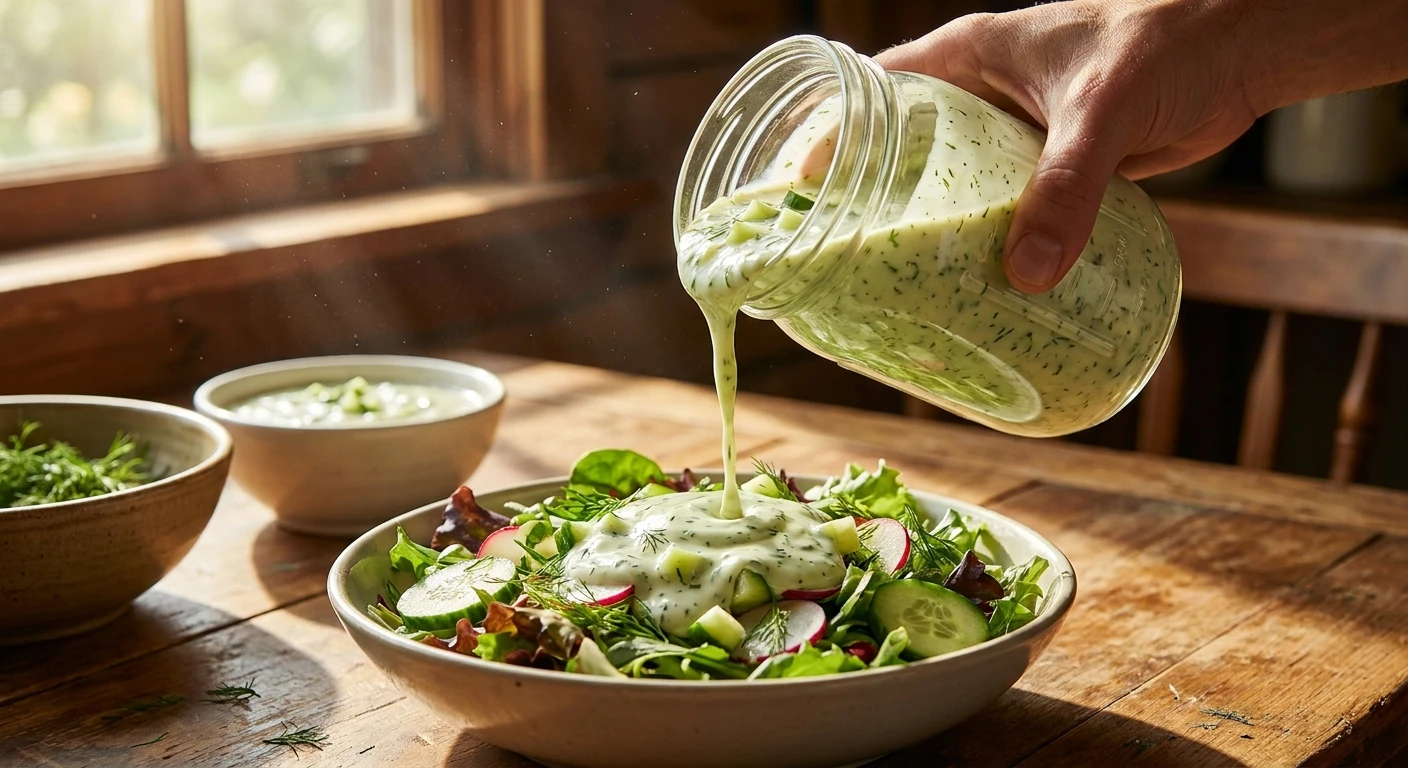
Why You Need Dill Pickle Dressing in Your Life Right Now
If you want a sauce that practically screams with vibrant, tangy flavor, whipping up a batch of homemade dill pickle dressing is exactly what you need to do today. Seriously, hear me out. I still remember summers back in Ukraine, spending time at my babusya’s dacha just outside of Kyiv. The cellar was always packed with massive glass jars of kvasheni ogirky—our traditional fermented, incredibly garlicky cucumbers. I used to sneak down there just to drink the cold, salty brine straight from the jar. That intensely savory, dill-heavy flavor profile completely ruined boring, store-bought vinaigrettes for me. Fast forward to now, and I realize that combining that sharp, herbaceous brine with a creamy base is the ultimate kitchen hack.
You are getting the absolute best of both worlds here. You get the rich, comforting mouthfeel of a classic ranch or Caesar, but it gets aggressively cut by the sharp, acidic bite of fermented cucumbers. It wakes up tired greens, makes a fantastic dip for crispy potatoes, and honestly, you might just find yourself eating it straight off a spoon. Making this from scratch gives you total control over the sodium and the ingredients. Plus, it is a brilliant way to use up that leftover liquid sitting at the bottom of your pickle jar instead of pouring it down the drain.
Read also: Authentic tortellini in brodo Recipe Guide; The Ultimate Crispy Bol Egg Roll Recipe.
The Core Magic of Combining Brine and Cream
So, why exactly are we obsessing over this specific condiment combo? Well, it all comes down to versatility and bold flavor mechanics. When you rely on cheap bottled dressings, you usually get a flat, one-dimensional sourness from distilled white vinegar and a bunch of artificial thickeners. A proper homemade version uses actual pickle juice, which brings complex organic acids, garlic notes, and mustard seed undertones right into the mix.
| Feature | Store-Bought Dressing | Homemade Pickle Dressing |
|---|---|---|
| Flavor Profile | Flat, artificial, often overly sweet | Bright, complex, deeply savory |
| Texture | Gummy due to xanthan gum | Luxuriously creamy and fresh |
| Cost Efficiency | High markup for cheap oils | Virtually free if using leftover brine |
Think about the sheer value proposition here. You are taking something you already have in your fridge and turning it into a gourmet sauce. Here are two massive examples of how this changes your weeknight cooking: First, imagine a boring Tuesday night chicken breast. Shred it, toss it with this creamy dressing, and suddenly you have a phenomenal chicken salad sandwich filling. Second, think about roasted baby potatoes. Pull them out of the oven crispy and hot, then immediately toss them in this sauce—they absorb the tanginess while keeping their crunch.
Here are just a few foolproof ways to utilize your fresh batch:
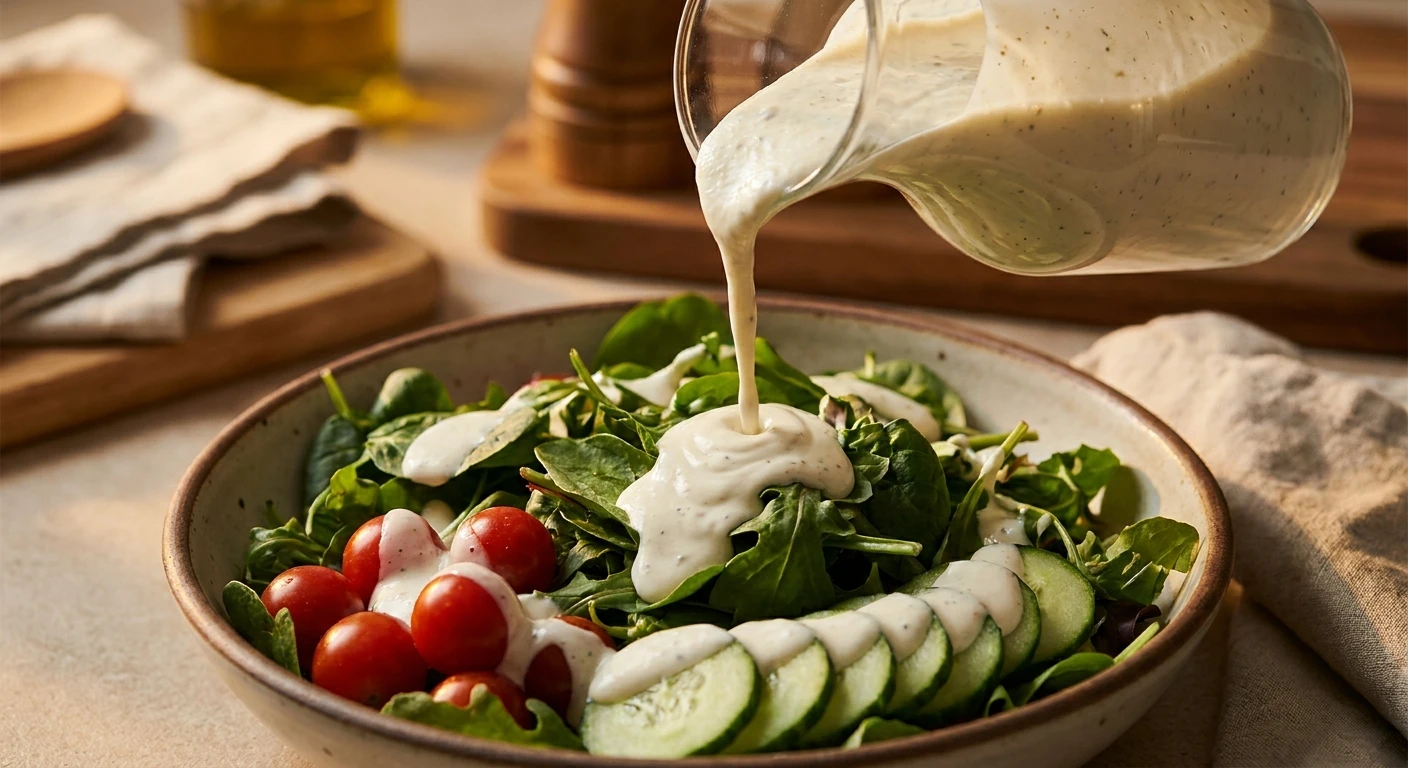
- The Ultimate Wedge Salad Upgrade: Pour it heavily over a crisp wedge of iceberg lettuce, topped with crispy bacon and fresh tomatoes.
- Next-Level Burger Sauce: Smear a thick layer on your toasted brioche buns instead of standard mayo to cut through the richness of the beef patty.
- Crispy Fried Food Dip: Serve it alongside fried chicken tenders, onion rings, or zucchini fries for a cooling, acidic contrast.
The Humble Origins of Pickle-Infused Sauces
Origins in Traditional Fermentation
People have been preserving cucumbers in salt and water for thousands of years, tracing way back to ancient Mesopotamia. But the specific idea of using the leftover preservation liquid as a culinary ingredient has deep roots in Eastern Europe. In places like Ukraine, Poland, and Russia, absolutely nothing went to waste. The brine from fermented vegetables, known as rozsil, was traditionally used as a hangover cure, a soup base (think of the famous pickle soup, rassolnik), and a meat tenderizer. Our ancestors inherently knew that the acidic, probiotic-rich liquid was culinary gold. They would whisk it with rich sour cream (smetana) to pour over early spring greens and radishes.
The Evolution of Tangy Dressings Over the Decades
As Eastern European immigrants brought their beloved barrels of dill pickles to North America in the late 19th and early 20th centuries, the flavors started to merge with Western culinary habits. The mid-century American obsession with mayonnaise and dairy-based salad dressings created the perfect landscape for fusion. Tartar sauce was already an established staple for seafood, relying on chopped cornichons or capers. However, the idea of a pourable, salad-friendly sauce specifically highlighting American-style kosher dills really started gaining traction in local diners and delis, where cooks needed cheap, flavorful ways to dress heavy potato and macaroni salads.
The Modern State of the Condiment Scene
Fast forward to 2026, and we are seeing a massive resurgence in this exact flavor profile. With grocery prices being what they are, the zero-waste cooking movement has pushed home cooks to look at every ingredient twice. Throwing away a jar of perfectly good, seasoned brine is practically a crime now. Modern food creators are constantly looking for ways to maximize umami and acidity without relying on ultra-processed ingredients. This dressing fits perfectly into the current culinary zeitgeist—it is nostalgic, intensely flavorful, economical, and ridiculously easy to customize with plant-based alternatives if needed.
The Chemistry of Emulsions Explained
Breaking Down the Science of the Sauce
Making a creamy sauce at home is essentially an exercise in basic kitchen chemistry. You are creating an emulsion, which is the forced marriage of two liquids that naturally hate each other: oil (fat) and water (the pickle brine). When you whisk these together, you break the liquids into microscopic droplets. But to keep them from separating back out into a gross, broken puddle, you need an emulsifier. Mayonnaise and sour cream already contain natural emulsifiers like lecithin (from egg yolks) and milk proteins. When you slowly whisk the acidic brine into your creamy base, these proteins and phospholipids coat the tiny water droplets, suspending them permanently within the fat.
Why the Acid-Fat Balance Matters
The human palate goes absolutely crazy for the combination of fat and acid. Fat coats the tongue, delivering richness and carrying fat-soluble flavor compounds (like the essential oils in fresh dill). Acid, on the other hand, makes your mouth water, cleansing the palate and preventing the fat from feeling heavy or cloying. Pickled cucumber brine is loaded with lactic acid from the fermentation process (or acetic acid if they are vinegar-based). This acid cuts right through the dense mayonnaise and sour cream.
- Lactic Acid Benefits: Naturally fermented pickles produce lactic acid, which provides a softer, more complex tang compared to harsh distilled white vinegar.
- Viscosity Control: The salt in the brine slightly alters the protein structures in the dairy, naturally thickening the dressing if allowed to rest in the fridge.
- Allicin Activation: The raw garlic often found in kosher dills contains allicin, a compound that becomes sharper and more pungent when pureed into a fat-rich base.
Step-by-Step Guide to the Perfect Sauce
Step 1: Gathering the Right Pickles
Do not just grab any random jar from the back of the fridge. You want a high-quality garlic dill cucumber. Absolutely no sweet pickles, no bread and butter nonsense. You want something with a fierce, garlicky, salty bite. The better the pickle, the better the final product.
Step 2: Prepping Your Base Ingredients
You need a solid foundation. I recommend a 50/50 split of full-fat mayonnaise and full-fat sour cream. The mayo gives it that glossy, rich emulsion, while the sour cream provides a clean, dairy tang. Plop half a cup of each into a medium mixing bowl. If you want a lighter version, plain Greek yogurt is a fantastic substitute for the sour cream.
Step 3: Chopping the Inclusions
Texture is everything. Pull two large pickles from the jar and finely mince them. You want pieces small enough to fit comfortably on a piece of lettuce, but large enough to provide a distinct crunch. If you prefer a completely smooth texture, you can throw everything into a food processor, but I strongly advocate for the rustic, chunky method.
Step 4: Measuring the Brine
This is where you control the consistency. Start by spooning exactly three tablespoons of the liquid directly from the jar into your mayo mixture. It might look like it won’t combine at first, but keep a whisk handy. You can always add more liquid later if you want a thinner consistency for pouring over delicate greens.
Step 5: Whisking the Fats and Acids
Grab your whisk and beat the mixture vigorously. You will watch it transform from a thick paste into a glossy, pourable liquid. Make sure you scrape down the sides of the bowl. The emulsion should hold perfectly without breaking.
Step 6: Folding in the Fresh Aromatics
Now, toss in your finely diced cucumbers, a large handful of chopped fresh dill, a tiny pinch of garlic powder, and a generous crank of coarse black pepper. Do not add extra salt yet! The brine is already heavily salted. Fold everything together gently with a rubber spatula.
Step 7: Resting for Flavor Development
This is the hardest part, but it is non-negotiable. Transfer your sauce into an airtight mason jar and stick it in the fridge for at least two hours. Overnight is even better. The dried spices need time to hydrate, the fresh herbs need to release their oils, and the dairy needs to firm back up after being agitated.
Debunking Common Condiment Myths
Myth: It is basically just tartar sauce.
Reality: Not even close! Tartar sauce relies heavily on capers, lemon juice, and sometimes sweet relish, and is usually strictly mayo-based. This dressing uses sour cream to thin it out, heavily features the actual liquid brine, and requires an aggressive amount of fresh dill, making it much lighter and more herbaceous.
Myth: You can use any type of pickle.
Reality: Using sweet gherkins or bread and butter chips will result in a weirdly sweet, cloying mess that ruins salads. You strictly need kosher dills, garlic dills, or traditional fermented sour cucumbers to get the savory bite required.
Myth: Homemade dressings go bad in a couple of days.
Reality: Because of the high acid content from the brine, which acts as a natural preservative, this mixture will easily last for up to 10 to 14 days in a tightly sealed jar in your refrigerator.
Frequently Asked Questions
Can I make this dairy-free or vegan?
Yes, absolutely. Just swap the mayonnaise for a high-quality vegan mayo, and replace the sour cream with plain, unsweetened cashew yogurt or a dairy-free sour cream alternative. The ratios remain exactly the same.
How long does it last in the fridge?
If kept in a clean, airtight glass jar at the back of the fridge (where it is coldest), it will stay fresh and punchy for up to two weeks. Just give it a good shake before using it.
What if I don’t have fresh dill?
While fresh is always superior for that bright, grassy note, you can absolutely use dried dill weed in a pinch. Just use one-third of the amount called for, as dried herbs are much more concentrated.
Is this keto-friendly?
Yes! As long as you check your pickle jar to ensure there is no added sugar in the brine, the combination of mayo, sour cream, and dill is perfectly aligned with low-carb and keto diets.
Can I use it as a pasta salad dressing?
It is genuinely one of the best pasta salad binders you will ever try. Toss it with cold macaroni, diced red onions, celery, and hard-boiled eggs for an instant summer cookout classic.
Why is my dressing too thin?
You likely added too much liquid from the jar up front. To fix a thin sauce, just whisk in another tablespoon of mayonnaise or a spoonful of thick Greek yogurt until it reaches your desired consistency.
Can I freeze this sauce?
No, please don’t! The freezing and thawing process will break the emulsion, causing the dairy to separate and become completely watery and grainy. Always make it fresh.
Does it work as a chicken marinade?
It does work, but you are better off using just the straight brine to marinate your chicken, then serving the creamy sauce on the side as a dip once the chicken is cooked. Dairy can burn quickly on a hot grill.
There you have it—a foolproof, intensely delicious way to upgrade your meals using simple ingredients you likely already have sitting around. Stop settling for bland, overpriced bottles from the grocery store. Grab a bowl, whisk up this incredible dill pickle dressing, and completely revolutionize your salads, sandwiches, and snacks this week!
Leave a Reply