

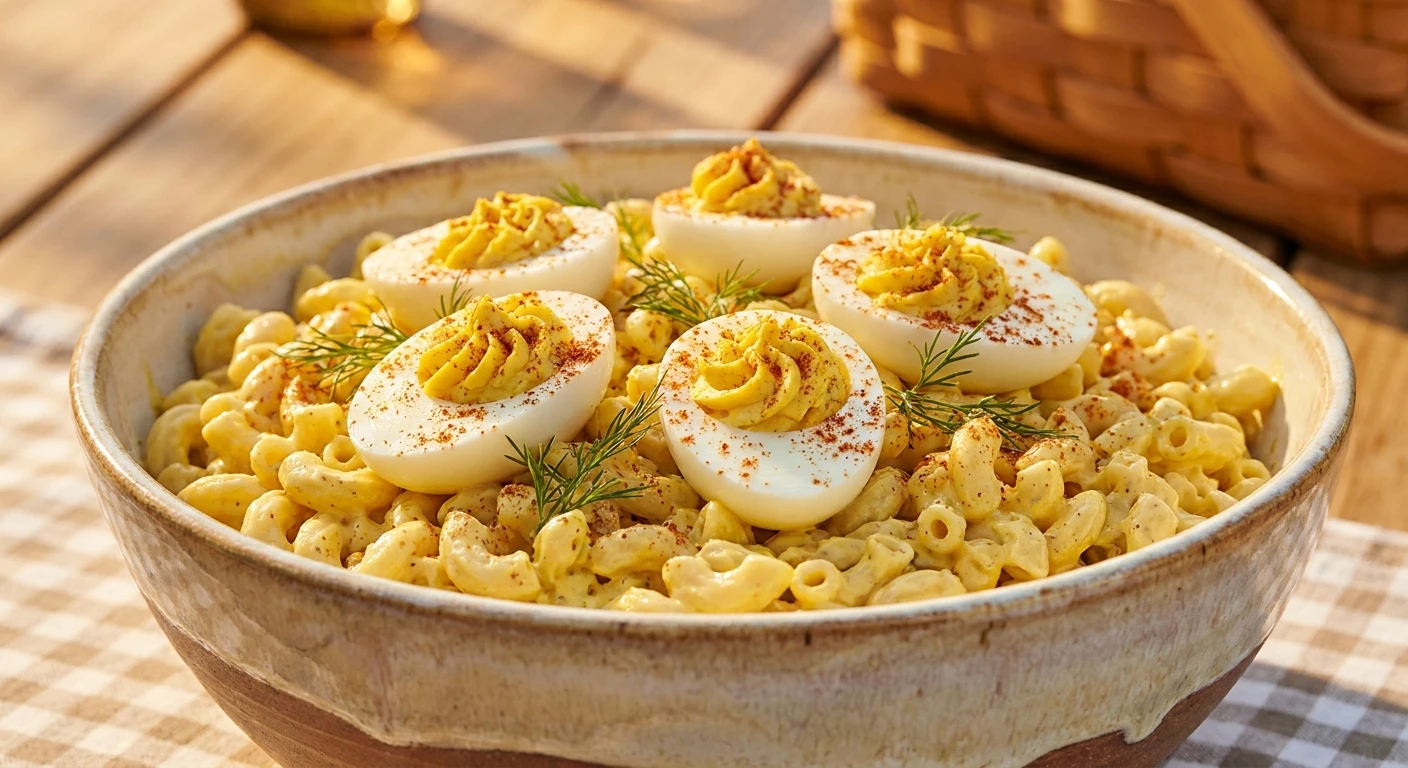
The Ultimate Deviled Egg Pasta Salad Blueprint
Whipping up a batch of deviled egg pasta salad guarantees a crowd-pleasing side dish that bridges the gap between creamy comfort food and tangy picnic classics. This culinary hybrid merges the sharp, mustard-infused bite of classic deviled eggs with the satisfying, carbohydrate-rich bulk of traditional macaroni salad. Understanding the mechanics behind this dish elevates it from a standard afterthought to the centerpiece of any gathering. The secret lies entirely in the balance of textures and the stabilization of the dressing emulsion.
Creating this masterpiece requires paying close attention to acid-to-fat ratios. The rich egg yolks combined with mayonnaise form a heavy base, which must be aggressively cut with vinegar, mustard, and a sweet element like pickle relish. Unlike standard pasta salads that often rely on bottled vinaigrettes or bland mayonnaise coatings, this specific variation demands a calculated approach to layering flavors. The paprika dusting at the end is not just visual; it adds a subtle, earthy smokiness that ties the entire profile together. By mastering the core components of this dish, you unlock a versatile recipe that performs just as well at a formal holiday dinner as it does at a casual backyard barbecue.
Read also: What to Serve with Chicken Cordon Bleu: Perfect Side Dishes; How to Make Perfect Fried Beets: A Crispy Recipe Guide.
Core Components: Building Flavor and Texture
Building a robust side dish requires understanding how different ingredients interact on a chemical and sensory level. The value proposition of a well-executed pasta salad lies in its ability to serve multiple culinary functions. For example, it acts as a cooling counterpoint to spicy barbecue ribs, while simultaneously providing enough caloric density to serve as a standalone vegetarian lunch option. The contrast between the tender pasta, the creamy yolk-based dressing, and the crisp bite of fresh celery or red onion creates a dynamic mouthfeel.
To fully grasp the anatomy of this dish, review the primary components and their functional roles:
| Ingredient Category | Ideal Selection | Flavor & Texture Impact |
|---|---|---|
| Starch Base | Elbow Macaroni, Cavatappi, or Ditalini | Provides a neutral, chewy canvas. Tubular shapes trap the dressing internally. |
| Dressing Base | High-Quality Mayonnaise & Mashed Hard-Boiled Yolks | Delivers intense richness, fat, and a velvety coating that clings to the starch. |
| Acid & Crunch | Dijon Mustard, Sweet Relish, Celery, Red Onion | Cuts through the fat with sharp acidity; adds necessary textural contrast. |
Achieving the perfect consistency requires a specific sequential method. Follow these essential assembly rules:
- Mash the yolks completely: Before adding any liquid, the cooked yolks must be pulverized into a fine crumb to prevent lumpy dressing.
- Build the emulsion slowly: Whisk the mayonnaise, mustard, and vinegar into the yolks gradually to create a stable, creamy sauce.
- Fold gently: Once the pasta and chopped egg whites are introduced, fold the mixture with a silicone spatula to prevent breaking the pasta or turning the egg whites into mush.
Origins of the Deviled Flavor Profile
The term “deviled” in a culinary context traces its roots back to Great Britain in the 18th century. Originally, it described highly seasoned, spicy, or fried dishes, often associated with a dark, rich color and a sharp bite of mustard or pepper. The concept of deviling was initially applied to meats and kidneys, but by the 19th century, it became a popular preparation method for eggs. Cooks discovered that the creamy texture of a hard-boiled egg yolk was the perfect canvas for robust, pungent spices.
The Evolution of Pasta Salads
Pasta served cold is a relatively modern invention. Traditional Italian culinary practices rarely featured chilled pasta coated in heavy emulsions. The American iteration of macaroni salad gained immense popularity post-World War II, aligning with the rise of commercial mayonnaise and the advent of the modern supermarket. Housewives and home cooks sought economical, bulk-producing recipes that could feed large families during summer months without heating the oven.
The Modern State of Hybrid Salads
Today, the fusion of deviled eggs and macaroni salad represents a peak in comfort food evolution. The modern state of this dish embraces customization. Contemporary chefs often incorporate regional twists, such as adding smoked paprika from Spain, apple cider vinegar for a rustic New England touch, or even a dash of hot sauce reflective of Southern barbecue traditions. This synthesis of two iconic side dishes highlights a broader trend in culinary arts: maximizing familiar flavor profiles by combining beloved classics into a single, cohesive recipe.
The Science of Emulsions and Starches
Understanding the underlying food chemistry guarantees a superior final product. Many home cooks struggle with dry or watery salads because they ignore how starches and fats behave under temperature changes.
The Chemistry of Mayo-Based Emulsions
The dressing relies heavily on the emulsifying properties of lecithin, a phospholipid found abundantly in egg yolks. When combined with mayonnaise (which is already an emulsion of oil and water stabilized by egg), the extra cooked yolks reinforce the structure. The acidity from the mustard and relish lowers the pH, which slightly denatures the proteins, thickening the sauce and preventing it from splitting when folded into the cold pasta.
Preventing Pasta Starch Retrogradation
When pasta cools, the starch molecules (amylose and amylopectin) begin to realign and crystallize in a process called retrogradation. This can make chilled pasta taste hard or stale. Coating the pasta with a slightly thinned, acidic dressing while it is still warm or at room temperature can inhibit this crystallization, keeping the macaroni tender even after days in the refrigerator.
- Boiling physics: Cooking pasta in heavily salted water alters the boiling point and ensures sodium penetrates the starch granules deeply.
- Yolk gelatinization: Egg yolks set firmly at 158 degrees Fahrenheit (70 degrees Celsius). Overcooking causes iron and sulfur to react, creating an unappealing green ring.
- pH buffering: Commercial mayonnaise contains enough acid to buffer bacterial growth slightly, though safe temperature control remains critical.
- Hydration balance: Pasta continues to absorb moisture as it sits. A dressing that looks too wet initially will absorb into the pasta, resulting in a perfectly creamy texture the next day.
The 7-Step Assembly Plan
Executing this recipe flawlessly requires a systematic approach. Follow this step-by-step guide to achieve the optimal texture and flavor profile.
Step 1: Boiling the Eggs
Start by placing older eggs (which peel easier) in a single layer in a saucepan. Cover them with cold water, bring to a rolling boil, then remove from heat and cover for exactly 10 to 12 minutes. This precise timing ensures a bright yellow yolk without the sulfurous green ring.
Step 2: The Ice Bath Shock
Immediately transfer the boiled eggs into a bowl filled with ice water. This rapid cooling halts the cooking process instantly and causes the egg whites to contract slightly from the shell membrane, drastically simplifying the peeling process.
Step 3: Selecting and Cooking Pasta
Boil elbow macaroni in heavily salted water. Cook the pasta about one minute past the package instructions for “al dente.” Because the pasta will firm up significantly once chilled, starting with slightly softer pasta ensures the final cold texture is perfectly tender.
Step 4: Rapid Cooling the Macaroni
Drain the pasta and rinse it briefly under cold water to stop the cooking and remove excess surface starch. Toss the cooled pasta with a very light drizzle of neutral oil to prevent sticking while you prepare the remaining ingredients.
Step 5: Crafting the Dressing Base
Slice the peeled eggs in half. Remove the yolks and place them in a large mixing bowl. Mash them completely with a fork until they resemble fine sand. Add mayonnaise, yellow mustard, Dijon mustard, sweet pickle relish, a splash of apple cider vinegar, salt, and black pepper. Whisk vigorously until the dressing is perfectly smooth.
Step 6: Chopping and Folding
Roughly chop the remaining egg whites, along with crisp celery and finely diced red onion. Add the cooled pasta, chopped egg whites, and vegetables to the bowl with the dressing. Fold everything together gently using a large silicone spatula until every noodle is heavily coated.
Step 7: Resting, Chilling, and Garnishing
Transfer the mixture to a serving dish. Cover it tightly with plastic wrap and refrigerate for at least two hours—preferably overnight. This resting period allows the pasta to absorb the flavors and the dressing to thicken. Before serving, dust the top generously with sweet or smoked paprika and garnish with fresh dill.
Myths and Realities of Pasta Salads
There are several misconceptions regarding the preparation of cold deli-style salads that can compromise the final quality.
Myth: You absolutely must use classic elbow macaroni.
Reality: While elbows are traditional, any short, textured pasta like rotini, cavatappi, or medium shells will hold the heavy dressing beautifully.
Myth: Farm-fresh eggs are best for hard-boiling.
Reality: Fresh eggs have a strong membrane that adheres tightly to the shell. Eggs that have been in the refrigerator for a week or two have larger air pockets, making them much easier to peel.
Myth: The salad tastes best immediately after mixing.
Reality: Chilling the salad for at least a few hours is mandatory. The resting phase allows the starches to absorb the acidic dressing, marrying the flavors harmoniously.
Myth: Mayonnaise makes the salad spoil instantly at room temperature.
Reality: Commercial mayonnaise is highly acidic and pasteurized, making it quite stable. The real spoilage risk usually comes from the low-acid ingredients like eggs and onions, though you should still adhere to strict food safety temperature guidelines.
Frequently Asked Questions
Can I freeze this salad?
No. Mayonnaise-based dressings separate and break when frozen, and the pasta will become unpleasantly mushy upon thawing.
How long does it last in the fridge?
Stored in an airtight container, it will maintain its quality and food safety for up to three to four days.
Can I use Greek yogurt instead of mayonnaise?
Yes. You can substitute up to half of the mayonnaise with plain, full-fat Greek yogurt to reduce calories while maintaining a creamy texture.
What is the best mustard to use?
A combination of classic yellow mustard for the traditional “deviled” color and Dijon mustard for complex sharpness yields the best results.
Should I rinse the pasta?
Yes. Unlike hot pasta dishes where you want surface starch to bind a warm sauce, cold salads require rinsing to stop the cooking process and prevent clumping.
Why did my dressing get watery?
Watery dressing usually happens if the pasta was not drained properly, or if vegetables with high water content (like cucumbers) were added without being salted and drained first.
Is paprika strictly necessary?
While technically optional, paprika provides the signature aesthetic and a subtle earthy flavor that characterizes a true deviled egg profile.
Can I add protein to make it a main dish?
Absolutely. Fold in diced ham, cooked bacon crumbles, or even cold water shrimp to easily convert this side dish into a heavy main course.
How do I fix a dry salad the next day?
Simply stir in a tablespoon or two of milk, a splash of pickle juice, or an extra spoonful of mayonnaise to revive the creamy texture.
What herbs work best as a garnish?
Fresh chopped dill or flat-leaf parsley provide a bright, herbaceous contrast to the heavy, rich dressing.
Mastering this classic side dish relies entirely on balancing acidic brightness against rich, fatty textures, all while respecting the science of starches. By following these precise steps and utilizing the optimal ingredients, you ensure a flawless culinary experience. Prepare a batch of this iconic comfort food for your next gathering, allow it to chill properly, and watch it become the most talked-about dish on the table.



Leave a Reply