

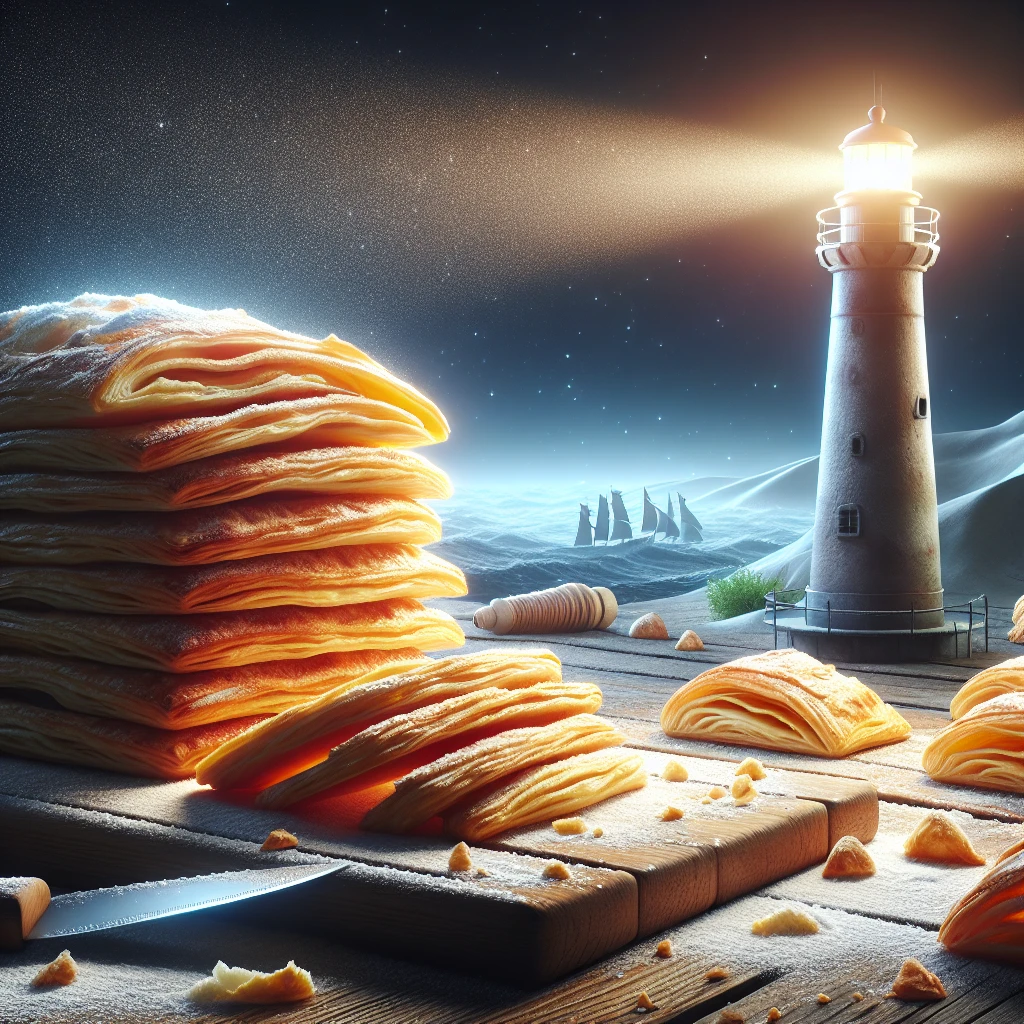
Why You Need Butter Puff Pastry Sheets Right Now
Have you ever wondered why local artisanal bakeries smell so incredibly good, and whether you can replicate that magic at home with pure butter puff pastry sheets? Trust me, you absolutely can. A few years back, I was walking down the cobblestone streets near Rynok Square in Lviv, waiting for a friend on a chilly autumn morning. The air was literally thick with the mesmerizing, sweet aroma of melting butter and caramelized sugar. I ducked into a tiny, unassuming bakery and ordered a freshly baked pastry. When I took a bite, the outer crust practically shattered into a million delicate, buttery flakes. It was an absolute revelation. The local baker leaned over the counter and told me his secret: he never compromised on the fat source. It had to be strictly pure butter, meticulously folded to create endless microscopic layers. Ever since that trip to Ukraine, I have been absolutely obsessed with replicating that exact shattering crunch and rich flavor in my own kitchen. We are breaking down exactly how to use these golden sheets to level up your baking game effortlessly, without spending three days laminating dough by hand. Whether you are aiming for sweet treats or savory masterpieces, understanding how to handle this ingredient changes everything about how you bake.
The Core Magic Behind the Dough
What actually makes true butter puff pastry sheets so remarkably special compared to the standard alternatives you find buried in the back of the supermarket freezer? The answer comes down to lamination and ingredient purity. Lamination is the process of folding and rolling butter into dough repeatedly. When you use real butter instead of shortening or oils, you get a completely different chemical reaction in the oven. Real dairy fat contains water, which evaporates quickly when hit with high heat, pushing the layers apart. Artificial fats just melt and turn your dough greasy. Let’s look at a straightforward comparison so you can see exactly why the authentic version wins every single time.
| Feature | Pure Butter Sheets | Oil/Margarine-Based Sheets |
|---|---|---|
| Flavor Profile | Rich, nutty, and authentic with a melt-in-your-mouth finish. | Flat, sometimes artificial, and leaves a noticeable greasy film. |
| Rise and Flakiness | Incredible height, shattering crispness, clearly defined layers. | Dense, heavy, often struggles to achieve significant volume. |
| Digestibility | Natural dairy fat processes easily in the digestive system. | Heavily processed oils can feel heavy and sit in the stomach. |
When you commit to the good stuff, the value proposition is absolutely immense. Think about making classic Napoleons for a family gathering; using pure sheets means you get that signature delicate crunch instead of a chewy, disappointing mess. Or imagine throwing together a quick savory tart with caramelized onions and goat cheese. The pastry acts as a premium canvas that elevates the simple ingredients into a gourmet meal. To handle it correctly and get those massive, airy layers, you have to follow a few rigid rules.
- Keep it absolutely freezing cold: The moment your fat gets too warm, it absorbs into the flour instead of separating the layers. Work fast and put it back in the fridge if it gets soft.
- Flour your surface correctly: A light dusting prevents sticking, but too much flour dries out the exterior. Brush off any excess before you fold or shape your creations.
- Bake at a shockingly high heat: You need an oven preheated to at least 400°F (200°C) to immediately create the steam necessary to push the dough upward.
Origins of the Folded Dough
Let’s take a step back and look at the fascinating history behind this culinary marvel. The concept of layered dough actually traces its roots back centuries, though the exact timeline is wrapped in a bit of legend. Many historians credit a French apprentice named Claudius Gele in the early 1600s. The story goes that he wanted to bake a rich loaf of bread for his sick father, who was restricted to a diet of only flour, butter, and water. Instead of kneading the butter directly into the mixture, Gele folded it inside the dough repeatedly. The master baker warned him that the fat would simply melt out during baking, but the result was a towering, flaky masterpiece that defied all logic of the era. Whether this is entirely historically accurate or slightly embellished over time, it marks the recognized birth of the laminating technique.
Evolution Through the Ages
Fast forward to the 18th and 19th centuries, and the technique caught the attention of European royalty. The legendary French chef Marie-Antoine Carême famously perfected the method. He mapped out the exact mathematics of the folding process, standardizing the legendary ‘six turns’ that result in precisely 729 distinct layers of butter and dough. Carême turned baking into an architectural endeavor, using these incredibly stable but delicate sheets to build massive, towering centerpieces for royal banquets. Suddenly, this wasn’t just a simple baked good; it was an elite symbol of culinary prowess. Bakers across the continent started mimicking his precise geometric folds, passing the strict methodology down through generations of apprentices.
Modern State of Laminating
Today, the landscape looks remarkably different. By the time we hit 2026, grocery store freezers and specialty food distributors have completely upgraded their offerings. You no longer have to spend two entire days chilling, rolling, and folding just to make a quick weekend dessert. Modern automated pastry rollers can create perfectly uniform sheets of dough without melting the fat, maintaining the exact pressure needed to simulate Carême’s hand-rolled perfection. However, the modern market is deeply divided between cheap oil substitutes and premium authentic versions. Discerning home bakers now prioritize pure ingredients, realizing that the automated process only yields spectacular results if the raw materials are uncompromised.
The Thermodynamics of Lamination
If you want to bake like a professional, you need to grasp the actual science happening inside your oven. It all boils down to thermodynamics and vapor pressure. Butter is an emulsion. It consists of roughly 80% to 82% milk fat, about 16% to 18% water, and a tiny percentage of milk solids. When you slide your cold butter puff pastry sheets into a blazing hot oven, that 16% water content rapidly reaches its boiling point before the surrounding structural network has a chance to fully set. The water turns into steam, expanding forcefully. Because the steam is trapped between the thin layers of fat and dough, it forces the layers upward and outward. If the oven is too cool, the fat simply liquefies and pools onto your baking sheet, resulting in a flat, sad cracker instead of a towering pastry.
Gluten Network and Butter Traps
The secondary scientific component is the gluten network. When you roll out the flour and water mixture, you are developing gluten strands. These strands need to be elastic enough to stretch upward when the steam hits, but strong enough to hold the architecture in place once the moisture evaporates. The lipid crystallization of the dairy fat acts as a physical barrier, effectively acting as tiny, microscopic ‘traps’ that stop the gluten sheets from fusing together. When baked, the proteins undergo the Maillard reaction, browning beautifully and creating complex, savory flavor compounds. To break down the science clearly, here are some rapid-fire facts:
- Expansion Rate: The rapid conversion of water to steam can lift the dough to nearly eight times its original raw height.
- Melting Point Dynamics: Premium European butter has a higher fat content and a specific melting point that gives you a wider margin of error before the layers collapse.
- Maillard Reaction Temp: The signature golden-brown color and nutty flavor profile only begin to develop rapidly once the exterior surface temperature hits around 300°F (150°C).
- Resting Period Necessity: Resting the dough in the fridge isn’t just about chilling the fat; it actively relaxes the stressed gluten strands so the pastry doesn’t shrink aggressively in the oven.
Day 1: Classic French Palmiers
If you have a week to experiment, I have built the ultimate roadmap for you. We kick off Day 1 with the simplest, most elegant cookie in existence: the Palmier. All you need is a generous coating of coarse sugar scattered over your butter puff pastry sheets. You fold the opposite sides inward so they meet in the exact center, slice them into thin pieces, and bake. The sugar instantly caramelizes in the intense heat, forming a crunchy, sweet glaze over the intensely flaky dough. It takes ten minutes of prep and pairs brilliantly with your morning espresso.
Day 2: Savory Cheese Straws
On Day 2, we pivot to savory. Cheese straws are the ultimate crowd-pleasing snack. Brush your chilled sheet lightly with egg wash, then coat it entirely in freshly grated Gruyere and a heavy pinch of smoked paprika. Fold it in half to lock the cheese inside, roll it slightly, and cut it into long strips. Twist each strip a few times before placing it on parchment paper. The twisted architecture creates incredible textural contrast as the cheese bubbles and crisps along the edges.
Day 3: Quick Fruit TartsDay 3 brings a vibrant dessert. Cut your dough into even squares. Take a sharp knife and lightly score a smaller square inside each piece, creating a border. Prick the inner square heavily with a fork—this stops the center from rising wildly. Spoon a bit of fresh raspberry jam or thinly sliced apples directly into the center and bake. The borders will puff up dramatically around the fruit, creating a stunning bakery-style tart with barely any effort.
Day 4: Sausage Rolls with a Twist
Day 4 is all about comfort food. Skip the boring hot dogs and grab some premium, highly seasoned local sausage meat. Lay it in a line down the center of a long rectangle of dough, wrap it tightly, and crimp the edges with a fork. Brush the whole log heavily with egg yolk and sprinkle toasted fennel seeds on top. Slice them into bite-sized pieces and bake until the meat is fully cooked and the exterior is a deep, shattering golden brown.
Day 5: Mushroom Wellingtons
Day 5 steps up the elegance. We are doing individual, vegetarian Wellingtons. Sauté finely chopped mushrooms with garlic, thyme, and a splash of dry sherry until all the moisture evaporates—this dry mixture is called a duxelles. Place a generous spoonful onto a square of dough, fold the corners up to create a sealed parcel, and bake. The dry mushrooms prevent the bottom from getting soggy, letting the pastry reach its full, spectacular height.
Day 6: Cream Horns
Day 6 challenges your technique slightly. You will need metal baking cones for this. Cut your dough into long, continuous ribbons. Wrap the ribbons tightly around the metal cones, slightly overlapping the edges so they seal together as they bake. Once they come out of the oven, slide the metal out immediately while they are hot. Once cooled, pipe them full of lightly sweetened whipped cream mixed with vanilla bean paste. The contrast between the shattered shell and the soft cream is unbelievable.
Day 7: The Ultimate Mille-Feuille
On the final day, we tackle the masterpiece. Mille-Feuille translates to ‘a thousand leaves.’ You take a full sheet, prick it entirely with a fork, cover it with parchment paper, and place another heavy baking tray directly on top. Baking it flat forces the layers to become intensely dense and perfectly straight. Once baked and completely cooled, cut the massive crisp into three identical rectangles. Stack them with layers of thick, rich vanilla pastry cream in between. Top it with a simple icing glaze. It is the ultimate flex of your newfound baking skills.
Myth: Making it from scratch is always better
Reality: While doing it entirely by hand is a fun weekend project to understand the science, high-quality commercial sheets made with real ingredients are practically indistinguishable from homemade. Even top-tier restaurants regularly purchase pre-laminated dough from specialty suppliers to ensure absolute consistency.
Myth: You can bake it at low temperatures
Reality: Low and slow is the absolute enemy of laminated dough. If you bake it at 325°F (160°C), the moisture will slowly evaporate without creating the violent burst of steam needed for lift. You will end up with a greasy, dense cracker. Always crank the heat high.
Myth: Margarine gives the exact same flakiness
Reality: Margarine lacks the specific water content and melting properties of natural dairy fat. It leaves a distinct waxy film on the roof of your mouth and fundamentally fails to produce the sky-high layers you want. The flavor is entirely completely incomparable.
Myth: It can sit at room temperature for hours before baking
Reality: If your prepared tart sits on the counter while you wait for guests to arrive, the fat will bleed right into the flour. If you prep ahead of time, keep everything wrapped tightly in the refrigerator until the exact moment it needs to hit the hot oven.
Myth: Leftovers stay fresh for days on the counter
Reality: The delicate, airy structure absorbs ambient humidity incredibly fast. Within twelve hours, the crispness fades. You can revive them slightly with a quick blast in a hot oven, but they are always drastically better consumed on the exact day they are baked.
Can I freeze baked puff pastry?
Yes, but it is vastly better to freeze unbaked, shaped items. Baking them fresh straight from the freezer yields a much crispier result than trying to thaw and reheat a fully baked product.
Why is my pastry shrinking in the oven?
This happens when the gluten hasn’t relaxed. If you roll the dough out aggressively and immediately throw it into the oven, the stretched proteins will snap back. Always rest your cut shapes in the fridge for twenty minutes.
Can I re-roll the scraps?
You can, but you will destroy the precise layering. Stack the scraps directly on top of each other and gently press them down. Never crumple them into a ball, or you will completely ruin the lamination.
What is the ideal thickness for rolling?
Most commercial blocks or thick sheets should be gently rolled out to about one-eighth of an inch (around 3mm). Any thinner, and you risk completely crushing the delicate fat barriers.
Why did the butter leak out onto the pan?
Your dough got too warm before baking, or your oven wasn’t properly preheated. The fat melted before the steam could blast the dough upward. Keep it chilled and the oven blazing hot.
How do I get a perfectly shiny golden top?
An egg wash is mandatory. Beat an egg thoroughly with a tiny pinch of salt and a splash of milk. Brush it evenly, making absolute sure it doesn’t drip down the cut sides, which can glue the layers together.
Can I use it for a pie crust?
You can use it for a top crust easily, but it is generally too delicate and airy for a bottom crust that holds heavy, wet fruit fillings. It tends to get extremely soggy on the bottom of deep-dish pies.
Does the brand really matter?
Tremendously. In 2026, the market is flooded with subpar products. You must flip the box over and read the ingredients. If the word ‘margarine’, ‘shortening’, or ‘palm oil’ appears, put it right back on the shelf.
Can I microwave it to defrost it quickly?
Absolutely not under any circumstances. Microwaving will spot-melt the fat deposits inside the dough. Always thaw it slowly in the refrigerator overnight, or on the counter for a short, closely monitored period.
Is it vegan?
Authentic versions are heavily reliant on dairy, so no. While vegan alternatives exist using advanced plant-based solid fats, genuine butter puff pastry sheets are decidedly not suitable for a strict vegan diet.
Ultimately, learning how to master butter puff pastry sheets is one of the highest-yield skills you can develop in your home kitchen. You unlock the ability to throw together seemingly complex, breathtakingly beautiful meals and desserts on an idle Tuesday evening. Stop settling for the heavy, artificial, oil-laden alternatives. Hunt down the good stuff, respect the temperature rules, and start experimenting with the recipes we laid out. Your kitchen is about to smell better than that tiny, magical bakery in Lviv. Go preheat your oven and start folding!
Leave a Reply