

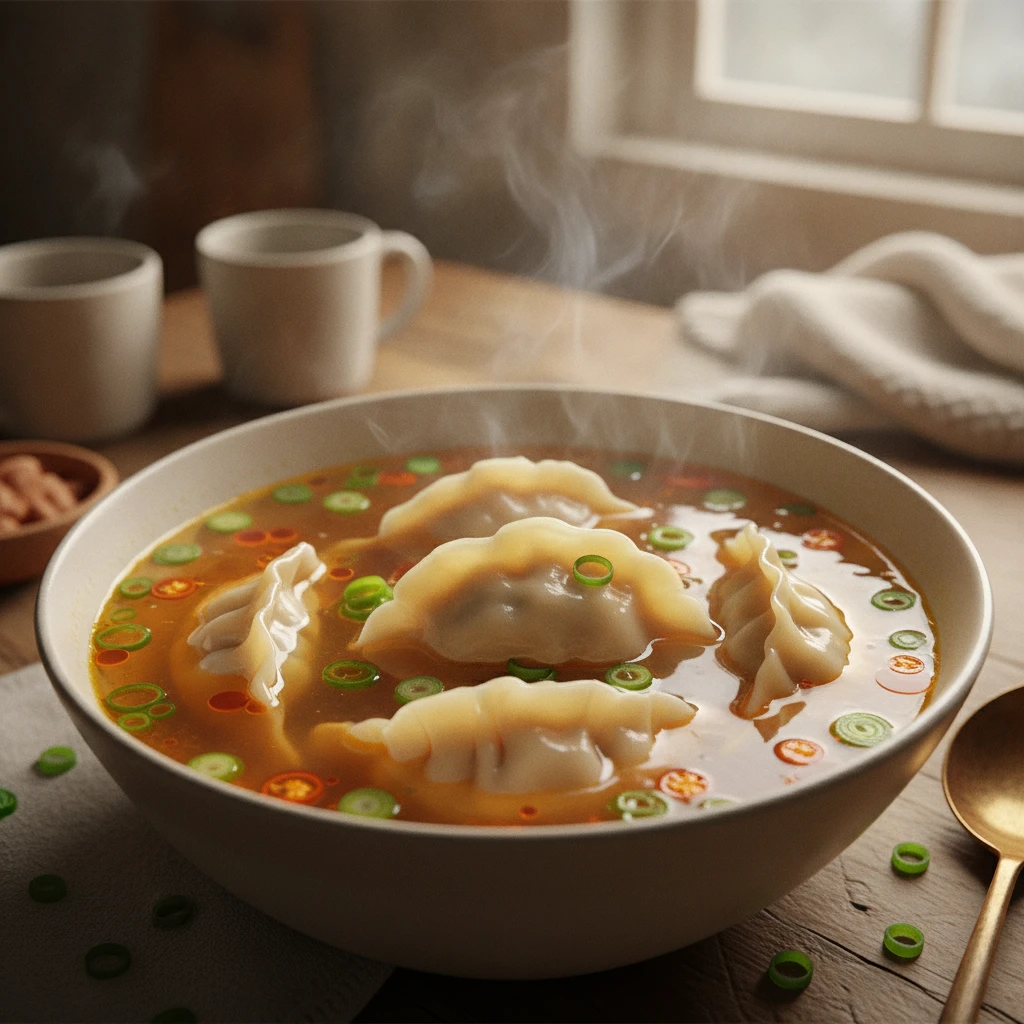
The Ultimate Guide to Making a Flawless Bouillon Won Ton
Let me tell you a secret about making the perfect bouillon won ton right at home. It was a freezing evening here in Kyiv back in early 2026, the snow piling up against the windows, and I found myself craving something deeply comforting. I did not just want a standard soup; I wanted that magical combination of a crystal-clear, slow-simmered broth paired with incredibly delicate, flavor-packed dumplings. That is when I realized that crafting this dish is not just cooking—it is an act of pure love. You take simple ingredients and turn them into a masterpiece of texture and flavor. The robust depth of a French-style clarified stock meets the precise, tender bite of an Asian dumpling. My goal for you is to skip the takeout menu and master this yourself. Once you learn how to balance the rich base with a perfectly folded wrapper, your weeknight dinners will completely change. Grab a warm cup of tea, pull up a chair, and let us chat about building the best bowl of soup you have ever tasted.
Creating a truly spectacular soup means paying close attention to both components: the liquid and the filling. Most people just throw some store-bought stock into a pot, boil some frozen dumplings, and call it a day. But if you want to elevate your home cooking, you need to treat the liquid gold like a fine wine. The secret is clarification. You want a base that is so clear you can read a newspaper through it, yet packed with so much umami it leaves your lips slightly sticky from the natural gelatin. On top of that, your dumplings need a filling that is juicy and well-seasoned, encased in a wrapper that holds its shape without becoming gummy. This dish offers incredible nourishment during cold months and acts as a massive confidence booster for your culinary skills.
Read also: Authentic tortellini in brodo Recipe Guide; Classic Old Fashioned Swiss Steak Recipe.
| Broth Type | Flavor Profile | Best Dumpling Filling |
|---|---|---|
| Clear Chicken Base | Light, highly aromatic, subtle herbaceous notes | Classic minced pork and sweet shrimp |
| Roasted Beef Bone | Intensely rich, deep mahogany color, strong umami | Ground beef with fresh scallion and ginger |
| Mushroom & Kombu | Earthy, slightly sweet, clean ocean finish | Firm tofu, shiitake, and shredded Napa cabbage |
To really nail the foundation of this meal, you must follow a strict process for your liquid base. Here are the non-negotiable steps to building that incredible foundation:
- Blanch the bones first: Cover your meat or bones with cold water, bring it to a hard boil for five minutes, and dump that water. This removes all the blood and impurities that cause cloudiness.
- The low and slow simmer: When you start your actual stock, never let it reach a rolling boil. Keep it at a bare tremble. Boiling emulsifies the fats and ruins the clarity.
- Skim relentlessly: Keep a spoon nearby and skim the foam off the top for the first two hours. This step is tedious but absolutely mandatory for a glass-like finish.
- Season at the finish line: Do not add soy sauce or salt until the very end. As the liquid reduces, flavors concentrate, and salting too early guarantees a ruined, overly salty batch.
Ancient Origins of the Dumpling Broth
The concept of wrapping meat in dough and serving it in a hot liquid is practically as old as civilization itself. In ancient China, specifically during the Han Dynasty, these delicate parcels were considered medicinal. Cooks would fill them with warming herbs and spices, boiling them to fend off winter chills. The original name translates roughly to “swallowing clouds,” which perfectly describes the way a well-made wrapper floats in a clear soup. People would gather around large steaming pots in the bustling street markets, sipping from wooden bowls. It was food for the soul, designed to be both filling and restorative.
Evolution Across Continents
As trade routes expanded, so did culinary techniques. When European influences began mingling with Asian traditions, something fascinating happened. The classic French technique of creating a consommé—a highly clarified, intense meat stock—found its way into fusion kitchens. Chefs realized that replacing the murky, quick-boiled water used in street food with a refined, crystal-clear liquid elevated the entire experience. It was no longer just peasant food; it became a dish worthy of high-end banquet tables. The marriage of the meticulous French clarification process with the rustic, satisfying Chinese dumpling birthed a completely new culinary category.
Modern State of Soups
Fast forward to the modern kitchen of 2026, and we are seeing a massive revival of these slow-food traditions. Home cooks are moving away from instant noodles and embracing the therapeutic process of cooking from scratch. We have access to better ingredients, better tools, and a global understanding of flavor profiles. You can now easily find high-quality wrappers at your local market, or even mill your own flour to create custom dough. The beauty of the modern approach is that we respect the history while using contemporary knowledge to make the process foolproof.
The Science of Clarification
Let us talk about what is actually happening in your pot. Making a clear soup is essentially an exercise in protein manipulation. When you heat bones and meat, proteins like collagen begin to denature and break down into gelatin. This happens optimally around 160°F to 180°F. If you push the temperature to 212°F (a full boil), the violent agitation forces fats, coagulated blood proteins, and minerals to violently mix into the water, creating a permanent, cloudy emulsion. By keeping the heat low, you allow the gelatin to gently extract while the impurities float to the surface in large, easily removable clumps. Sometimes chefs use an “egg raft”—a mixture of egg whites and lean meat—which acts like a literal net, gathering every microscopic particle of cloudiness as it cooks, leaving behind pure, amber-colored perfection.
Gluten Network in Dumpling Wrappers
The dough is just as scientifically fascinating. You are working with wheat flour and water, relying entirely on the formation of a gluten network. When you knead the dough, two proteins—glutenin and gliadin—link together to form strong, stretchy bonds. If you over-knead, the wrappers become tough and rubbery. If you under-knead, they dissolve into mush the second they hit the hot liquid. Resting the dough allows the starches to fully hydrate and the gluten strands to relax, giving you that perfect slippery, chewy texture that contrasts beautifully with the tender meat inside.
- Collagen conversion: Turns tough connective tissue into rich, mouth-coating gelatin.
- Osmotic pressure: Ensures that a properly salted filling stays juicy instead of leaking its moisture out into the cooking water.
- Starch gelatinization: Happens when the wrappers cook, turning them from opaque white to translucent and glossy.
- Maillard reaction: If you roast your bones before simmering, amino acids and reducing sugars brown, adding incredible depth and complexity.
Day 1: Sourcing the Bones and Meat
Great food starts with great shopping. Go to your local butcher and ask for a mix of chicken carcasses, feet (for massive gelatin content), and some pork bones. For the filling, grab pork shoulder with a good 70/30 meat-to-fat ratio. Fat is flavor, and lean meat will result in a dry, crumbly center.
Day 2: The Slow Simmer
Dedicate a lazy Sunday to the stock. Blanch everything first, rinse it clean, and then set your pot on the lowest possible burner setting. Add a few slices of ginger and some scallion whites. Let it gently bubble away for at least 6 to 8 hours. Your house will smell absolutely incredible.
Day 3: Clarifying the Liquid Gold
Strain your masterpiece through a fine-mesh sieve lined with cheesecloth. Do not press on the solids; just let gravity do the work. Chill the liquid overnight in the fridge. The next morning, you can easily lift the solidified disc of fat right off the top, leaving you with pure, clear jelly.
Day 4: Preparing the Filling
Chop your pork finely by hand if you can—it creates a much better texture than machine grinding. Mix in soy sauce, a dash of sesame oil, white pepper, finely grated ginger, and a pinch of sugar. Stir it vigorously in one direction until it becomes sticky and paste-like. This is called developing the myosin, and it keeps the meatball bouncy.
Day 5: The Folding Masterclass
Set up a comfortable workstation at your kitchen table. Place a small spoonful of filling in the center of a wrapper. Moisten the edges with a dab of water, fold it in half to make a triangle, and press out all the air. Bring the two bottom corners together, cross them over, and pinch hard to seal. It takes a few tries to get the rhythm, but it becomes incredibly relaxing.
Day 6: Assembly and First Tasting
Bring a separate pot of plain water to a boil. Never cook the dumplings directly in your precious, clarified stock, as the loose flour from the wrappers will completely ruin its clarity. Boil the dumplings until they float, then carefully transfer them with a slotted spoon into a warmed bowl.
Day 7: Flavor Adjustments and Serving
Heat your clear base. Taste it and add a tiny splash of light soy sauce or sea salt until it sings. Pour the steaming hot liquid over the resting dumplings. Garnish with razor-thin slices of scallion and perhaps a few drops of roasted chili oil for a pop of color and heat. Grab a spoon and enjoy your hard work.
Myth: You must use boiling water to cook the dumplings properly.
Reality: A violent, rolling boil will actually tear the delicate wrappers apart before the meat inside has a chance to cook. You want a gentle, steady simmer to ensure they cook evenly and maintain their beautiful shape.
Myth: Store-bought boxed broth is perfectly fine as a substitute.
Reality: Commercial boxed stocks are heavily processed and severely lack the natural gelatin found in homemade versions. You will miss out on the rich, luxurious mouthfeel that truly defines this comforting dish.
Myth: Intricate folding techniques are required for it to taste authentic.
Reality: The shape of the dough is purely aesthetic. As long as you seal the edges tightly so the juices do not escape during cooking, a simple half-moon or triangle fold tastes exactly the same as a complicated pleat.
Can I freeze the raw dumplings?
Absolutely. Place them on a parchment-lined baking sheet not touching each other, freeze until solid, and then transfer to a zip-top bag. Cook them straight from frozen, adding an extra minute or two to the boiling time.
What is the absolute best meat to use?
Pork shoulder or collar is the gold standard due to its fat content. You can also mix half pork and half chopped raw shrimp for an incredibly sweet, snappy texture.
How long does the homemade stock last?
It will keep perfectly in an airtight container in the refrigerator for up to 4 or 5 days. If you want to keep it longer, freeze it in quart containers for up to six months.
Can I make this dish completely vegetarian?
Yes. Build an intense umami base using dried shiitake mushrooms, kombu (kelp), and roasted root vegetables. Fill the wrappers with a mix of pressed tofu, cabbage, and wood ear mushrooms.
Why did my wrapper break during cooking?
Usually, this happens if you overstuffed the wrapper, failed to press out all the trapped air pockets before sealing, or let the cooking water boil too aggressively.
Do I cook them directly in the final soup?
Never. Always boil them in a separate pot of plain water. The excess starch on the wrappers will instantly turn your beautifully clear masterpiece thick and cloudy.
What garnishes work best?
Keep it simple so the hard work shines. Finely chopped scallions, a tiny pinch of white pepper, and a few drops of pure, toasted sesame oil are all you need.
Making a proper bouillon won ton is a journey of patience, technique, and incredible aromas filling your kitchen. The contrast between the rich, clear liquid and the savory, tender bite is unlike anything else you can make at home. Do not be intimidated by the steps; just take it one phase at a time. I promise that the moment you take that first sip, every single minute of effort will make sense. Grab your ingredients, set aside some time this weekend, and start simmering your way to comfort food perfection!



Leave a Reply