

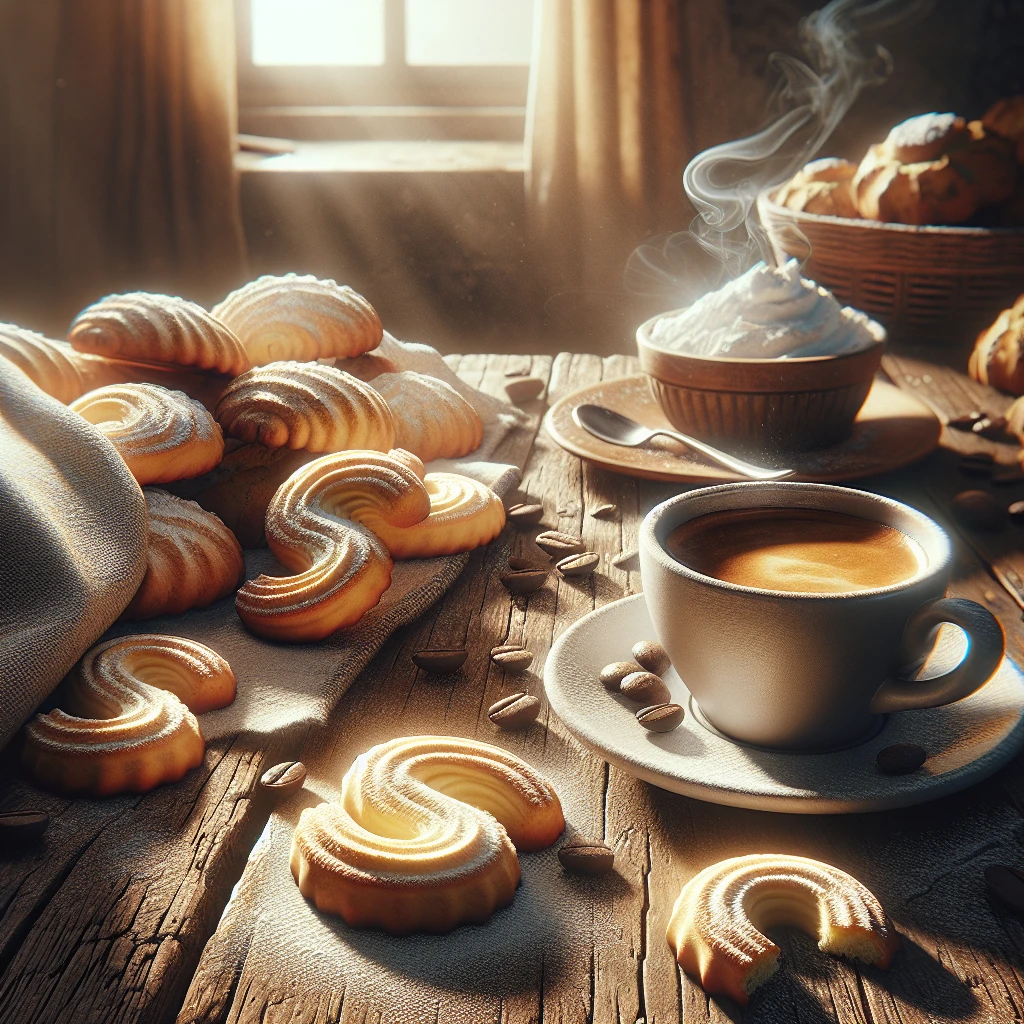
Mastering Authentic Italian S Cookies at Home
Ever wondered why your homemade italian s cookies rarely taste like those magical treats sitting in the glass display case of a traditional Sicilian bakery? You certainly are not alone. Making these seemingly simple baked goods requires more than just mixing flour and sugar; it demands precision, patience, and a bit of rustic intuition. I still clearly remember a bitter winter afternoon walking near Khreshchatyk in Kyiv, ducking into a small, inconspicuous café to escape the freezing wind. The barista, an older gentleman with roots in Palermo, handed me a freshly brewed espresso along with a modest, powdered sugar-dusted biscuit. One bite of that perfectly dense yet delicate treat shifted my entire perspective on baking. Those simple curves held immense flavor, sparking a long journey to perfect the recipe.
I spent months tweaking ratios, testing different fats, and researching old-world techniques to recreate that exact experience. Fast forward to 2026, where culinary trends lean heavily toward maximalist, over-the-top desserts, yet the quiet, comforting elegance of classic regional pastries still holds unmatched appeal. We are going to explore the mechanics, the deeply rooted history, and the precise step-by-step methodology required to bring these iconic sweets to life in your own kitchen. You will learn exactly how to balance the citrus notes, achieve the iconic crumb structure, and turn everyday pantry staples into an unforgettable coffee companion.
Understanding the anatomy of these classic treats requires looking at their fundamental components. At their heart, these are rustic, lightly sweetened shortbread variations designed to be sturdy enough for dipping but tender enough to melt beautifully on your tongue. The secret lies in a very specific fat-to-flour ratio, yielding a crumbly yet cohesive texture. There are distinct reasons why you should master this specific dough. First, they serve as the ultimate vehicle for hot beverages. Whether you prefer a dark, robust espresso, a frothy cappuccino, or even a delicate Earl Grey tea, the biscuit absorbs the liquid without immediately turning into mush. Second, they make phenomenal edible gifts. Because they contain minimal moisture, they boast a remarkably long shelf life, making them ideal for packaging in decorative tins for holidays or shipping to distant friends.
Let us look closely at how different approaches affect the final product:
| Cookie Source | Texture Profile | Flavor Characteristics |
|---|---|---|
| Commercial Store-Bought | Typically dry, overly hard, prone to shattering | Artificial vanilla extract, flat sweetness |
| Artisan Bakery | Crisp outer shell, pleasantly soft center | Fresh lemon zest, rich dairy notes |
| Homemade Mastery | Perfectly customized crunch, fresh snap | Deep vanilla bean, subtle authentic citrus |
Achieving the ‘Homemade Mastery’ level depends on a few non-negotiable elements. The foundation of your success relies on the following components:
- High-Quality Fat: European-style butter with at least 82% butterfat provides the necessary richness and structural integrity, preventing the dough from spreading excessively in the oven.
- Fresh Citrus Oils: Using freshly grated lemon or orange zest releases essential oils directly into the sugar, creating a bright, aromatic profile that extracts simply cannot replicate.
- The Right Leavening Agent: While baking powder works in a pinch, traditional recipes often utilize baker’s ammonia to produce a uniquely crisp texture and a fast, even rise.
When you bring these elements together thoughtfully, the result speaks for itself, elevating your casual afternoon coffee break into a genuine culinary event.
Ancient Origins of Shaped Biscuits
Tracing the lineage of shaped biscuits takes us far back into the culinary archives of the Mediterranean. Long before modern ovens existed, bakers needed reliable, long-lasting provisions that could survive extended travel. The concept of twice-baked or low-moisture goods became highly valued among merchants and sailors. Early iterations of these sweets were far less refined, utilizing honey, coarse grain flour, and whatever wild fats were available. Shaping dough into letters or recognizable symbols originally held ceremonial or religious significance, often baked for specific feast days to honor local patron saints.
The Evolution Through the Renaissance
As trade routes expanded and ingredients like refined sugar and exotic spices became more accessible to the European elite, regional baking underwent a massive shift. Monasteries and convents across Italy played a massive role in refining pastry techniques. Nuns would spend days preparing intricate sweets for religious holidays and wealthy benefactors. The distinct S-shape emerged during this era, though historians debate its exact origin. Some claim the shape represents the word ‘sweet’ or specific family crests, while others argue it was simply a practical way to ensure the dough baked evenly without a raw center. Whatever the initial reason, the elegant curve became a hallmark of Sicilian and Southern Italian bakeries.
The Modern State of Traditional Italian Baking
Today, traditional baking relies heavily on nostalgia, yet it seamlessly incorporates modern efficiency. While large-scale manufacturing has standardized many regional treats, artisan bakers fiercely protect heirloom recipes. You will find that modern interpretations occasionally incorporate unexpected additions like anise extract, almond flour, or a half-dip in dark chocolate. Despite these contemporary twists, the fundamental respect for quality ingredients remains unyielding. The enduring popularity of these pastries proves that true culinary excellence does not require flashy gimmicks; it simply requires a deep understanding of flavor balance and technique.
The Chemical Reactions in the Dough
Baking is essentially a series of controlled chemical reactions, and this specific dough acts as a fascinating scientific canvas. When you mix the ingredients and apply heat, a multitude of processes happen simultaneously. The most crucial is the Maillard reaction, a complex interaction between amino acids and reducing sugars that occurs above 140 degrees Celsius. This reaction is solely responsible for the beautiful golden-brown color on the edges of your italian s cookies, as well as the complex, toasted flavor notes that develop during baking. Additionally, the type of leavening agent dramatically alters the internal crumb structure. Many old-school bakers swear by Ammonium Carbonate, widely known as baker’s ammonia. Unlike standard double-acting baking powder, baker’s ammonia dissipates completely during the baking process, leaving behind absolutely no soapy residue while creating microscopic air pockets that result in an unbelievably crisp, airy bite.
Temperature Control and Gluten Development
Another highly critical factor involves manipulating temperature and managing gluten networks. Wheat flour contains proteins named glutenin and gliadin. When these proteins meet moisture from the eggs and butter, they link together to form gluten. For bread, you want a strong gluten network; for short, crumbly biscuits, excessive gluten is your absolute worst enemy. Managing this requires strict thermal and mechanical discipline.
Here are the core scientific facts you must manage:
- Fat Coating: Creaming butter with sugar physically coats the flour proteins with fat during the mixing phase, inhibiting water absorption and strictly limiting gluten formation.
- Thermal Arrest: Chilling the dough solidifies the butterfat. When cold dough enters a hot oven, the exterior sets before the interior fat melts completely, preventing the biscuit from flattening into a puddle.
- Sugar Hydration: Allowing the dough to rest for an hour before baking gives the sugar crystals adequate time to draw out moisture from the eggs, resulting in a more uniform spread and a smoother surface finish.
- Evaporation Rates: The distinctive S-shape creates a higher surface-area-to-volume ratio compared to a standard round drop, promoting faster moisture evaporation and yielding that signature dry crunch.
Creating the ultimate batch requires following a strict, uncompromising procedure. Think of this not just as a recipe, but as a mandatory blueprint for culinary success.
Step 1: Gathering and Measuring Precisely
Baking heavily relies on exact measurements. Use a digital kitchen scale to weigh out 500 grams of all-purpose flour, 150 grams of granulated sugar, 200 grams of unsalted butter, and two large room-temperature eggs. Precision prevents the dough from becoming excessively dry or unmanageably sticky. Guessing volumes with cups often leads to massive inconsistencies.
Step 2: Creaming Butter and Sugar
Place your softened butter and sugar into the bowl of a stand mixer fitted with a paddle attachment. Beat them together on medium-high speed for a full five minutes. You are looking for a pale, fluffy consistency. This process physically punches tiny air bubbles into the butter, which will expand in the oven and give the pastry its light texture.
Step 3: Incorporating Eggs and Flavoring
Add the room-temperature eggs strictly one at a time, allowing the first egg to completely emulsify into the fat before adding the second. If your eggs are cold, they will instantly curdle the butter. At this stage, add one teaspoon of premium vanilla paste and the freshly grated zest of one whole organic lemon.
Step 4: Sifting and Folding Dry Ingredients
In a separate bowl, heavily whisk your flour with one teaspoon of baking powder (or baker’s ammonia) and a large pinch of fine sea salt. Gradually fold this dry mixture into your wet ingredients using a spatula or the lowest mixer setting. Stop mixing the very second you no longer see visible streaks of dry flour to prevent tough cookies.
Step 5: Chilling the Dough
Gather the freshly mixed dough, press it into a flat disc, wrap it tightly in plastic wrap, and place it in the refrigerator for at least two hours. This mandatory resting period relaxes any accidentally formed gluten strands and ensures the butter is completely firm before shaping.
Step 6: Shaping the Signature S Forms
Preheat your oven to 180 degrees Celsius (350 degrees Fahrenheit). Pinch off small portions of the chilled dough, roughly 30 grams each. Roll them out on a clean, unfloured surface into small ropes about five inches long. Gently curve the top end to the right and the bottom end to the left, forming a distinct, elegant letter shape. Place them on a parchment-lined baking sheet.
Step 7: Baking to Golden Perfection
Bake on the middle rack for exactly 12 to 14 minutes. Watch the edges closely; you want a light golden brown perimeter while the center remains relatively pale. Remove them from the oven and let them sit on the hot pan for five minutes before transferring them to a wire rack to cool completely. They will harden significantly as they cool down.
When a recipe has been passed down through countless generations, misinformation naturally accumulates. Let us clear up the most persistent misunderstandings surrounding this classic treat.
Myth: You need highly specialized pastry flour to get the right texture.
Reality: Standard all-purpose flour works perfectly. The secret to a tender crumb lies entirely in how you handle the fat and control the mixing time, not in buying expensive specialty grains.
Myth: The S-shape is purely for visual aesthetics.
Reality: The curves serve a functional purpose. The exposed bends bake slightly faster than the thicker middle sections, giving you a wonderful contrast of textures in a single bite.
Myth: You must use an electric mixer.
Reality: Italian grandmothers made these entirely by hand for centuries. While a mixer saves time, creaming the butter and sugar thoroughly with a sturdy wooden spoon is completely viable and highly authentic.
Myth: They expire quickly and need to be eaten within two days.
Reality: Because of their low moisture content, they boast an exceptionally long shelf life. Stored in an airtight tin at room temperature, they easily retain their snap and flavor for up to three weeks.
Frequently Asked Questions
Can I freeze the raw dough?
Yes, absolutely. Wrap the unbaked shaped ropes tightly in plastic wrap and freeze them for up to three months. You can bake them directly from frozen, simply adding two extra minutes to your total oven time.
Why did my cookies spread flat in the oven?
Your butter was likely too warm before baking, or you did not chill the dough long enough. Always ensure your dough feels completely firm before it enters the hot oven.
Can I substitute the lemon zest with something else?
Orange zest makes a wonderful, slightly sweeter substitute. For a completely different flavor profile, try adding half a teaspoon of anise extract or a handful of finely crushed almonds directly to the batter.
Is baker’s ammonia safe to use?
Yes. It smells extremely strong when raw, but the intense ammonia odor completely evaporates during the baking process, leaving behind a perfectly safe, phenomenally crisp pastry.
Can I add an icing glaze?
Traditionalists prefer them plain or lightly dusted with powdered sugar, but a simple glaze made from confectioners’ sugar and fresh lemon juice adds a lovely tart finish.
How do I make them crispier?
Bake them for two additional minutes, then turn off the oven, crack the door slightly, and let them sit inside for another five minutes to completely dry out the interior structure.
Are they supposed to be hard or soft?
They should possess a firm, snapping exterior that yields to a slightly tender, crumbly center. They are not meant to be soft and chewy like a modern chocolate chip cookie.
Baking the perfect batch of italian s cookies at home bridges the gap between old-world tradition and modern kitchen convenience. By understanding the science behind the dough, respecting the crucial resting times, and committing to high-quality ingredients, you can easily replicate the magic of a classic European bakery right in your own home. Grab your digital scale, gather your ingredients, and start baking today. Your morning coffee experience will genuinely never be the same again.
Leave a Reply