

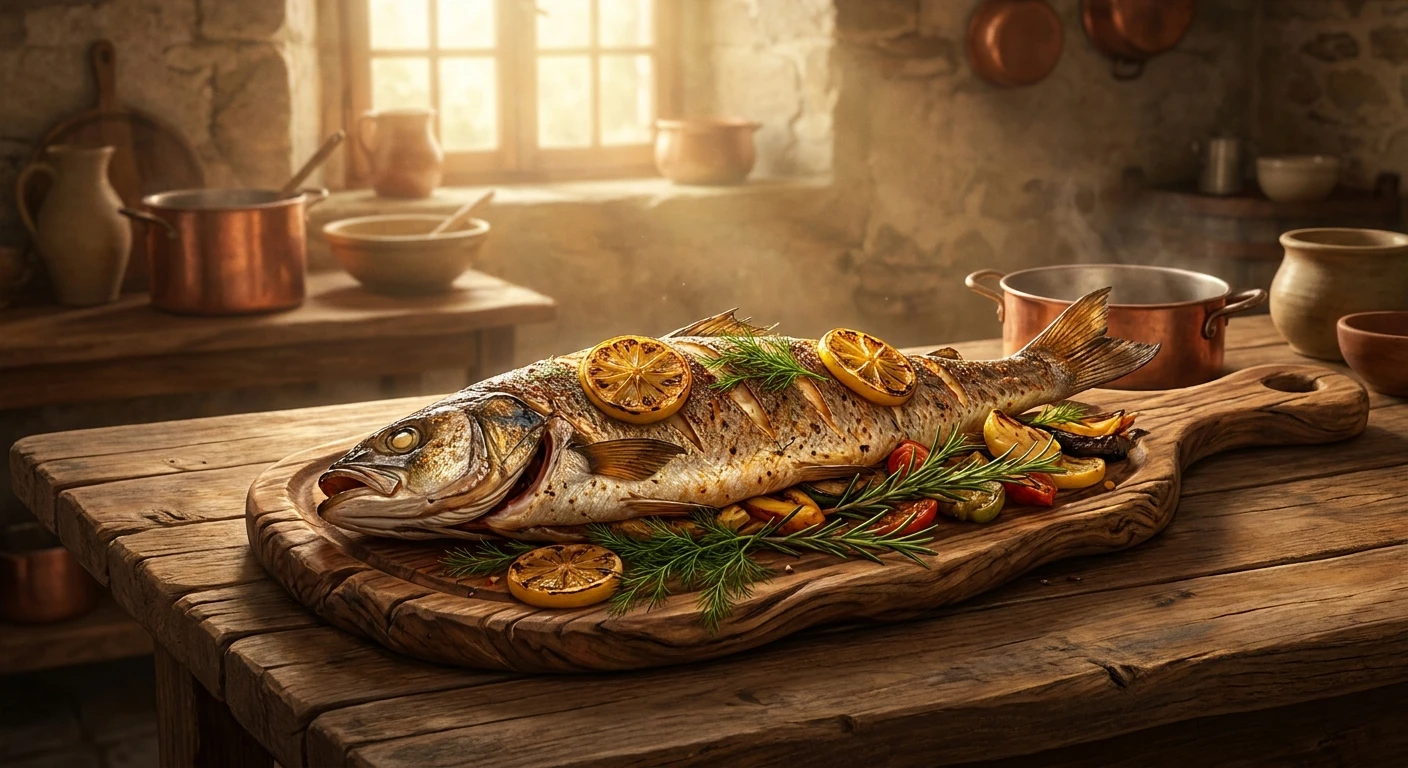
Mastering the Preparation of a Whole Salmon
Preparing a whole salmon gives you the absolute best flavor, yield, and presentation for any major gathering. You might think handling a massive fish requires professional culinary training, but the reality is incredibly straightforward and highly rewarding. When you start with an intact catch, you lock in layers of moisture, delicate fats, and deep oceanic flavors that pre-cut portions quickly lose on the butcher’s block. We are detailing the exact mechanics, preparation techniques, and cooking methods required to master this magnificent fish from head to tail. The sheer economics of buying intact seafood makes it a brilliant choice for dinner parties, large family meals, or weekly meal prepping. Rather than paying a premium for a fishmonger’s filleting labor, you keep those dollars in your pocket while retaining the highly nutritious bones and head for a rich seafood stock. A beautifully roasted fish sitting on a massive platter, heavily garnished with fresh herbs and charred lemon slices, creates an unforgettable centerpiece for your table. You get a flawless ratio of crispy seasoned skin, rich belly fat, and tender loin meat, easily satisfying every texture preference at your gathering. By mastering this core culinary skill, you guarantee perfectly flaky, well-seasoned bites every single time you cook.
You really get unparalleled value and culinary flexibility when choosing an intact fish over standard, pre-packaged fillets. The main value proposition of a whole salmon rests squarely on three pillars: immense moisture retention, sheer cost efficiency, and absolute zero-waste utility. Baking or roasting the fish entirely intact actively shields the delicate inner flesh from intense, direct heat. This natural barrier allows the rich, localized fats to render slowly, effectively basting the meat from the inside out and preventing the dry, chalky texture often associated with overcooked fillets. Furthermore, the remaining anatomy offers outstanding secondary uses. For example, simmering the leftover spine, fins, and head produces a thick, collagen-heavy stock that acts as an incredible base for seafood chowders or complex risottos. Another excellent example is utilizing the leftover tail meat and belly scraps for high-quality fish cakes or vibrant morning hashes.
Read also: Classic Old Fashioned Swiss Steak Recipe; Perfect Herb Crush Salmon Joeys Recipe Guide.
| Fish Cut Type | Average Cost Efficiency | Optimal Cooking Method |
|---|---|---|
| Intact/Uncut Fish | Highly Economical (Lowest price per pound) | Slow roasting, grilling over coals, salt baking |
| Center Cut Fillets | Premium Pricing (Labor included) | Pan-searing, high-heat broiling, sous-vide |
| Cross-section Steaks | Moderate Pricing | Direct grilling, fast pan-frying |
To secure the best possible results, you must select the freshest raw product available. Keep these strict rules in mind at the fish counter:
- Inspect the eyes closely. They must appear crystal clear, bright, and slightly bulging; avoid any fish with sunken, cloudy, or gray eyes.
- Check the gills under the side flaps. You want to see a vibrant ruby red or deep pink coloration, entirely avoiding gills that look brown, slimy, or sticky.
- Press the flesh gently. The body should feel remarkably firm, snapping back immediately after you touch it, rather than leaving a lingering indentation.
- Smell the cavity and skin. It should smell purely like a clean ocean breeze, completely devoid of any sharp, sour, or heavily pungent odors.
Origins of Salmon Feasts
The tradition of harvesting and cooking intact fish dates back thousands of years, primarily anchored in the cultures of the Pacific Northwest and coastal Scandinavian communities. Indigenous tribes heavily relied on these massive seasonal runs, treating the fish with immense reverence. They frequently cooked the catch whole by staking it over open cedar fires, allowing the ambient wood smoke to slowly render the fats and preserve the meat. This method celebrated the entire animal, ensuring no nutrient-dense part went to waste during long, harsh winters.
Evolution of Culinary Techniques
As culinary arts evolved through medieval Europe and into the classic French kitchens, the methodologies shifted toward elaborate court presentations. Chefs began utilizing massive poaching vessels specifically designed to hold an uncut fish, gently simmering it in an acidic court bouillon flavored with wine, fennel, and peppercorns. Another historical leap was the salt-crust method, where cooks buried the entire fish in a mixture of egg whites and coarse sea salt. This created a hard thermal oven around the fish, locking steam inside and producing an unbelievably tender texture that remains highly popular in elite coastal restaurants today.
The Modern State of Sourcing
Fast forward to 2026, and the landscape of seafood sourcing has fundamentally shifted toward extreme sustainability and advanced traceability. Wild-caught populations face strict seasonal quotas, making them highly prized seasonal delicacies. Concurrently, highly regulated, land-based aquaculture has drastically improved the quality and environmental footprint of farmed options. Consumers now have direct access to detailed origin data, ensuring the fish they roast for Sunday dinner was raised or caught using ethical, ocean-friendly practices.
The Anatomy and Muscle Structure
Understanding the internal biology of the fish drastically improves your cooking precision. The muscular structure consists of distinct, W-shaped blocks known as myotomes, which are held together by thin layers of connective tissue called myocommata. When raw, this connective tissue remains strong and slightly rubbery. As thermal energy penetrates the skin and bones, the myocommata actively breaks down and converts into liquid gelatin. This exact chemical conversion allows the myotome blocks to separate cleanly, creating the classic “flaky” texture we universally associate with perfectly executed seafood.
Heat Transfer and Collagen Breakdown
Cooking a fish with its skeletal structure intact alters the basic thermodynamics of the roasting process. Bones conduct heat differently than bare muscle tissue, slowing the internal temperature rise and providing a wider margin for error. The deep pink or reddish hue of the flesh comes directly from astaxanthin, a highly stable carotenoid pigment that the fish absorbs through its natural diet of krill and small crustaceans. This pigment remains completely stable during cooking, retaining its vibrant visual appeal on the plate.
- Astaxanthin functions as a powerful antioxidant, naturally protecting the fish’s cellular structure from environmental stress.
- The delicate connective collagen officially begins melting into gelatin at roughly 120°F to 130°F (49°C to 54°C).
- Carryover cooking will reliably raise the internal temperature of a large fish by 5 to 10 degrees after you remove it from the oven.
- The highly sought-after Omega-3 fatty acids remain largely intact during gentle roasting, but can oxidize rapidly if exposed to aggressive, direct flames without skin protection.
Step 1: Selecting and Inspecting
Your action plan starts at the local fish market or trusted grocery counter. Request a fish in the six to eight-pound range, which comfortably feeds a group of eight to ten people. Instruct the fishmonger to thoroughly gut the fish and remove the gills, but insist they leave the head and tail firmly attached for presentation and stock purposes. Double-check the firmness and smell before they wrap it in ice paper.
Step 2: Scaling and Cleaning
Once you get the catch back to your kitchen, lay down plenty of newspaper or prep it directly in a clean sink. Using the dull edge of a butter knife or a dedicated fish scaler, scrape firmly from the tail straight up toward the head. The scales will fly everywhere, so work methodically. After descaling, rinse the entire exterior and the internal cavity under freezing cold water to remove any lingering blood line against the spine. Pat the entire fish completely dry with heavy-duty paper towels; moisture is the enemy of crispy skin.
Step 3: Scoring the Skin
Grab your sharpest chef’s knife and make diagonal slashes across both sides of the fish, spacing the cuts about two inches apart. You want to slice completely through the tough outer skin and barely into the upper layer of flesh. These scores perform two critical functions: they prevent the skin from violently shrinking and curling in the oven, and they provide direct channels for your heavy seasonings to penetrate deep into the thickest parts of the loin.
Step 4: Seasoning Inside and Out
Aggressive seasoning is an absolute necessity for a piece of protein this large. Rub high-quality olive oil completely over the skin and generously inside the open belly cavity. Pack the cavity tightly with coarse sea salt, cracked black pepper, whole sprigs of fresh dill, crushed garlic cloves, and overlapping wheels of bright citrus. Take extra care to thoroughly rub salt directly into the diagonal scores you made earlier, ensuring flavor reaches the innermost muscle fibers.
Step 5: Setting Up the Oven or Grill
Preheat your oven to 375°F (190°C) for a steady, even roast. Line a massive, heavy-duty baking sheet with double layers of aluminum foil and a sheet of parchment paper on top to absolutely guarantee the skin won’t stick. If you prefer to grill, prepare a two-zone charcoal fire so you can utilize indirect, ambient heat rather than risking a massive grease flare-up directly under the fatty belly.
Step 6: The Cooking Process
Transfer your fully stuffed and seasoned fish onto the prepared baking sheet. Place it in the center rack of your hot oven. A standard rule of thumb dictates roasting for roughly 12 to 15 minutes per pound of total weight. However, visual cues and a digital probe are far superior. Check the fish right behind the head; when the thickest part of the meat turns opaque and easily flakes away from the spine with a gentle fork twist, the cooking process is complete. Aim for an internal temperature of 125°F to 130°F for a beautiful medium doneness.
Step 7: Resting and Carving
Pull the tray from the oven and let the entire fish rest undisturbed on the counter for at least ten minutes. This mandatory resting phase allows the rapidly expanding juices to settle and redistribute back into the muscle fibers. To serve, gently peel back the heavily crisped skin. Use a wide spatula to lift individual portions of the top fillet cleanly away from the rib cage. Once the top is cleared, simply grab the tail, lift the entire skeletal spine up and away, and seamlessly serve the bottom fillet.
Debunking Common Preparation Myths
Myth: Cooking the fish completely intact makes the interior dry and unpalatable.
Reality: The exact opposite is true. The thick skin and dense bone structure act as an insulated thermal blanket, trapping ambient moisture and actively circulating rendering fats throughout the flesh, yielding exceptionally juicy results.
Myth: You need industrial restaurant equipment to handle a massive catch.
Reality: A completely standard home oven and a basic diagonal baking sheet are more than sufficient. If the fish is slightly too long, you can simply curve the tail or remove the head right before placing it on the pan.
Myth: The head and spine are entirely useless garbage.
Reality: These exact parts hold massive amounts of natural collagen and residual meat. Simmering them with basic aromatics produces a liquid gold seafood stock that elevates soups, sauces, and stews to incredible heights.
Myth: Farm-raised seafood in 2026 is always nutritionally inferior.
Reality: Modern, highly monitored land-based aquaculture systems produce remarkably clean, highly nutritious, and environmentally stable fish that easily rival their wild counterparts in both flavor and healthy fat content.
Frequently Asked Questions
How long does the roasting process typically take?
For a standard six to eight-pound fish cooked at 375°F, expect the process to take roughly 45 to 60 minutes. Always verify with a reliable instant-read thermometer.
Do I need to flip the fish over halfway through?
Absolutely not. Flipping a large, delicate fish drastically increases the risk of it breaking entirely in half. The ambient heat of the oven cooks both sides evenly.
What is the absolute best internal temperature?
For perfectly tender, moist results, aim to pull the fish at 125°F (51°C) and let it rest. Carryover heat will push it to a food-safe, utterly delicious 130°F to 135°F.
How should I store the massive amount of leftovers?
Flake the remaining meat completely off the bones, let it cool entirely, and store it in an airtight glass container in the refrigerator for up to three days. It makes incredible cold salads.
Can I freeze it if I buy it raw in bulk?
Yes, but you must ensure it is tightly wrapped in multiple layers of plastic wrap and heavy-duty foil to prevent severe freezer burn. Thaw it incredibly slowly in the refrigerator over 24 hours.
What herbs work best inside the cavity?
Fresh dill, hearty parsley stems, robust thyme, and fragrant tarragon are the undisputed champions of seafood aromatics. Combine them with sharp lemon and crushed garlic.
Should I wrap the entire thing in aluminum foil?
Wrapping it tightly in foil will aggressively steam the fish, completely preventing the skin from getting crispy. Leave the top fully exposed if you desire crispy, flavorful skin.
Can I scale the fish a day ahead of time?
Yes. You can scale, clean, and score the fish a full 24 hours in advance. Leave it uncovered on a wire rack in the fridge to drastically dry out the skin for superior roasting.
Tackling a whole salmon is an incredibly satisfying culinary project that consistently delivers massive flavor and unbeatable visual appeal. By understanding the anatomy, respecting the temperatures, and following these specific preparation steps, you command the kitchen with complete confidence. Stop paying extra for basic fillets; grab a spectacular intact fish for your next weekend feast and start cooking!



Leave a Reply