

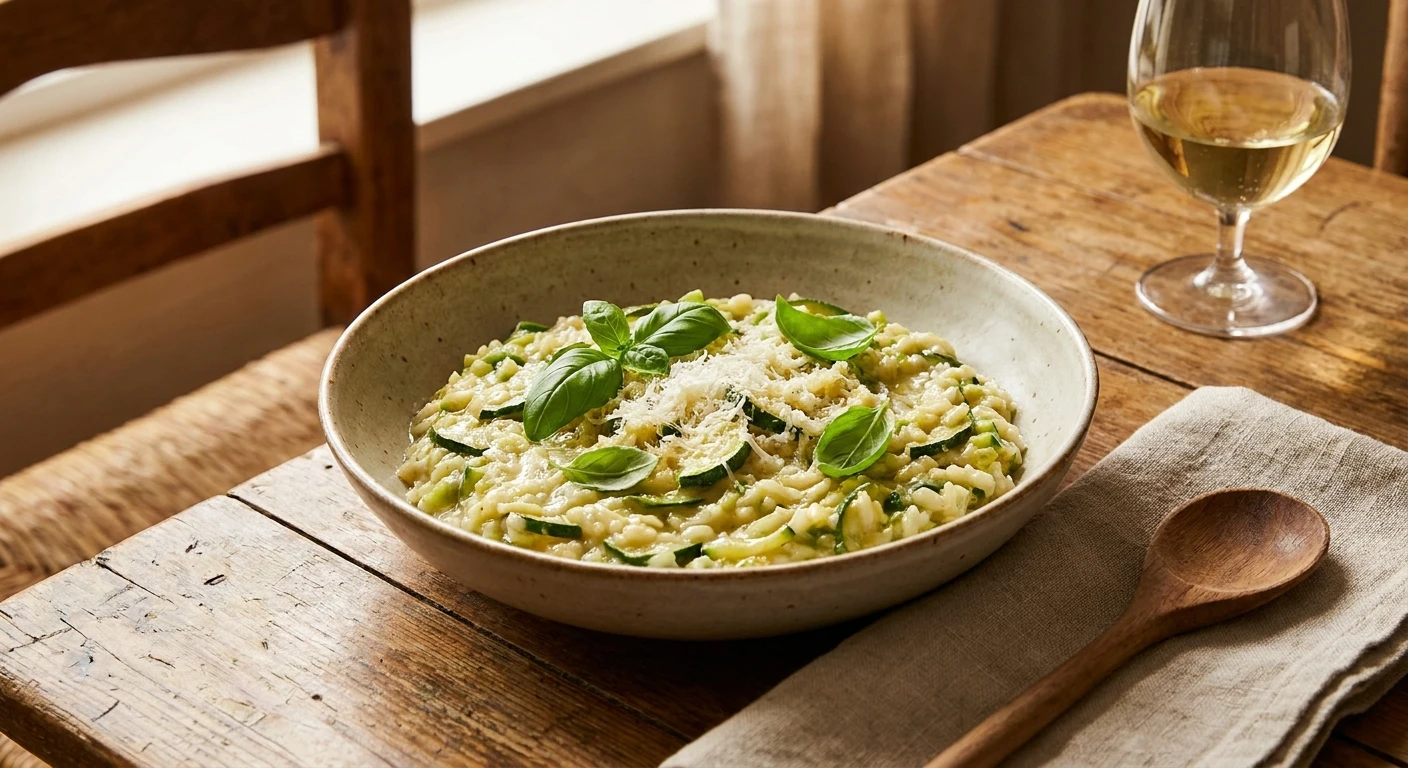
Why You Need to Try This zucchini risotto Today
If you have never experienced the comforting, velvety magic of a perfect zucchini risotto, you are seriously missing out on one of the best weeknight dinners ever created. I am going to show you exactly how to turn a couple of simple, humble green squashes into an absolute masterpiece that tastes like it came straight from a high-end Milanese kitchen.
You know, growing up in Ukraine, we always had an overwhelming abundance of zucchini, or kabachky as we affectionately call them, in the late summer gardens. My grandmother would fry them in heavy cast-iron pans, bake them with garlic, and stuff them with seasoned meats. But it was not until I traveled and started experimenting with classic Italian techniques that I realized the true potential of this humble vegetable. Mixing our local love for fresh, earthy squash with the slow, methodical stirring of Arborio rice changed everything for my weekly meal planning. It is 2026, and honestly, with grocery prices acting wildly unpredictable lately, making a massive, satisfying pan of this stuff is both a brilliant budget lifesaver and a total mood booster for the whole family.
Grab your favorite wooden spoon, pour yourself a refreshing little drink, and let us get right into the kitchen. You are going to absolutely love how simple and satisfying this whole process actually is when you break it down.
Why make this specific dish over anything else in your recipe book? First off, the texture profile is absolutely phenomenal. When you slowly coax the complex starches out of the rice and fold in tender, finely grated zucchini, the vegetable essentially melts directly into the sauce. It acts as a natural, highly effective thickening agent, making the dish incredibly creamy without needing cups of heavy dairy cream. This makes it significantly lighter, fresher, and arguably much better for your digestion than the heavier, cheese-loaded alternatives you find at chain restaurants.
| Ingredient | Core Role in Recipe | Main Nutritional Benefit |
|---|---|---|
| Arborio Rice | Starch base and structure | Creates the signature creamy texture naturally |
| Fresh Green Zucchini | Moisture and bulk volume | Adds essential vitamins, hydration, and dietary fiber |
| Rich Vegetable Broth | Flavor infusion liquid | Deepens the complex savory profile of the dish |
Here are the absolute non-negotiable rules for making this work perfectly every single time you fire up the stove:
- Grate it incredibly fine: Do not aggressively chop the squash into massive chunks. Grating it on a fine box grater allows the vegetable to literally dissolve into the creamy starch emulsion, enriching every single bite with subtle flavor.
- Toast the dry rice: Give your grains a couple of minutes in hot olive oil or butter before adding any liquid whatsoever. This crucial step seals the exterior and prevents the whole pot from turning into a mushy, unappetizing disaster.
- Warm your broth thoroughly: Pouring ice-cold liquid into a hot pan immediately shocks the grains. Always keep a separate pot of gently simmering broth right next to your main cooking pan.
This meal is insanely versatile for home cooks. For example, you can serve it as a standalone vegetarian main course for a cozy, intimate dinner date by candlelight. Another example, it works perfectly as a sophisticated, elegant side dish sitting right next to grilled chicken breasts or pan-seared white fish fillets. People often mistakenly think making this type of dish is an intimidating chore that requires you to be chained miserably to the stove. That is just a terribly bad reputation spread by impatient cooks. Yes, you have to stir it frequently, but that stirring is highly meditative. It forces you to slow down, put away your distracting phone, and actually pay close attention to the beautiful food you are cooking. The brilliant harmony between the sharp minced garlic, the mild sweetness of the summer squash, and the salty punch of aged parmesan creates a flavor profile that feels wildly expensive but costs mere pennies per serving.
The Origins of the Dish
The core technique traces its historical roots back to Northern Italy, specifically the lush regions of Lombardy and Piedmont, where the short-grain rice varieties were first cultivated by farmers in the marshy, water-rich landscapes. The brilliant concept of slow-cooking rice in rich broth until it releases its natural starches is centuries old. However, incorporating our star green vegetable specifically was not the first grand iteration of the dish. Early historical versions relied heavily on exotic saffron, massive amounts of butter, and rich bone marrow. The addition of local garden vegetables came naturally as rural farmers desperately needed to stretch their winter pantry staples using whatever was wildly abundant in their summer harvests. Zucchini, being an incredibly prolific grower, became an obvious and incredibly delicious candidate for the pot.
The Evolution of Vegetable Combinations
As the decades passed, the regional recipe traveled from humble farmhouse kitchens to bustling urban restaurants. Clever chefs quickly realized that the squash was not just a cheap, boring filler; it was a textural secret weapon. In the mid-twentieth century, as authentic Italian cuisine gained massive global popularity, ambitious cooks began to deeply refine the cooking technique. They started excitedly experimenting with completely different cuts and preparation methods. Some puréed the vegetable entirely beforehand to create a bright green, visually vibrant sauce, while others highly preferred the rustic, chunky texture of heavily diced squash. The rapid evolution brought about fresh variations adding vibrant fresh herbs like mint and sweet basil, or beautifully finishing the hot dish with a sharp squeeze of fresh lemon juice to brilliantly cut through the richness of the melted butter and cheese.
The Modern State of the Recipe
Fast forward rapidly to today, and this comforting, steaming bowl sits comfortably on the popular menus of both casual neighborhood bistros and incredibly high-end Michelin-starred establishments. Modern home cooks and professional chefs have adapted it brilliantly to fit wildly various dietary needs. You will effortlessly find stellar vegan versions using savory nutritional yeast and high-quality plant-based butter that legitimately rival the traditional dairy-heavy classics. Furthermore, with the massive rise of local farm-to-table movements globally, utilizing fresh, seasonal, strictly pesticide-free squash has wonderfully elevated the basic flavor profile dramatically. It proudly remains a beloved culinary staple simply because it perfectly bridges the massive gap between sophisticated, gorgeous restaurant fare and deeply comforting, highly accessible home cooking.
The Science of Starch Release
To really nail this dish perfectly, you have to deeply understand a little bit of the actual chemistry happening silently in your hot pan. Arborio, Carnaroli, and Vialone Nano—the primary acceptable rice varieties used—contain two highly specific types of starch: amylose and amylopectin. Amylose is heavily concentrated deep in the center of the individual grain and strongly helps it keep its rigid shape and firm, satisfying bite. Amylopectin is located right on the delicate outside of the grain. When you physically stir the rice and slowly add piping hot liquid, the sheer mechanical friction and the intense heat cause the delicate amylopectin to physically dissolve directly into the savory broth. This chemical reaction is exactly what naturally creates that signature creamy suspension. If you aggressively dump all the broth in at once, you are simply just boiling rice like a standard pilaf. The agonizingly slow addition and constant mechanical agitation are absolutely mandatory for the chemical reaction that slowly builds the velvety sauce.
How Zucchini Enhances the Emulsion
The lovely green squash is roughly ninety-four percent pure water by total volume. When you finally introduce it to the intensely hot pan, it rapidly undergoes a fascinating process of total cellular breakdown. As the microscopic cell walls physically collapse under the heat, the vegetable rapidly releases its tightly trapped moisture directly into the hot cooking liquid. This rapid water release needs to be managed incredibly carefully so it absolutely does not dilute the beautiful starch emulsion we just spent twenty minutes building.
- Osmosis in intense action: Adding coarse sea salt early naturally draws out the vegetable moisture through basic osmosis, allowing it to rapidly soften and gently blend seamlessly into the creamy rice base.
- Maillard reaction fundamentals: Toasting the entirely dry rice grains perfectly before adding any wet liquid successfully initiates the complex Maillard reaction, beautifully developing a subtle nutty flavor profile that simple boiling alone simply cannot achieve.
- Thermal shock prevention: Aggressively heating your broth successfully prevents the internal temperature of the main cooking vessel from ever dropping rapidly. A sudden, massive temperature drop immediately halts the crucial gelatinization process of the starches, resulting in highly gritty, very poorly cooked grains that ruin the meal.
- Emulsification magic: The critical final step involves vigorously and aggressively beating freezing cold butter and finely grated cheese directly into the hot grains entirely off the heat. The sudden, intentional temperature drop strongly forces microscopic fat and water molecules to permanently bind, creating a highly stable, extremely luxurious culinary emulsion.
Step 1: Prep Your Ingredients Relentlessly
Preparation, or strictly following your mise en place, is your absolute best friend here. Vigorously grate two medium squashes, finely dice one small white onion, and carefully mince three large cloves of fresh garlic. Have your block of parmesan pre-grated and your cold butter cubed and waiting. Once you actually start cooking, you cannot casually walk away from the hot stove, so having everything in small bowls ready to go is absolutely crucial for total success.
Step 2: Heat the Broth Properly
Carefully pour four to roughly five cups of exceptionally high-quality vegetable or roasted chicken stock into a medium stainless-steel saucepan. Bring it rapidly to a gentle, rolling simmer and then confidently leave it on the absolute lowest heat setting available. You want it steaming aggressively hot but definitely not rapidly boiling away and evaporating straight into the kitchen air.
Step 3: Sweat the Aromatics
In your main heavy-bottomed cooking pot or enameled Dutch oven, quickly heat a generous splash of extra virgin olive oil over strict medium heat. Drop in your finely diced onion and patiently cook for about three to four solid minutes until highly translucent and soft. Do absolutely not let it brown or burn. Add the freshly minced garlic and patiently cook for just exactly thirty seconds until deeply and wildly fragrant.
Step 4: Toast the Grains
Swiftly pour in exactly one standard cup of completely dry Arborio rice. Stir it wildly and continuously for about two full minutes. You intensely want to successfully coat every single tiny grain in the hot oil and lightly toast them until the sharp edges become slightly translucent while the dense center remains stark, solid white.
Step 5: Incorporate the Vegetable
Now, aggressively toss in your freshly grated squash mountain. Stir it thoroughly and rapidly with the beautifully toasted grains and softened aromatics. Patiently cook this wet mixture for about three to four minutes so the raw vegetable slowly begins to fully soften and readily release its initial massive burst of hidden water directly into the screaming hot pan.
Step 6: The Slow Ladle Process
Carefully add your absolute first ladle of steaming hot broth. Stir gently and deeply continuously until the hot liquid is almost completely and entirely absorbed by the thirsty rice. Patiently repeat this exact process, strictly one standard ladle at a time. This entire meditative process usually takes exactly about eighteen to twenty-two long minutes. The plump rice should be incredibly tender but still bravely retain a slight, satisfying chew in the dead center.
Step 7: The Mantecatura Finish
Confidently remove the hot pot entirely and completely from the stove heat. Vigorously and aggressively stir in two full tablespoons of freezing cold dairy butter and a massive, generous handful of freshly grated real parmesan cheese. This specific off-the-heat aggressive agitation is exactly what perfectly binds absolutely everything into a stunningly glossy, genuinely restaurant-quality finish. Generously season with cracked black pepper and serve it steaming hot immediately.
Myth: You fundamentally need heavy cream to make it properly creamy.
Reality: Authentic Italian culinary recipes almost entirely never use heavy cream. The notoriously luxurious, rich velvety texture comes entirely and solely from the natural starches abundantly found inside the short-grain rice, brilliantly combined with the dramatic final emulsification of cold butter and sharp cheese at the very, absolute end.
Myth: You violently have to stir constantly without stopping for a single second.
Reality: While highly frequent, rhythmic stirring is strongly recommended to continuously release the complex starches and successfully prevent harsh sticking, taking a brief five-second pause to grab a cold drink or quickly wipe the messy counter will absolutely not miraculously ruin your dinner. Just consciously keep it moving regularly.
Myth: Absolutely any type of regular rice works if you simply cook it long enough.
Reality: Standard long-grain white rice or fragrant jasmine rice severely lacks the biologically necessary amylopectin starch. They will unfortunately just turn into a terribly sad, entirely separated pilaf. You strictly and fundamentally need Arborio, authentic Carnaroli, or Vialone Nano for this exact method to actually work.
Can I magically freeze the cold leftovers?
Absolutely and entirely not. The delicate texture will permanently become terribly grainy and horribly mushy once completely thawed. Keep savory leftovers strictly stored securely in an airtight glass container deep in the cold fridge for roughly up to three days.
What can I creatively do with cold leftovers?
Joyfully roll the highly chilled, firm mixture into tiny bite-sized balls, generously coat them in crispy breadcrumbs, and deep fry them fiercely in hot oil to easily make absolutely incredible, wildly crispy arancini.
Do I strictly have to use dry wine?
No. A brief splash of incredibly dry white wine brilliantly adds nice, bright acidity, but you can entirely and easily skip it entirely or simply use a tiny, fresh squeeze of tart lemon juice instead.
Can I successfully make this fully vegan?
Yes absolutely! Smartly swap the dairy butter for rich olive oil or quality plant butter, strictly use rich vegetable broth, and successfully substitute the traditional dairy parmesan with a wonderfully good quality, savory nutritional yeast.
Why is my final dish entirely too excessively thick?
It most likely simply sat entirely too long completely unbothered before finally serving. The heavy starches naturally thicken incredibly quickly as it physically cools down. Just aggressively stir in a quick, hot splash of remaining broth to instantly loosen it gracefully back up.
Should I carefully peel the dark skin entirely off?
No, the wonderfully dark green skin brilliantly adds a truly beautiful visual speckle of bright color to the final plate and strongly holds incredibly essential dietary nutrients. Just aggressively wash the rough exterior thoroughly.
Can I successfully add extra heavy protein?
Definitely and absolutely. Highly seasoned grilled jumbo shrimp or a wonderfully juicy pan-seared thick chicken breast paired perfectly on top of the steaming bowl is absolutely phenomenal.
Making the absolute ultimate savory bowl of incredibly creamy goodness honestly does not have to be a wildly stressful kitchen nightmare at all. It honestly just takes a very little bit of quiet patience, wonderfully hot broth, and some deeply enthusiastic, rhythmic stirring. You officially have got absolutely all the real facts, the deep underlying science, and the absolute exact precise steps to miraculously pull this off flawlessly tonight. Proudly grab your fresh ingredients and excitedly get cooking right now! Please drop a quick comment down below and absolutely let me fully know exactly how wonderfully yours turns out!
Leave a Reply