
Why Nutella Tiramisu is the Only Dessert You Need Right Now
Have you ever taken a bite of a dessert and felt your soul temporarily leave your body? If you haven’t, you clearly haven’t tried genuine Nutella tiramisu yet. Honestly, it is that ridiculously good. You know that feeling when you just want something rich, comforting, and absolutely decadent after a long week? This is exactly the cure for that craving.
Back when I was staying near the Golden Gate in Kyiv during a remarkably chilly winter, I found myself desperately wanting something sweet but entirely tired of standard local pastries. A neighborhood barista handed me a layered cup of what looked like pure magic. It was a local twist on a classic—a chocolate hazelnut variation of the traditional Italian staple, made right there behind the counter. That exact moment changed my baking trajectory forever.
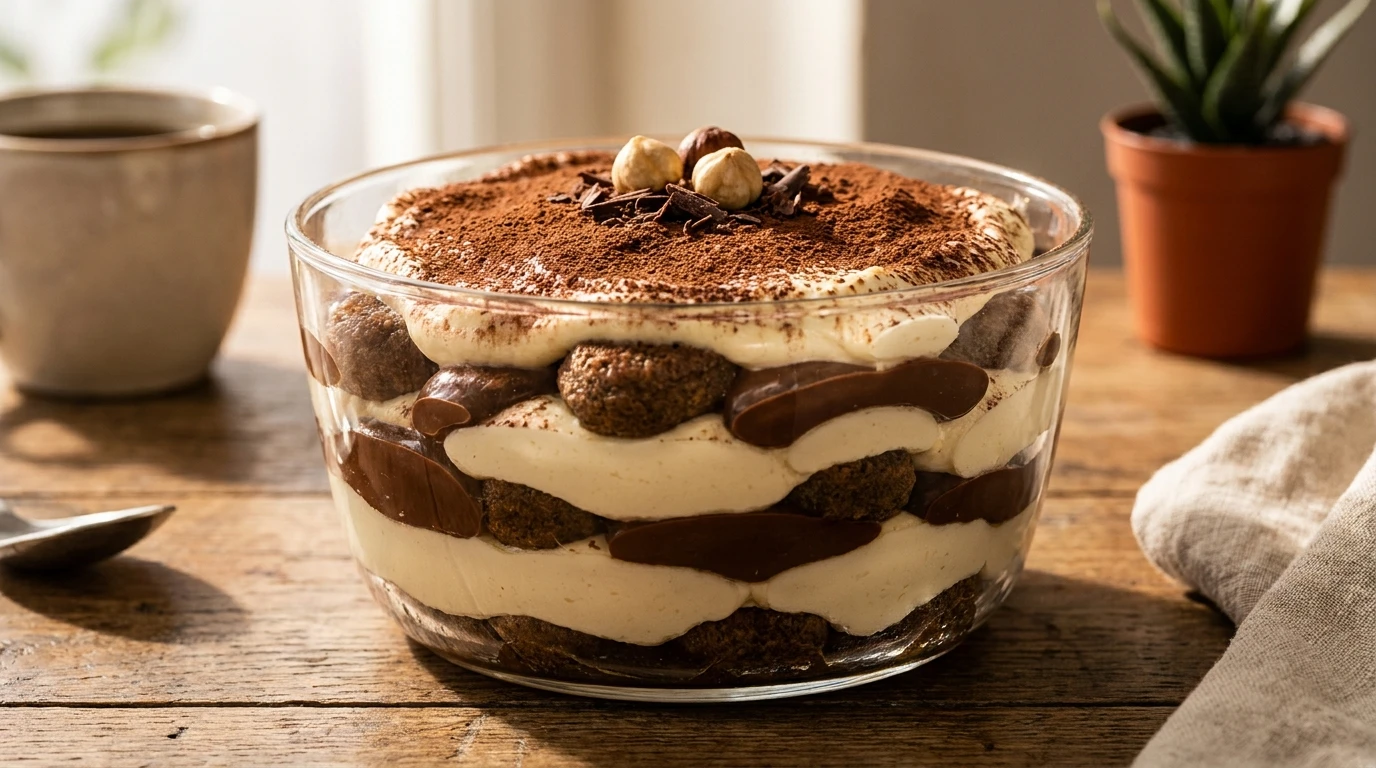
We are throwing out the old, intimidating rulebook today. We are getting straight to how you can create this absolute masterpiece right in your own kitchen without losing your mind over complicated techniques. The thick layers of cold espresso-soaked cookies, the unbelievably creamy and rich mascarpone cheese, and that iconic, glossy chocolate hazelnut spread create a texture profile that will honestly ruin all other sweets for you. You might think making something this visually stunning requires a culinary degree from Paris, but it is basically foolproof. Get your mixing bowls out, grab a whisk, and make sure your coffee is brewed strong, because things are about to get incredibly delicious.
Breaking Down the Magic
What actually makes this specific dessert tick? Traditional tiramisu is brilliant, sure. Coffee, cocoa, rich cheese, and a bit of liquor. It is a masterpiece in its own right. But when you introduce a heavy, sweet, sticky hazelnut paste into the mix, you fundamentally shift the entire flavor dynamic. You get an earthy, nutty base that perfectly grounds the extreme, acidic bitterness of the espresso.
First off, it is an incredibly reliable crowd-pleaser. If you bring a standard coffee-heavy dessert to a dinner party, half the room might pass on it because they do not like the intense caffeine flavor. Bring a chocolate hazelnut layered dream in a massive glass dish, and watch grown adults fight over the very last scoop. Specifically, kids usually hate the strong coffee taste of the original version, but the chocolate spread effortlessly masks the harshness, making it entirely family-friendly. Also, it requires absolute zero baking time. Your oven stays completely off, which is a massive win during sweltering summer months or when your oven is fully occupied with cooking dinner.
| Feature | Classic Version | Nutella Version |
|---|---|---|
| Base Flavor Profile | Strong coffee and pure cocoa | Sweet hazelnut and rich chocolate |
| Kid-Friendly Factor | Usually no (bitter and boozy) | Absolutely yes (sweet and comforting) |
| Texture Dynamic | Light, airy, and highly porous | Rich, dense, and luxuriously creamy |
Here are just a few reasons why this specific combination completely takes over your taste buds:
- Unmatched Flavor Balance: The natural fat from the heavy mascarpone cheese aggressively cuts through the intense sugar of the chocolate spread, preventing the dessert from becoming sickeningly sweet.
- Foolproof Assembly Process: Even if your layers turn out a little bit messy or uneven, the final product just looks rustic, homey, and wonderfully artisanal. You literally cannot mess up the presentation.
- Exponentially Better with Age: Unlike baked cakes that dry out quickly, letting this sit in the fridge overnight allows the cookies to fully hydrate. It tastes infinitely better on day two, assuming it actually lasts that long in your house.
Where Did This Masterpiece Come From?
Origins of the Classic Base
Before we can fully appreciate the hazelnut upgrade, we have to look at the roots. Traditional tiramisu, which literally translates to “pick me up” in Italian, has origins that are famously heavily debated. Most food historians trace it back to the Veneto region of Italy in the 1960s or 1970s. It was essentially designed as a massive energy boost—a dense combination of sugar, heavy carbohydrates from the savoiardi (ladyfingers), and a massive hit of caffeine. It was food meant for absolute indulgence, perfectly combining simple, widely available local ingredients into something far greater than the sum of its parts.
The Hazelnut Chocolate Revolution
So, how did hazelnut enter the chat? We have to look at the history of Gianduja. Following World War II, cocoa was incredibly scarce and highly expensive across Europe. Italian confectioners in the Piedmont region had to stretch their limited cocoa supply, so they started blending it with something they had in absolute abundance: local hazelnuts. This genius act of rationing eventually birthed the famous spread we all keep in our pantries today. Combining this historical hazelnut paste with the classic coffee dessert was basically an inevitability. Bakers realized that the roasted notes of coffee naturally complimented the roasted notes of hazelnuts, creating a flavor bridge that just made sense.
The Modern State of Dessert
Fast forward to the current culinary landscape. As we navigate the food trends of 2026, we are seeing a massive shift toward “hyper-comfort” foods. People are no longer strictly impressed by tiny, deconstructed, molecular gastronomy desserts on massive white plates. We want abundance. We want nostalgia blended with modern indulgence. The hazelnut chocolate tiramisu perfectly captures this 2026 zeitgeist. It takes a historically revered recipe and injects it with a pure, unadulterated dose of childhood comfort, bridging the gap between high-end restaurant quality and cozy home baking.
The Science of Layered Perfection
Emulsification and Fat Ratios
Making this dessert isn’t just throwing things in a pan; there is actual science making it taste this good. The creamy layer relies heavily on a process called emulsification. Mascarpone cheese has an incredibly high butterfat content—often hovering around 70-75%. When you whip this dense fat with sugar and potentially heavy cream or egg yolks, you are forcing air into a fat matrix. The fat molecules trap the tiny air bubbles, creating a structure that feels simultaneously rich on the tongue but light in the mouth. Adding the hazelnut spread introduces additional plant-based fats (palm oil and hazelnut oil), which further stabilizes this matrix, preventing the cream from collapsing and weeping water.
The Magic of Espresso Absorption
Then we have the ladyfingers. These dry, spongey cookies are basically edible sponges. Their highly porous, dry structure relies on capillary action to draw liquid upward against gravity. When you dip them in cold espresso, the water molecules from the coffee rush into the microscopic air pockets of the baked egg foam structure of the cookie. If you dip them too long, the structure completely dissolves into mush. If you dip them perfectly, they retain a slight bite while holding maximum liquid.
- Capillary Action: The scientific process that allows the dry ladyfingers to instantly absorb the coffee without totally losing their physical integrity immediately.
- Flavor Receptor Saturation: The combination of bitter (coffee), sweet (sugar), and savory/fat (cheese and nuts) hits multiple taste receptors on your tongue simultaneously, causing a massive dopamine response in the brain.
- Viscosity Matching: The thickness of the whipped cheese perfectly matches the thickness of the slightly melted chocolate spread, allowing them to stack on top of each other without bleeding into one muddy mess.
Your Ultimate 7-Step Assembly Guide
Step 1: Gathering the Absolute Essentials
First, get everything out on your counter. You need extremely fresh mascarpone cheese, heavy whipping cream, a jar of high-quality hazelnut chocolate spread, a package of firm Italian ladyfingers, and some freshly brewed espresso. Do not try to substitute the mascarpone with regular cream cheese unless you want a completely different, much tangier dessert. Bring your mascarpone to room temperature so it whips smoothly without creating massive lumps.
Step 2: Brewing the Perfect Espresso
You cannot use weak, watery diner coffee for this. You need intense, robust espresso. Brew about two full cups of it. The most crucial part of this step is letting the coffee cool down completely to room temperature or even chilling it. If you dip your delicate cookies into boiling hot coffee, they will disintegrate into soup in exactly two seconds, and the heat will subsequently melt your expensive cheese layer.
Step 3: Whipping the Creamy Base
In a large bowl, whisk your heavy cream until it hits soft peaks. In a separate bowl, gently fold your room-temperature mascarpone with a bit of powdered sugar and vanilla extract. Carefully fold the whipped cream into the cheese mixture. You want to keep as much air in this mixture as humanly possible. Treat it gently.
Step 4: The Hazelnut Chocolate Integration
Take your jar of spread and microwave it for exactly 15 to 20 seconds. You do not want it boiling hot; you just want it loose and pourable. You can either fold a massive scoop of it directly into half of your cheese mixture to make a designated chocolate cream layer, or keep it separate to drizzle purely between the white layers. I highly recommend the drizzle method for better visual contrast.
Step 5: The Crucial Ladyfinger Dip
This is where most people mess up. Take one ladyfinger, drop it into the cold espresso, count to one, flip it, count to one, and immediately pull it out. That is it. A “one-two” count. Do not leave it drowning in the coffee. It will continue to soften as it sits in the fridge later.
Step 6: Constructing the Layers
Grab a 9×13 inch glass baking dish. Line the entire bottom with your slightly soaked ladyfingers in a tight row. Spread exactly half of your fluffy mascarpone cream over the cookies. Take your warmed, loose hazelnut spread and aggressively drizzle it all over the white cream. Repeat the entire process: another tight layer of soaked cookies, the rest of the creamy mascarpone, and finally, a heavy dusting of pure cocoa powder over the top.
Step 7: The Mandatory Chilling Period
This is the hardest step. Cover the dish tightly with plastic wrap and put it in the refrigerator. Walk away. Do not touch it for at least 6 hours, though 12 to 24 hours is vastly superior. The chilling period allows the moisture from the cream to migrate into the cookies, marrying all the textures into one cohesive, sliceable masterpiece.
Common Misconceptions
Myth: You absolutely must use raw eggs to make authentic tiramisu creams.
Reality: While historically accurate, modern versions easily substitute heavily whipped cream for raw eggs, providing the exact same airy texture without any food safety anxiety, especially when serving large groups.
Myth: Any brand of chocolate syrup will work just fine as a substitute.
Reality: Absolutely not. Thin chocolate syrup will just bleed into the cheese and make a runny mess. You need the thick, fat-heavy structure of a proper hazelnut paste to maintain structural integrity.
Myth: You have to use alcohol like rum or Marsala wine.
Reality: The hazelnut spread provides so much complex, roasted flavor that skipping the alcohol entirely actually allows the nuttiness to shine much brighter.
Myth: It is too heavy for a summer dessert.
Reality: Because it is served ice cold straight from the fridge, it is actually incredibly refreshing despite its rich ingredients.
Frequently Asked Questions
Can I make this entirely ahead of time?
Yes, absolutely! In fact, you really should. Making it 24 hours before your event is the absolute optimal timeframe. The flavors meld together perfectly, and the cookies reach the exact right level of softness without turning to mush.
Can I freeze the leftovers?
Yes, you can. Wrap individual slices tightly in plastic wrap and freeze them. When you want a piece, just let it sit on the counter for about twenty minutes. It honestly tastes like an incredibly high-end ice cream cake when eaten semi-frozen.
What if I cannot find mascarpone cheese at my local store?
While mascarpone is king, you can blend block cream cheese with a little bit of heavy whipping cream and a tiny splash of sour cream to mimic the fat content and texture. It will be slightly tangier, but still fantastic.
Do I have to use an espresso machine?
Not at all. If you do not have a machine, just make extremely strong instant coffee. Use double the amount of instant granules you normally would for a standard cup. Just ensure it cools down completely.
How do I neatly slice it for serving?
The trick is a sharp knife and a tall glass of hot water. Dip the knife in the hot water, wipe it completely dry with a towel, and make your cut. Repeat this for every single slice to get those gorgeous, clean edges.
Why did my mascarpone cream curdle and turn yellow?
This happens if you over-whip the cheese, basically turning it into butter, or if you use ingredients that are at drastically different temperatures. Always fold gently and use room-temperature cheese.
Can I use a different nut spread?
Definitely! Pistachio cream has become incredibly popular recently and works flawlessly in this exact same recipe format if you want to switch up the flavor profile entirely.
Is it okay for kids to eat this given the coffee content?
The total caffeine per slice is quite low compared to a cup of coffee, but if you are worried, you can absolutely use decaffeinated espresso or even hot chocolate for the soaking liquid instead.
How long will this safely last in the fridge?
If kept tightly covered to prevent it from absorbing other fridge odors (nobody wants garlic-flavored dessert), it will stay perfectly fresh and safe to eat for up to four days.
Should I use hard or soft ladyfingers?
Always buy the hard, crispy Italian savoiardi. The soft, cake-like ones sold in the bakery section will instantly turn into a soggy, unappealing paste when dipped in liquid.
So there you go. You have all the science, the history, and the exact roadmap to make the most incredible dessert on the planet right now. Stop staring at the screen, go grab those ingredients, and treat yourself to this absolutely wild, creamy, chocolatey experience. Let me know how your first batch turns out—you are going to be obsessed!

Leave a Reply