

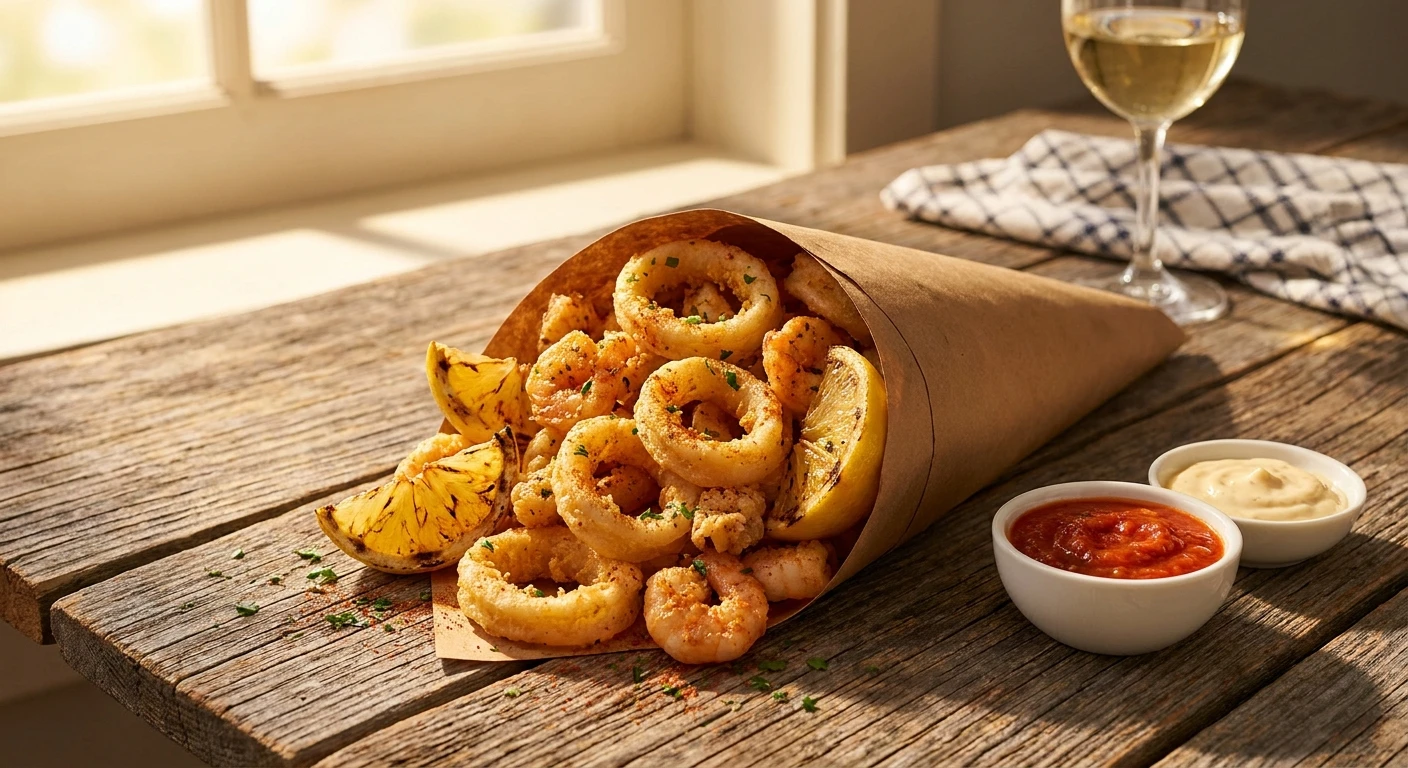
Mastering the True Art of fritto misto di mare at Home
Listen, if there is one dish that instantly transports you to a sun-drenched coastline with a cold glass of white wine in hand, it is absolutely a flawlessly executed fritto misto di mare. Let me set the scene for you. Just last month, finding myself back home by the Black Sea in Odesa, I was hit by a massive wave of nostalgia. Even now, in 2026, with the world moving faster than ever, local fishermen still haul in their daily catch with the same timeless rhythm. I sat at a small wooden table right on the beach, watching the waves crash, and ordered a platter of fried seafood from a tiny shack that dared to emulate the great Italian coastal classics. It was good, but it lacked that shatteringly crisp, almost ethereal lightness that a genuine Italian preparation demands.
That experience solidified my core belief: achieving the perfect seafood fry is not about throwing fish into hot oil. It is a delicate, precise choreography of temperature, moisture control, and utilizing the lightest possible flour coating. You need the exterior to be so crisp that it sings when you bite into it, while the interior remains perfectly tender and sweet. I spent the next week aggressively testing oil temperatures and flour blends in my kitchen to recreate that ultimate Mediterranean dream. I want to share exactly how you can replicate this magic without ending up with a greasy, heavy mess.
The Mechanics of Flawless Frying and Moisture Control
Making this dish successfully requires understanding how water interacts with hot oil. The primary benefit of frying seafood at home is absolute control over your ingredients and the freshness of your frying medium. When you eat this at a crowded tourist-trap restaurant, you often run into two major problems. First, the cost markup on a simple plate of fried squid and shrimp is astronomical. Second, commercial kitchens frequently overuse their frying oil, leaving your food tasting heavy, oxidized, and flat.
By taking matters into your own hands, you secure a massive value proposition. Example 1: You can selectively source wild-caught shrimp and fresh local calamari for a fraction of a restaurant bill. Example 2: You get to use fresh, clean oil, ensuring the delicate, sweet flavors of the ocean actually shine through rather than tasting like yesterday’s French fries.
Let us look at a quick breakdown of what goes into the fry basket:
| Seafood Type | Optimal Flour Coating | Ideal Frying Time |
|---|---|---|
| Calamari Rings | Durum wheat semolina mix | 60 to 90 seconds |
| Small Whole Shrimp | Rice flour and 00 flour | 45 to 60 seconds |
| Whitebait / Anchovies | Pure fine cornmeal or semolina | 30 to 45 seconds |
Before you even think about turning on the stove, you have to respect the preparation phase. Here is the mandatory sequence for prepping your ingredients:
- Thorough Cleaning: Remove the beaks, quills, and ink sacs from the squid. Peel the shrimp only if they are large; otherwise, leave the delicate shells on for extra crunch.
- Aggressive Drying: Pat every single piece of seafood dry with heavy-duty paper towels. Any surface moisture will instantly turn into steam, blowing your flour coating right off the meat.
- Chilling: Keep the dried seafood in the refrigerator until the exact moment you are ready to dredge and fry. Warm seafood turns mushy the second it hits the oil.
The Humble Origins of the Dish
To truly appreciate what you are cooking, you need to know where it came from. The origins of this coastal staple are rooted in sheer practicality. Historically, Italian fishermen returning to ports in Naples, Genoa, or Venice would sell their premium, large catches to the wealthy merchants and high-end taverns. What remained in the bottom of the nets—the tiny fish, the broken shrimp, the small squid—was collectively known as the “paranza.” Not wanting to waste a single calorie, the fishermen’s families would take this mixed, unsellable catch, toss it in whatever coarse flour they had, and fry it in olive oil or lard over an open flame.
Evolution Across the Mediterranean
As decades turned into centuries, this humble peasant food evolved from a dockside necessity into a celebrated culinary tradition. Different regions adopted their own signatures. In the Veneto region, you might find tiny soft-shell crabs known as “moeche” mixed into the basket. Down in Campania, the fry is heavily focused on anchovies and squid, often served in a simple paper cone called a “cuoppo” to absorb excess oil while you walk the streets. The concept of coating small, fresh ingredients in a light dusting of flour and flash-frying them spread across the Mediterranean, influencing Spanish tapas and Greek meze alike.
The Modern State of Seaside Frying
Today, this dish has transcended its frugal roots to become a fixture on menus from casual trattorias to Michelin-starred establishments. Chefs experiment with different starches, infusing the dredging flour with dehydrated citrus powders or utilizing high-tech fryers that maintain temperature to the decimal point. Yet, the soul of the dish remains unchanged: it must be fresh, it must be fast, and it must be shared among friends with plenty of lemon wedges.
The Thermodynamics of Frying Seafood
Cooking is just applied physics and chemistry. When you drop a piece of floured squid into hot oil, a violent reaction occurs. The high heat (ideally 170°C to 180°C) immediately vaporizes the microscopic layer of moisture on the surface of the seafood. This rapid evaporation creates a barrier of steam pushing outward. This steam barrier is exactly what prevents the cooking oil from seeping into the flesh. If your oil is too cold, the steam barrier never fully forms, and the oil rushes into the food, resulting in a soggy, greasy disaster.
Gluten, Starches, and Achieving the Perfect Crust
The type of coating you use dictates the final texture. Traditional heavy batters trap too much moisture, essentially steaming the delicate seafood from the inside out. We want a dredge, not a batter. Using a mix of low-protein flours is the secret. When you use flours with high gluten content, the crust becomes tough and chewy. By cutting regular wheat flour with rice flour or fine semolina, you disrupt the gluten network. The result is a fragile, glass-like crust that shatters perfectly upon impact.
- Maillard Reaction: The golden-brown color you crave is the result of amino acids and reducing sugars reacting at high temperatures, creating hundreds of new flavor compounds.
- Oil Smoke Point: Peanut oil, sunflower oil, or high-oleic safflower oil have high smoke points (above 200°C), making them stable and safe for this rapid, high-heat process.
- Moisture Migration: Salt draws out moisture through osmosis. Never salt your seafood before frying, or the water will pool on the surface and ruin the crust. Only salt immediately after it leaves the oil.
Step 1: Sourcing the Freshest Catch
Your dish will only be as good as your raw materials. Head to a reputable fishmonger and look for small, tender calamari, whole small shrimp, and tiny bait fish like smelts or anchovies. The seafood should smell like a clean ocean breeze, not fishy or ammonia-like.
Step 2: Cleaning and Drying the Seafood
Process your seafood meticulously. Slice the calamari into thin rings and leave the tentacles intact—they get the crispiest. Lay everything out on a wire rack lined with paper towels. Press down firmly to extract every single drop of surface moisture. Dry seafood equals a crispy crust.
Step 3: Preparing the Flour Dredge
In a large, wide bowl, mix 50% semolina rimacinata (finely milled semolina) with 50% rice flour. Do not add salt or pepper to this mix, as salt draws out moisture and pepper burns in hot oil, turning bitter. Keep the dredge light and airy.
Step 4: Heating the Oil to Exact Specs
Pour at least three inches of neutral frying oil into a heavy-bottomed Dutch oven or a deep cast-iron skillet. Attach a deep-fry thermometer to the side. Bring the heat up gradually until the thermometer registers exactly 175°C (347°F). Maintaining this zone is your top priority.
Step 5: The Batch Frying Process
Toss a small handful of seafood into your flour mixture. Shake off all the excess flour using a mesh sieve—you only want a micro-dusting. Carefully lower the seafood into the oil. Do not overcrowd the pot, or the oil temperature will plummet. Fry for just 60 to 90 seconds until pale golden and crisp.
Step 6: Draining and Seasoning Instantly
Using a wire spider, quickly scoop the fried treasures out of the oil. Transfer them immediately to a wire rack set over a baking sheet (paper towels trap steam underneath, making the bottom soggy). The very second they hit the rack, hit them aggressively with fine sea salt.
Step 7: Plating with Citrus and Serving
Transfer the salted seafood to a warm serving platter or a traditional paper cone. Cut several lemons into cheeks (they are easier to squeeze than wedges) and scatter them around the dish. Serve immediately. This is not a dish that waits for the guests; the guests must wait for the dish.
Myth: You need a thick, heavy beer batter to get crispy fried fish.
Reality: Heavy batters completely overpower the delicate flavor and texture of squid and shrimp. A micro-thin dusting of semolina and rice flour provides a vastly superior, lighter crunch without acting like a sponge for frying oil.
Myth: Extra virgin olive oil is the best oil for deep frying seafood.
Reality: While traditional in some ancient recipes, unrefined extra virgin olive oil has a relatively low smoke point and a very strong flavor that can easily become acrid when held at high frying temperatures. A neutral, high-heat oil is far more reliable for home cooks.
Myth: You cannot use frozen seafood for this dish.
Reality: High-quality frozen calamari and shrimp, frozen at sea, are often fresher than “fresh” seafood sitting in a display case for days. The trick is to thaw it slowly in the fridge overnight and dry it ruthlessly before coating.
Myth: It takes hours of standing over a stove to make a decent portion.
Reality: The actual cooking time per batch is under two minutes. If you prep your ingredients properly beforehand, the frying process is an incredibly fast, dynamic burst of activity.
Can I use an air fryer for this recipe?
No. An air fryer is essentially a small convection oven. It will bake the flour onto the seafood, creating a dry, powdery exterior. True crispiness requires rapid submersion in hot oil.
What is the absolute best oil to use?
Peanut oil or high-oleic sunflower oil are top tier due to their high smoke points and neutral flavor profiles.
Do I need to use eggs or milk for the dredge?
Absolutely not. Liquid binders create thick, heavy batters. The natural residual moisture of the thoroughly dried seafood is enough for the light flour dusting to adhere perfectly.
Can I reheat leftovers the next day?
Technically yes, by flashing them in a very hot oven for a few minutes, but the quality degrades severely. This dish is meant to be consumed within minutes of cooking.
What fish is strictly forbidden in this mix?
Avoid oily, dense fish like salmon or tuna, and avoid thick fillets of white fish. Stick to small, bite-sized, delicate creatures.
Why did my flour coating fall off in the oil?
Your seafood was too wet when you dredged it, creating steam that blew the crust off, or your oil was too cold, failing to instantly set the starches.
Is semolina flour really better than all-purpose flour?
Yes. Semolina has a coarser grind that crisps up beautifully, providing a much more satisfying crunch than standard powdery all-purpose flour.
Executing this technique correctly will change the way you view fried food forever. It is an exercise in speed, temperature, and absolute freshness. Now that you have the blueprint, the science, and the step-by-step mechanics, there is nothing stopping you from bringing the Mediterranean coast right into your kitchen. Go to your local fish market, grab the best catch you can find, and fire up that stove today!
Leave a Reply