

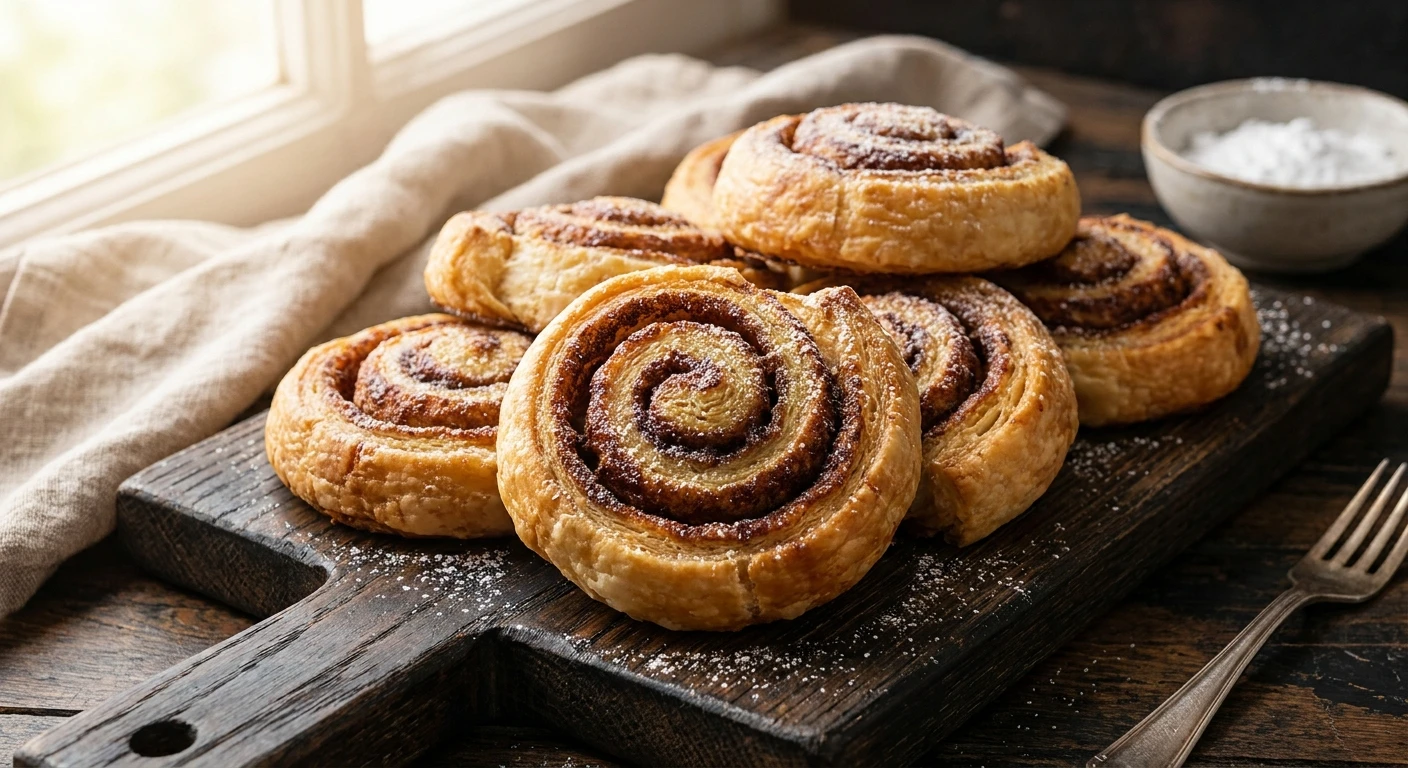
Why You Need Cinnamon Pinwheels in Your Life
Whenever you need a quick comfort fix, baking warm cinnamon pinwheels is the absolute best way to turn your day around. There is something deeply satisfying about that combination of crisp, buttery pastry and a rich, sweet, spiced filling. The aroma alone acts like a warm hug for your entire house. You get all the comforting flavor profiles of a classic, labor-intensive sweet roll, but in a fraction of the time. The thesis is simple: baking does not have to be an all-day chore to deliver spectacular results, and these swirled treats prove exactly that.
Living here in Kyiv, the winters can get incredibly brisk. During those chilly mornings, my grandmother used to roll out a local variation of sweet dough filled with farmer’s cheese and jam. While those were fantastic, I distinctly remember the first time I baked a classic spiced version instead. The intense, warming aroma totally changed my perspective on quick baking. Fast forward to 2026, and my weekend morning ritual remains unchanged. I stand in my kitchen, roll out the dough, and sip on a strong, dark Ukrainian coffee while waiting for the oven to do its magic. It is a foolproof method for generating instant happiness, and sharing them with friends always brings a massive smile to their faces.
The Core Mechanics of a Perfect Swirl
To understand why this pastry works so well, you just have to look at the contrast in textures. The exterior gets beautifully crispy, while the interior remains slightly chewy and heavily saturated with melted butter and dark brown sugar. They are remarkably versatile. I make them for lazy Sunday mornings, but they are equally impressive if you need a rapid dessert for unexpected guests. Think about hosting a cozy autumn afternoon tea party; a platter of these warm treats pairs impeccably with Earl Grey or a spicy chai. Or consider a busy holiday breakfast where you want a festive vibe without waking up at 4 AM to knead yeast dough. They deliver massive value because you get premium bakery-level aesthetics with minimal kitchen stress.
Building the perfect flavor profile requires understanding your basic ingredients. Here is a quick breakdown of what goes into the mixture, what job it does, and how you can swap things out if you need to.
| Ingredient | Primary Function | Best Alternative |
|---|---|---|
| All-Purpose Flour | Provides structural integrity and chew | 1-to-1 Gluten-Free Flour Blend |
| Ground Ceylon Spice | Delivers the signature aromatic core | Ground Cardamom or Nutmeg |
| Unsalted Butter | Creates rich, flaky, distinct layers | High-Quality Vegan Butter Block |
| Dark Brown Sugar | Adds moisture and deep caramel notes | Coconut Sugar or Muscovado |
Achieving that flawless spiral shape requires a specific approach. You cannot just haphazardly roll and hack away with a dull knife. Follow these core rules to keep your swirls intact:
- Chill the dough thoroughly before you attempt to cut it. Warm dough squishes and loses its circular definition the moment pressure is applied.
- Roll the cylinder tightly to avoid large air gaps. Loose rolling leads to the filling melting right out onto the baking sheet instead of staying trapped in the pastry.
- Use unflavored dental floss or a very sharp serrated knife to slice the portions. Floss applies even pressure entirely around the log, ensuring perfectly round discs.
Origins of the Spiced Swirl
To really appreciate what you are eating, you have to look back at the origins of the ingredients. The concept of rolling a sweet filling into dough dates back centuries, but the specific star of the show has a complex past. Traders carried spices from Sri Lanka and the Malabar Coast across treacherous routes just to supply European bakers. Once this highly prized bark reached Europe, it became a symbol of wealth. Wealthy households would command their kitchen staff to incorporate it into lavish breads and pastries. The idea of forming a spiral was both a visual flex and a practical way to ensure every single bite contained the expensive flavoring.
Evolution Across Europe
As trade routes expanded and ingredients became more accessible to the working class, regional variations exploded. You can trace the lineage of this concept to the famous Swedish Kanelbulle and various Eastern European rolled nut breads. However, traditional yeast-based breads required massive time investments. As the pace of life sped up, bakers started adapting these flavors into quicker formats like shortcrust pastry and puff pastry. The evolution shifted from heavy, dense loaves meant to sustain workers, to delicate, refined cookies and pastries designed for afternoon leisure and immediate gratification.
The Modern State of Baking
Right now, baking is all about maximizing flavor while minimizing effort. The modern kitchen has embraced the shortcut without sacrificing quality. Store-bought all-butter puff pastry has completely revolutionized how we approach these treats. You no longer have to laminate dough for three days to get an exquisite, flaky texture. Furthermore, dietary adaptations have never been better. Plant-based butters behave almost exactly like dairy butter now, meaning vegan adaptations of these treats are entirely indistinguishable from the classic recipes. The focus has shifted to the quality of the spice itself, with bakers seeking out single-origin varieties for the most intense aromatic experience possible.
The Maillard Reaction in Pastry
When you place your baking tray into the oven, a fascinating sequence of chemical events triggers. The most critical is the Maillard reaction. This happens when amino acids and reducing sugars endure high heat, typically starting around 140°C (285°F). This reaction is solely responsible for transforming pale, raw dough into a glorious, golden-brown masterpiece. It creates hundreds of new flavor compounds, bringing out those irresistible roasted, caramel, and slightly nutty notes. Without this chemical process, your baked goods would taste flat and completely uninteresting. The brown sugar in the filling caramelizes alongside the pastry, creating a sticky, slightly chewy edge that contrasts perfectly with the delicate, flaky center.
The Volatile Compounds of Flavor
The sensory magic relies heavily on science. The primary organic compound responsible for that distinct aroma is cinnamaldehyde. This compound is highly volatile, meaning it vaporizes easily when exposed to heat. This is precisely why your entire house smells incredible while the oven is running. However, this volatility also means you must handle the spice correctly to preserve its potency.
- Cinnamaldehyde interacts with the fat molecules in the butter, which actually helps trap the flavor in the pastry rather than letting it all evaporate.
- The water content in the butter rapidly turns to steam at 100°C (212°F), forcibly pushing the pastry layers apart to create structural flakiness.
- Gluten networks formed during the dough mixing phase stretch to trap this steam, preventing the pastry from collapsing into a dense puck.
- The sugar acts as a hygroscopic agent, meaning it attracts and holds onto moisture, keeping the interior of the pastry soft for days.
Step 1: Gather Your Ingredients
Preparation is everything. Do not start mixing until your workspace is fully set up. You need flour, baking powder, salt, cold butter, milk, dark brown sugar, and high-quality ground spice. Make sure your butter is genuinely cold, straight from the fridge. Warm butter will ruin the flaky texture we are trying to achieve. Measure everything precisely, preferably using a digital kitchen scale for absolute accuracy.
Step 2: Prepare the Dough Base
Whisk your dry ingredients together in a large mixing bowl. Cut the cold butter into small cubes and toss them into the flour. Use a pastry blender or your fingers to rub the butter into the flour until the mixture resembles coarse breadcrumbs. You want pea-sized lumps of butter remaining. Slowly pour in the cold milk, gently stirring with a fork just until the dough comes together. Do not overwork it, or you will develop too much gluten and end up with tough pastries.
Step 3: Mix the Sweet Filling
In a separate, smaller bowl, combine softened butter, dark brown sugar, and your ground spice. You want this to form a thick, spreadable paste. Using a paste rather than sprinkling dry sugar over melted butter guarantees that the filling stays inside the pastry while baking. The paste acts like a glue, binding the layers together seamlessly.
Step 4: Roll the Dough Flat
Lightly dust your clean kitchen counter with flour. Turn the dough out and pat it into a rough rectangle. Using a rolling pin, roll the dough out until it is about a quarter of an inch thick. Try to maintain a rectangular shape, measuring roughly 9 by 12 inches. If the dough starts sticking, lightly dust underneath it with a bit more flour, but be sparing.
Step 5: Spread and Swirl
Take your spiced sugar paste and spread it entirely across the rolled-out dough. Go all the way to the edges, leaving just a tiny half-inch border on one of the longer sides. Starting from the opposite long edge, begin rolling the dough tightly into a log. Work slowly, ensuring there are no air gaps. Pinch the final un-sugared edge to seal the seam tightly.
Step 6: Chill and Slice
Wrap your dough log tightly in plastic wrap and place it in the refrigerator for at least thirty minutes. This chilling phase firms up the butter and makes slicing infinitely easier. Once chilled, unwrap the log and use your unflavored dental floss or a serrated knife to cut it into one-inch thick slices. Place the slices on a baking sheet lined with parchment paper, leaving two inches of space between them.
Step 7: Bake to Golden Perfection
Preheat your oven to 200°C (400°F). Bake the pastries for 15 to 18 minutes. Watch them closely after the 12-minute mark, as the high sugar content makes them prone to burning. You want a deep golden brown color, and the filling should be bubbling. Remove them from the oven and let them cool on the baking sheet for five minutes before transferring them to a wire rack. They are best enjoyed slightly warm.
Myths vs. Reality in Pastry Making
Myth: You absolutely must make the dough entirely from scratch to get a decent result.
Reality: High-quality store-bought puff pastry or crescent dough sheets provide exceptional results and save you massive amounts of time. Do not feel guilty about using shortcuts.
Myth: These pastries are strictly meant to be eaten for breakfast.
Reality: They operate brilliantly as a late-night dessert. Serve a warm pastry next to a giant scoop of vanilla bean ice cream for a spectacular evening treat.
Myth: Adding extra spice will always result in a better, stronger flavor.
Reality: Overloading the filling can actually turn the mixture bitter and gritty. Stick to the suggested ratios for a balanced, sweet, and aromatic experience.
How long do they stay fresh?
They are absolute perfection on the day they are baked. However, you can store them in an airtight container at room temperature for up to three days. Just pop them in the microwave for ten seconds to revive that soft texture.
Can I freeze the unbaked dough?
Yes, absolutely. Once you roll the dough into a log, wrap it tightly in plastic wrap and then foil. It will stay good in the freezer for up to two months. Just thaw it in the fridge overnight before slicing and baking.
What kind of cinnamon is best?
Ceylon is highly recommended for its complex, floral, and slightly sweet flavor profile. Cassia, which is standard in most supermarkets, works fine but has a much sharper, more aggressive bite.
Can I add nuts or raisins?
Of course. Finely chopped pecans or walnuts add a phenomenal crunch. If adding raisins, soak them in warm water for ten minutes first so they do not burn in the oven.
Why did my filling leak out?
This usually happens if the dough was not rolled tightly enough, or if you used melted butter instead of creating a paste. Ensure your sugar paste is thick and your rolling technique is snug.
Do I need a special baking pan?
No special equipment is required. A standard flat metal baking sheet lined with parchment paper or a silicone baking mat works perfectly and ensures easy cleanup.
Is it possible to make them vegan?
Very easily. Swap the dairy milk for oat or almond milk, and use a high-quality plant-based butter block. The technique and baking times remain exactly the same.
How thick should I slice them?
Aim for about one inch thick. If you cut them too thin, they will dry out and become hard in the oven. If you cut them too thick, the center will remain raw while the outside burns.
Can I top them with icing?
A simple glaze made of powdered sugar, a splash of milk, and vanilla extract takes these to the next level. Drizzle it over the top only after the pastries have completely cooled.
Why is my pastry tough?
Tough pastry is the direct result of over-mixing the dough or using warm butter. Handle the dough as little as possible to keep the gluten networks relaxed.
Baking a tray of fresh cinnamon pinwheels is one of the easiest ways to bring joy into your kitchen. Whether you are using a quick store-bought puff pastry shortcut or mixing up a buttery dough from scratch, the result is always going to be incredible. The smell of caramelized sugar and warm spice never fails to impress. Grab your ingredients, follow these precise steps, and treat yourself today. Do not forget to share your freshly baked results with your friends, and enjoy every single warm, flaky bite!
Leave a Reply