
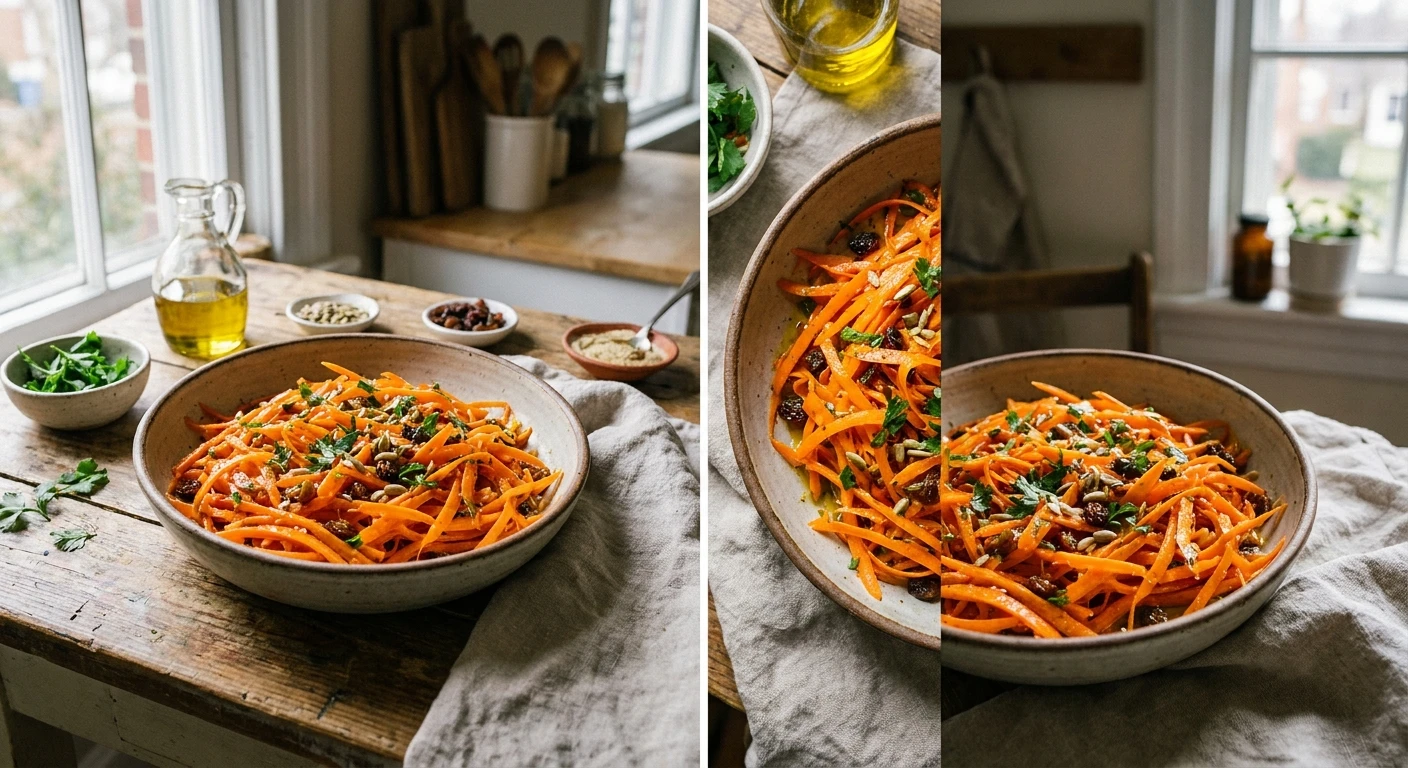
Why You Need This carrot salad with vinegar and sugar Right Now
If you want a side dish that absolutely slaps, a classic carrot salad with vinegar and sugar is exactly what you need in your kitchen rotation right now. Listen, I know fancy salads get all the hype on social media, but sometimes the most basic ingredients create the most mind-blowing flavors. Growing up, I spent my summers in Ukraine, mostly running around my grandparents’ dacha. On sweltering July afternoons, nobody wanted to turn on the stove. My babusya would walk out to the garden, pull fresh, dirt-covered carrots from the earth, wash them under the freezing cold outdoor hose, and bring them inside.
Within ten minutes, she would grate them down and toss them with the sharpest white vinegar and a generous handful of white sugar. The smell alone—that sharp, sweet, earthy aroma—instantly made my mouth water. It is the ultimate fast, affordable, and incredibly healthy snack. You do not need expensive greens that wilt in two days. You just need root vegetables and pantry staples. My thesis here is simple: this minimalist combination offers the perfect balance of acid, sweetness, and crunch, serving as the ultimate culinary equalizer for heavy meals.
Read also: Crispy frozen green beans in air fryer; The Ultimate Seafood Stir Fry Recipe.
I am telling you, once you master this basic preparation, you will stop buying those sad, soggy pre-packaged deli salads. It takes literally minutes, costs pennies per serving, and stays incredibly crisp for days. So grab your box grater, and let’s get into the absolute magic of this timeless side dish.
The Core Magic: Breaking Down the Sweet and Sour Crunch
You might be wondering why something so incredibly basic tastes so good. The secret lies in the aggressive contrast of flavors. When you mix sharp acidity with pure sweetness, you trick your palate into a state of total satisfaction. The sugar cuts the harsh, acidic burn of the vinegar, while the vinegar prevents the sugar from making the dish taste like a dessert. It is a brilliant culinary tug-of-war. Plus, raw carrots are naturally sweet and packed with an earthy crunch, providing the absolute perfect canvas for this dressing.
This dish holds immense value for home cooks because it acts as the ultimate palate cleanser. Imagine you are eating a heavy, fatty slice of roasted pork, or a massive portion of mac and cheese. You need something to cut through that fat. A scoop of this vibrant orange slaw resets your taste buds completely. For instance, you can pile it high on a pulled BBQ jackfruit sandwich for a vegan crunch, or serve it directly alongside heavy smoked sausages at a summer cookout.
| Ingredient | Core Function | Easy Alternative |
|---|---|---|
| Fresh Carrots | Provides the earthy base and crunchy texture. | Parsnips or Daikon Radish |
| White Vinegar | Adds sharp acidity to break down the vegetable walls. | Apple Cider Vinegar or Lemon Juice |
| White Sugar | Balances the acidity and creates a glossy syrup. | Honey or Maple Syrup |
If you need more convincing, here are the top reasons why you should constantly keep a batch of this in your fridge:
- Insane Fridge Longevity: Unlike leafy greens that turn to total mush after 24 hours, grated root vegetables actually get better, crunchier, and more flavorful as they sit in their acidic bath for days.
- Budget-Friendly Brilliance: You can buy a massive bag of carrots for a couple of dollars. Combined with cheap pantry staples, this might literally be the most cost-effective side dish on the planet.
- Total Versatility: It works with literally any cuisine. Stuff it in tacos, eat it with grilled fish, or just shovel it into your mouth straight from the bowl at midnight.
Origins of the Sweet and Sour Crunch
Let me tell you where this beautiful concoction actually comes from. The roots of this dish are deeply embedded in Eastern European and Central Asian preservation cultures. Long before modern refrigeration, people needed ways to keep vegetables edible through brutally long, freezing winters. Root vegetables like carrots, beets, and cabbage were survival staples. Pickling them with strong vinegars was the only way to preserve them. But pure vinegar is harsh, so families began adding sugar or honey to make the preserved vegetables palatable and genuinely enjoyable to eat in the dead of winter.
Evolution of the Dish
As the decades rolled by, this survival tactic evolved into a culinary staple. If you walked into any Soviet-era stolovaya (public canteen) in the 1970s or 1980s, you would undeniably see small glass plates piled high with vibrantly dressed grated carrots. It was standardized, cheap, and loved by everyone. The cafeteria workers would prep massive industrial buckets of the stuff. Over time, families brought the concept home, tweaking it slightly. Some added garlic, others added sunflower oil, but the holy trinity of the vegetable, the acid, and the sweet granules always remained untouched.
The Modern State of Carrot Salads
Right now, in the year 2026, we are seeing a massive revival of these old-school, minimalist recipes. People are entirely burnt out on overly complicated cooking routines. As grocery prices fluctuate and folks look for sustainable, whole-food options, going back to basics is the ultimate flex. High-end hipster cafes are currently charging ridiculous amounts of money for “heritage sweet and sour root slaws,” which is hilarious because it is just the exact same cheap dish our grandmothers made. The modern foodie respects the simplicity, realizing you do not need 15 ingredients to make something taste phenomenal.
The Chemistry of Vinegar and Sugar on Raw Carrots
Okay, let’s geek out for a second about what actually happens in the bowl. It is not just mixing; it is literal chemistry. Carrots are packed with rigid cell walls made of cellulose. When you introduce acetic acid (vinegar) to the raw, grated vegetable, the acid starts a slow breakdown of those cellular structures. It slightly softens the vegetable without turning it to mush. At the same time, the sugar triggers a process called osmosis. The high concentration of sugar on the outside of the carrot pulls water out from the inside of the carrot. This drawn-out water mixes with the vinegar and undissolved sugar, creating its own perfectly balanced, naturally slightly thickened dressing right at the bottom of your bowl.
Nutritional Synergies You Didn’t Know About
You might think adding sugar cancels out the health benefits, but that is totally false. The sheer volume of dietary fiber in the raw carrots severely slows down the absorption of the added sugar, preventing massive insulin spikes. Furthermore, the acidic environment actually aids your digestion.
- Beta-Carotene Powerhouse: Carrots are universally famous for vitamin A, which supports eye health and immune function.
- Digestive Fire: The acetic acid from the vinegar acts as a mild digestive aid, helping your stomach break down heavier proteins eaten alongside the meal.
- Gut-Friendly Fiber: The high levels of raw, insoluble fiber sweep through your digestive tract, promoting excellent gut mobility.
- Glycemic Control: The vinegar has been scientifically shown to lower the glycemic response of the meal, offsetting the small amount of refined sweetness added.
Your Ultimate 7-Day Carrot Salad Action Plan
Because I want you to truly embrace this dish, I built a 7-day plan. You can make a massive batch on Sunday and slightly alter it every single day so you never get bored. Here is exactly how to do it.
Day 1: The Classic Base Recipe
Start your week right. Grate four large carrots. Toss them with three tablespoons of standard white vinegar, one tablespoon of white sugar, and a solid pinch of sea salt. Let it sit in the fridge for at least 30 minutes before eating. Enjoy the pure, unadulterated classic.
Day 2: Adding Fresh Herbs
On Monday, take your leftover base and chop up a massive handful of fresh dill or parsley. Throw it in and mix vigorously. The herbs add a vibrant, grassy freshness that completely wakes up the flavor profile and makes it feel like an entirely new side dish.
Day 3: The Garlic and Oil Upgrade
Tuesday calls for richness. Grate one small clove of fresh garlic directly into the mix, and drizzle in a tablespoon of unrefined sunflower oil or extra virgin olive oil. The oil coats your palate and dramatically changes the mouthfeel, making it taste deeply savory.
Day 4: Toasted Sesame and Soy Twist
It is hump day, let’s pivot the flavor profile. Add a splash of soy sauce, half a teaspoon of toasted sesame oil, and a sprinkle of sesame seeds. Suddenly, your Eastern European classic tastes like a brilliant Asian-inspired slaw that pairs perfectly with rice bowls.
Day 5: Mixing with Cabbage for Slaw
Thursday means stretching the leftovers. Finely shred a wedge of green or purple cabbage and aggressively massage it right into the remaining carrot mix. The vinegar will immediately start breaking down the cabbage, giving you a beautiful, vibrant hybrid salad.
Day 6: Spicy Kick with Chili Flakes
Friday needs some heat. Dust your mix with crushed red pepper flakes or a spoonful of chili crisp. The sweetness of the sugar beautifully balances the sharp heat of the chili, creating an addictively spicy and sour crunch that you will honestly crave.
Day 7: The Ultimate Sandwich Topper
By Saturday, the flavors have marinated intensely. The carrots are slightly softer but still pack a massive crunch. Use this final batch as a heavy condiment. Pile it high on grilled cheese sandwiches, hot dogs, or smash burgers for an epic textural contrast.
Myths & Reality: Clearing Up the Confusion
People always overcomplicate food. Let’s completely destroy some common misconceptions about this simple recipe right now.
Myth: Adding sugar makes this dish completely unhealthy and basically a dessert.
Reality: You are using a tiny amount of sugar stretched across multiple servings of fibrous vegetables. The fiber completely negates any massive blood sugar spikes, making it perfectly fine.
Myth: You absolutely must use an expensive food processor to shred the vegetables properly.
Reality: A cheap, standard metal box grater actually produces the best texture, creating uneven ribbons that hold onto the dressing way better than machine-cut matchsticks.
Myth: You need fancy, expensive apple cider or balsamic vinegars for good flavor.
Reality: Standard, cheap white vinegar provides the sharpest, cleanest bite and authentically replicates the classic, nostalgic flavor profile better than anything else.
Myth: The dish will get completely soggy and gross if left in the fridge overnight.
Reality: It literally gets better. The curing process softens it slightly but locks in an incredible, snappy crunch that lasts for up to a full week.
Frequently Asked Questions
Can I use brown sugar instead of white?
Absolutely. Brown sugar adds a deeper, slightly molasses-like flavor. It will slightly darken the color of the dressing, but the taste is incredibly rich and totally delicious.
What vinegar is best if I don’t have white?
Apple cider vinegar is the absolute best runner-up. It provides a fruity acidity that works perfectly. Rice vinegar is also great for a milder, sweeter finish.
How long does this salad genuinely last in the fridge?
If kept in an airtight container, it stays perfectly crisp and safe to eat for 5 to 7 days. The vinegar acts as a natural preservative, keeping it fresh.
Can I add onions to the mix?
Yes, thinly sliced red onions are a brilliant addition. The acid will actually quickly pickle the onions right in the bowl, taking away their harsh raw bite.
Do I absolutely need to peel the carrots first?
Not if you wash them incredibly well. The skins hold great nutrients. However, peeling them results in a brighter orange color and a slightly sweeter overall flavor.
Is this recipe 100% vegan?
Yes, the classic recipe is entirely plant-based. Just double-check that the specific brand of white sugar you use is certified vegan, as some are processed with bone char.
Can I freeze this salad for later?
I strongly advise against freezing it. Freezing will completely destroy the cellular structure of the carrots, turning them into absolute mush when thawed.
Can I use pre-shredded carrots from the store?
You can in an absolute emergency, but they are incredibly dry. Grating them fresh ensures you get the natural vegetable juices necessary to form the dressing.
Is it okay to use a sugar substitute?
Yes, monk fruit sweetener or stevia works perfectly fine if you are watching your carbs. Just adjust the measurements according to the substitute’s specific sweetness level.
Should I serve this cold or at room temperature?
It is best served chilled straight from the fridge, as the cold temperature aggressively enhances the crisp, refreshing crunch of the raw vegetables.
Conclusion
Alright, you now possess all the knowledge you need to master this incredibly simple, delicious side dish. It is crunchy, sweet, sour, and absolutely packed with bright flavor. Stop overthinking your dinner sides and lean into the classics. Go grab some root veggies, mix up your dressing, and enjoy the magical simplicity of this timeless recipe. If you try it out, leave a comment below or share this guide with a friend who desperately needs a new go-to snack!
Leave a Reply