

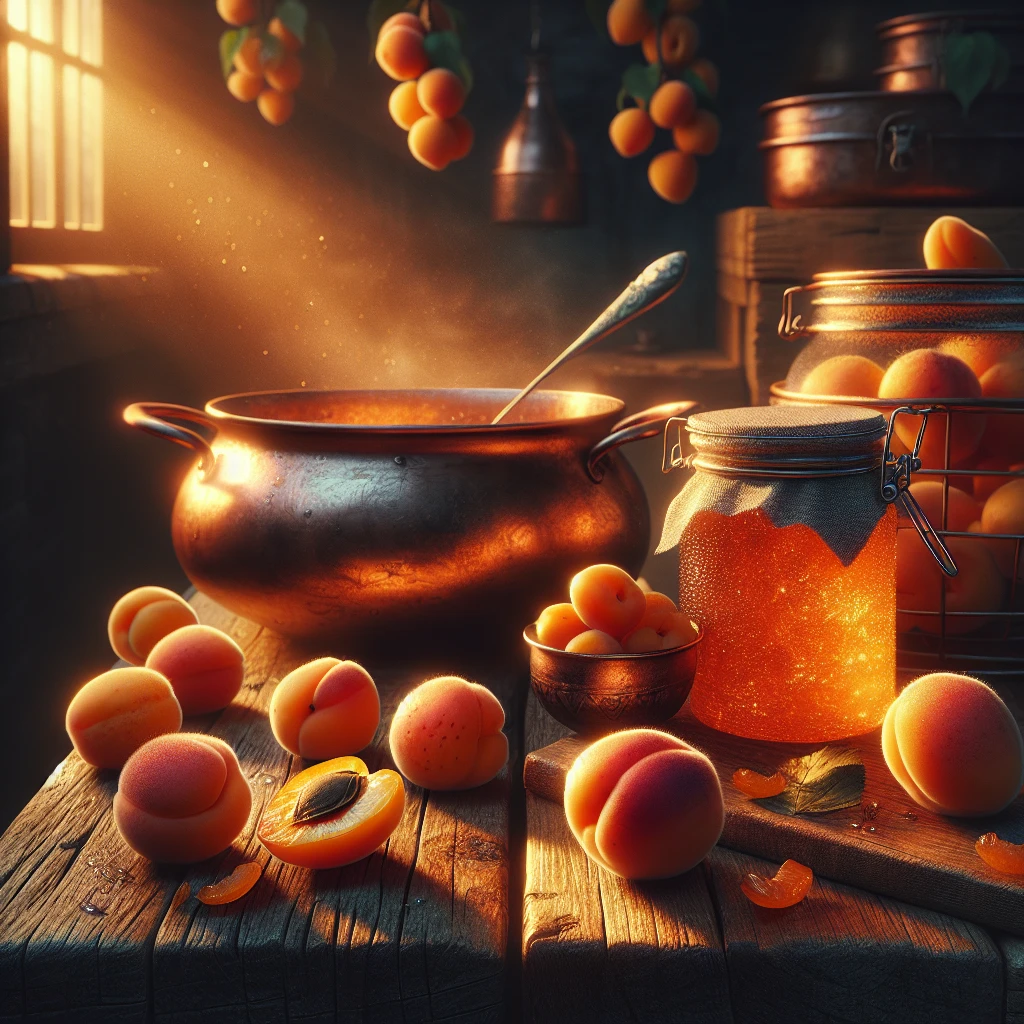
Quick and Easy Certo Apricot Jam Recipe
Ever wondered why your grandmother’s pantry always smelled like summer, and how you can replicate that magic using a trusty certo apricot jam recipe? Growing up, summer meant one thing: hauling buckets of fresh, sun-ripened fruit from my grandfather’s dacha near Kyiv. We’d sit on the porch for hours, pitting the sticky, fragrant fruit while bees buzzed lazily around us, drawn to the sweet nectar. Back then, making preserves took all day, boiling sugar and fruit until it naturally thickened into a dark, rich paste. The house would turn into a sauna, filled with the heavy scent of caramelized sugars.
Now, living in a fast-paced environment, I still intensely crave that exact taste of a vibrant Ukrainian summer, but I simply do not have twelve hours to spare monitoring a simmering stove. Crafting a flawless, sweet-tart fruit spread doesn’t require a culinary degree or endless patience. With the right ingredients and a little bit of structural magic, you can lock in that bright sunshine flavor in under an hour. I am sharing my absolute favorite, foolproof method to get that perfect, spreadable set every single time, without losing the fresh, vibrant tang we all desperately love about this specific stone fruit.
The Core Method: Why Pectin Changes Everything
Why do we even need to rely on a specific commercial brand or additive when cooking? Apricots are naturally very low in natural gelling carbohydrates. If you try to cook them down with just pure sugar, you often end up with a highly delicious but exceptionally runny syrup that instantly slides right off your morning toast. Using a commercial gelling agent ensures a completely reliable, firm set. There are massive tangible benefits to this modern approach. First, it requires significantly less cooking time, which perfectly preserves the bright, luminescent orange color and the fresh, tangy flavor of the raw harvest. Second, it yields vastly more volume since you aren’t spending hours evaporating all the natural water away.
| Method Used | Cooking Time Required | Fruit Flavor Retention | Set Reliability |
|---|---|---|---|
| Liquid Pectin (Like Certo) | 1-2 Minutes (hard rolling boil) | Incredibly High (Fresh, bright, vibrant) | Extremely High |
| Powdered Pectin | 1-3 Minutes (hard rolling boil) | High (Retains color and texture) | High |
| Traditional (No Pectin) | 30-60 Minutes (slow simmer) | Medium (Caramelized, dark, cooked taste) | Low (Often turns out runny) |
This streamlined method saves you incredible amounts of time and kitchen stress. For example, instead of spending your entire Sunday stirring a bubbling, scorching cauldron, you can whip up an entire batch right before breakfast and still have the rest of your day free. Another example: the high yield makes it incredibly cost-effective for holiday gifting, allowing you to produce a dozen jars from a single modest basket of produce. To succeed, you need to prepare perfectly.
- Wash and completely dry the produce thoroughly to remove any field dust, pesticides, or wild natural yeasts that might cause premature fermentation in your sealed jars.
- Finely chop or hand-crush the pieces rather than completely puréeing them in a blender. Keeping those beautiful, rustic chunks intact provides an incredible, professional texture.
- Measure the exact, precise amount of sweetener and crushed fruit into entirely separate bowls before you ever turn on the stove. Once the boil begins, timing is critical and you cannot stop to measure.
Origins of Preserving and Gelling
Long before we had neat little packets and bottles of reliable gelling agents lining our supermarket aisles, preserving the seasonal harvest was a strict matter of winter survival. Ancient Greeks and Romans brilliantly preserved quince in baths of pure honey, accidentally discovering that certain fruits thickened naturally into a solid paste when heated. The actual chemistry behind this mysterious thickening wasn’t scientifically understood until 1825, when the brilliant French chemist Henri Braconnot first formally isolated the specific carbohydrate responsible. Home cooks eventually realized that mixing naturally high-pectin fruits like tart apples or citrus peels with low-pectin fruits helped everything set properly, though the results remained wildly inconsistent.
The Evolution of Commercial Solutions
Fast forward to the dynamic early 20th century. The Douglas Pectin Company officially introduced the very first commercially available liquid pectin, completely revolutionizing the art of home canning. Suddenly, homemakers absolutely did not have to boil their precious harvest into a dark, muddy, caramelized mush just to get it to spread nicely on a slice of fresh bread. By industrially extracting these carbohydrates from leftover apple pomace and discarded citrus peels, companies provided an incredible shortcut that forever changed breakfast tables globally. It rapidly became a massive staple in North American and European kitchens alike, widely celebrated for its absolute convenience, foolproof nature, and ability to keep flavors tasting remarkably fresh.
Modern State of Home Canning
As we navigate the culinary trends of 2026, home food preservation has experienced a truly massive and exciting resurgence. People passionately want complete control over their daily ingredients, aggressively reducing artificial preservatives while deeply embracing artisanal, homemade quality. Modern cooks highly appreciate the rich heritage of putting up provisions, seamlessly blending traditional, nostalgic recipes with exact precision science. We now understand exactly how specific pH levels and sugar ratios interact chemically, making the entire canning process infinitely safer and more predictable than ever before. We happily get to enjoy the nostalgic, romantic charm of a bubbling pot of sweet apricots without dealing with the historical unreliability that frustrated our ancestors.
The Chemistry of the Gel Matrix
Creating the perfect morning spread is basically conducting a delicious, edible science experiment right in your kitchen. The gelling agent we use is a complex polysaccharide—essentially a very long chain of specific sugar molecules naturally found inside the rigid cell walls of terrestrial plants. Think of it conceptually as the structural, biological glue that holds microscopic plant cells firmly together. When you aggressively heat crushed fruit, you rapidly break down those tough cell walls and naturally release whatever low levels of this carbohydrate are natively present. Adding a commercial pouch introduces a massive, concentrated army of these long chains directly into your hot pot. However, these chains naturally hold a negative electrical charge, causing them to strongly repel each other. They desperately need external chemical help binding together to physically trap the water and juice, forming that lovely, jiggly, spreadable matrix we want.
Sugar, Acid, and Molecular Binding
To forcefully convince those stubbornly repelling microscopic chains to finally bond together, we strictly need two absolutely key catalysts: highly specific acidity and a vast amount of sugar. Acid rapidly lowers the overall pH of the hot solution, effectively neutralizing the negative electrical charges on the molecules so they completely stop pushing each other away. While these particular stone fruits possess some natural acidity, we almost always add a generous splash of fresh lemon juice to absolutely ensure the pH drops below the critical 3.5 threshold. The sweetener acts as a powerful dehydrating agent in this scenario. It aggressively binds to the free water floating in the mixture, pulling that hydration away from the chains and forcefully leaving them no choice but to grab tightly onto each other instead.
- Cellular breakdown phase: Intense heat rapidly softens the flesh, completely releasing deeply trapped juices, hidden flavors, and natural dietary fibers into the liquid solution.
- Water absorption mechanism: Granulated sugar molecules aggressively seek out and permanently bond with any available free water molecules they bump into.
- Molecular bonding action: The electrically neutralized chains blindly collide in the boiling chaos and securely lock together, forming a vast, invisible, three-dimensional microscopic web.
- Cooling phase suspension: As the ambient temperature finally drops below exactly 104°F (40°C), this massive 3D web physically solidifies, perfectly trapping the suspended chunks in a permanent gel.
Step 1: Completely Sterilize the Glassware
You absolutely need flawlessly clean, sterile glass to prevent dangerous spoilage. Thoroughly wash your heavy glass jars, fresh metal lids, and screw bands in extremely hot, highly soapy water. Carefully rinse them, then carefully place the empty glass jars upright into a massive boiling water bath for exactly ten full minutes to ensure they are completely sterile. Keep them sitting in the hot water until you are entirely ready to begin filling them.
Step 2: Prepare the Fresh Fruit
Take exactly about three pounds of fresh, wonderfully ripe, brightly colored apricots. Wash them meticulously under cold running water, carefully remove all the inner pits, and finely chop the remaining flesh with a sharp chef’s knife. Absolutely do not peel them; the delicate fuzzy skins hold tremendous amounts of pure flavor and stunning color. You want to yield exactly four tightly packed cups of crushed flesh.
Step 3: Measure the Granulated Sugar
Absolute precision is everything here; guessing will result in total failure. Measure exactly seven level cups of standard granulated white sugar directly into a completely separate, dry mixing bowl. Absolutely do not attempt to reduce this amount of sugar for dietary reasons, or the critical chemical reaction will instantly fail, completely leaving you with a runny, unusable syrup.
Step 4: Combine Components and Heat Gently
Carefully transfer your precisely measured four cups of prepared produce into a very large, incredibly heavy-bottomed cooking pot. Briskly stir in exactly a quarter cup of freshly squeezed, strained lemon juice to easily achieve that essential, critical acid bump we discussed earlier. Bring this chunky mixture to a very gentle, bubbling simmer over medium heat to begin naturally softening the firm flesh.
Step 5: Add Sweetener and Achieve Rolling Boil
Confidently dump all seven previously measured cups of sweetener directly into the simmering pot all at once. Stir the mixture constantly and aggressively over maximum high heat until the entire liquid reaches a massive, violent, full rolling boil—one that you physically cannot stop or stir down with a wooden spoon. This period of intense, chaotic heat is structurally critical for proper activation.
Step 6: Introduce the Liquid Gelling Agent
Immediately rip open and forcefully squeeze in exactly one full liquid pouch of your chosen commercial gelling agent. Keep stirring constantly, scraping the bottom of the pot, and strictly maintain that violent, hard rolling boil for exactly one full, uninterrupted minute. Timing is absolutely crucial here—set a digital timer. Promptly remove the heavy pot from the intense heat and quickly skim off any pale, airy foam floating on the surface.
Step 7: Fill Jars and Process for Stability
Carefully ladle the remarkably hot, liquid mixture directly into your prepared, still-hot sterile jars, leaving exactly a precise quarter-inch of empty headspace right at the very top rim. Meticulously wipe the glass rims perfectly clean with a damp paper towel, apply the fresh flat lids and metal screw bands tightly, and process the filled jars completely submerged in a rapid boiling water bath for exactly ten minutes to forcefully seal them securely for long-term pantry storage.
Common Preserving Myths
Myth: You can easily cut the sweetener amount entirely in half to make the final product much healthier for your daily diet.
Reality: The sweetener is a fundamentally necessary structural ingredient, absolutely not just a simple flavor enhancer. Reducing it chemically prevents the critical molecular bonding required for a firm set. If you intensely desire less sweetness, you must specifically buy a completely different, specially formulated low-sugar chemical gelling agent.
Myth: Using incredibly old, wildly overripe, mushy fruit always makes the absolute sweetest, most flavorful home preserves.
Reality: Wildly overripe produce actually possesses dramatically lower natural acidity and drastically diminished cellular structure. A smart, balanced mix of mostly perfectly ripe fruit blended with a few slightly firm, underripe pieces reliably yields the absolute best texture and bright tartness.
Myth: If the hot liquid doesn’t firmly set immediately upon cooling down on the kitchen counter, the entire batch is permanently ruined.
Reality: Some stubborn batches inexplicably take up to two full, uninterrupted weeks to completely and permanently set up inside the sealed glass. Leave them entirely undisturbed sitting in a cool, totally dark pantry before impatiently deciding you’ve made a terrible chemical mistake.
FAQ: Why did my batch completely fail to set?
Usually, this tragic failure happens strictly because the rigid sweetener ratio was playfully altered by the cook, or the violent, hard rolling boil wasn’t strictly maintained for a full, uninterrupted sixty seconds.
FAQ: Can I safely use commercially frozen fruit instead of fresh?
Yes, you can absolutely use frozen chunks. You must thaw them completely in a bowl and specifically include all the resulting colored juices in your strict four-cup volume measurement.
FAQ: Exactly how long will the safely sealed jars realistically last?
Properly processed, tightly sealed, and safely stored in a completely dark, cool basement or pantry, they will easily maintain their top nutritional quality and bright flavor for twelve to eighteen full months.
FAQ: Do I absolutely have to aggressively process them in a boiling water bath?
For safe, long-term ambient shelf stability, yes, absolutely. If you lazily skip this critical safety step, you must immediately store all the jars tightly sealed in the cold refrigerator and fully consume them within thirty days.
FAQ: Can I creatively add warm spices like raw vanilla bean or ground cardamom?
Definitely. Carefully stir in exactly one teaspoon of high-quality pure vanilla extract or a generous pinch of fragrant ground cardamom immediately just after safely removing the bubbling pot from the intense heat.
FAQ: What do I do if my batch predictably remains liquid and runny after waiting two full weeks?
You can meticulously empty the jars and aggressively re-boil the liquid with a tiny bit more chemical agent, or simply elegantly embrace the failure and happily use it as a totally fantastic, intensely flavorful dessert syrup topping for morning pancakes and plain Greek yogurt.
FAQ: Is liquid and dry powdered pectin entirely interchangeable in recipes?
Absolutely no, they are structurally different and purposefully added at entirely different specific stages of the chemical cooking process. Always strictly follow the highly specific printed instructions designed expressly for the exact formulation type you ultimately purchased.
Making your own exquisite preserves right at home beautifully connects you to deeply cherished, multi-generational familial traditions while keeping you firmly rooted in the unmatched convenience and exact precision of modern culinary science. By utilizing strict, careful measurements and an intensely fast, violent boil, you successfully capture the bright, vibrant, fleeting essence of warm summer days permanently inside a simple glass jar. Don’t sit back and idly wait for another fleeting fruit season to sadly pass you by—confidently grab your fresh ingredients, aggressively fire up the kitchen stove, and personally experience the immense, unmatched joy of creating homemade, deeply comforting sweetness. Passionately share your spectacular results with close friends, generously gift your hard work to your neighbors, and please enthusiastically let me know exactly how your delicious weekend batch beautifully turned out down in the comments below!
Leave a Reply