

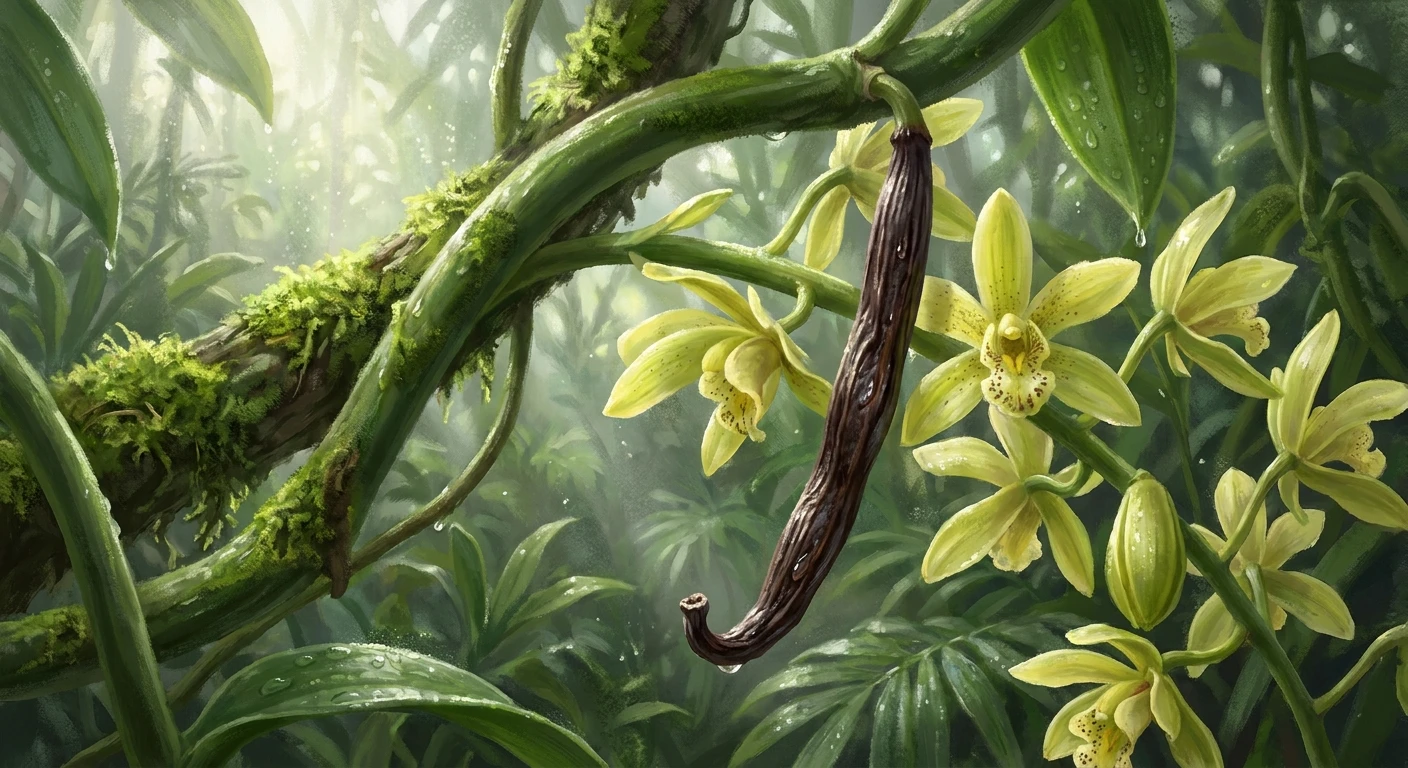
The Enigmatic Vanilla Fruit
The vanilla fruit is arguably the most recognizable flavor profile on earth, yet the actual physical pod remains an enigma to many everyday bakers. You probably have a small bottle of dark, sweet-smelling liquid sitting in your pantry right now. But understanding the botanical marvel behind the real agricultural product changes the way you approach food completely. The commercial extract you buy at the store pales in comparison to the immense depth of flavor locked inside a genuine, perfectly cured pod.
This slender, dark brown seed pod is actually the fruit of a climbing orchid. Producing it requires an extraordinary amount of human labor, precise timing, and immense patience. When you hold a single pod in your hand, you are holding the result of a delicate hand-pollination process and months of meticulous curing. Escaping the realm of synthetic, petroleum-derived flavorings and choosing the authentic pod elevates simple custards, cakes, and beverages into culinary masterpieces. By mastering the handling of this ingredient, you unlock an entirely new dimension of baking capability.
Read also: Ultimate Homemade Orange Pie Recipe and Tips; The Ultimate Brown Sugar Cake Recipe Guide.
Harnessing the Full Potential of the Pod
Working with the raw vanilla fruit requires an understanding of its physical structure and moisture content. Not all pods are created equal. The agricultural market classifies these pods into specific grades based on their visual appearance, moisture retention, and structural integrity. Selecting the correct grade dictates the success of your culinary project.
| Vanilla Grade | Average Moisture Level | Primary Culinary Application |
|---|---|---|
| Grade A (Gourmet / Prime) | 30% – 35% | Direct scraping for ice creams, custards, and delicate pastries |
| Grade B (Extract Grade) | 15% – 25% | Creating homemade liquid extracts, tinctures, and infusions |
| Grade C (Commercial) | Below 15% | Industrial flavorings, fragrance production, and bulk manufacturing |
The value proposition of using the whole pod is twofold: superior taste and zero waste. First, consider the flavor complexity. A Madagascar Bourbon pod delivers a rich, creamy, and highly traditional profile that pairs flawlessly with heavy creams and chocolates. Conversely, a Tahitian pod offers a distinctively floral, cherry-like aroma that shines brightly in fruit tarts and lighter glazes. Second, every single part of the pod is useful. After extracting the precious seeds, the empty husk still contains enormous aromatic power.
To properly harvest the seeds from the pod, follow these exact mechanical steps:
- Flatten the structure: Place the pod on a clean, stable cutting board and gently run your fingers along its length to flatten it out, ensuring the seeds are evenly distributed inside.
- Execute the bisection: Using a sharp paring knife, carefully score the top layer of the pod from the curved hook all the way down to the flat tip, exposing the dark, caviar-like interior.
- Scrape and extract: Turn the knife around and use the dull, unsharpened back of the blade to firmly scrape down the length of the open pod, collecting the sticky mass of seeds in one clean motion.
Origins of the Vanilla Orchid
The historical journey of the vanilla fruit begins deep within the dense forests of modern-day Mexico. Long before European galleons crossed the Atlantic, the indigenous Totonac people of the Veracruz region cultivated the vine. According to Totonac mythology, the orchid sprang from the blood of Princess Xanat, who fled to the forest with her mortal lover. The Totonacs held a strict monopoly on the cultivation of the plant, treating the aromatic pods as sacred offerings and valuable trade currency. When the Aztec Empire conquered the Totonacs in the 15th century, they immediately demanded the dark pods as tribute. The Aztecs called the spice “tlilxochitl,” translating to “black flower,” and primarily used it to flavor their bitter, frothy cacao beverages.
Global Evolution and Trade
In the early 16th century, Spanish explorers arrived in the Americas. Hernán Cortés is widely credited with bringing the fragrant pods, along with cacao, back to the European continent. For decades, the spice remained exclusively paired with chocolate, consumed only by royalty and the extreme elite. It was not until the early 17th century that Hugh Morgan, an apothecary to Queen Elizabeth I, boldly suggested using the pod as a standalone flavoring ingredient. This sparked a massive European demand. However, there was a major biological bottleneck. The specific Melipona bee, the only insect capable of naturally pollinating the orchid, lived exclusively in Mexico. Consequently, the vines grew in European botanical gardens but never produced any fruit.
Modern State of Cultivation
The global monopoly finally shattered in 1841 on the French island of Réunion. A 12-year-old enslaved boy named Edmond Albius figured out how to manually pollinate the orchid flower using a thin sliver of bamboo and his thumb. This brilliant mechanical workaround completely revolutionized the industry, allowing the crop to be grown in tropical climates worldwide. Today, Madagascar stands as the dominant global producer, yielding the vast majority of the world’s supply. The modern supply chain, however, is heavily affected by intense climate volatility. Severe cyclones and extreme weather patterns routinely damage the delicate vines, causing massive fluctuations in global market prices and making this one of the most expensive agricultural commodities on the planet.
Botanical Architecture
Scientifically, the plant is known as Vanilla planifolia. It is an epiphytic vine, meaning it relies on a host tree for physical structural support as it climbs toward the forest canopy, though it pulls its nutrients from the soil rather than parasitizing the host. The vine produces pale, greenish-yellow orchid flowers that bloom for merely a fraction of a day. The mechanics of the flower are exceptionally complex, featuring a physical barrier called the rostellum that permanently separates the male anther from the female stigma. Unless a human hand intervenes to lift that barrier and press the pollen directly into place during the fleeting morning hours, the flower simply drops off the vine and produces absolutely nothing.
The Chemistry of Vanillin
The magic of the pod lies in its chemical transformation. A raw, freshly harvested green pod holds completely zero aromatic value. It smells like a standard green bean. The intense flavor profile only emerges through a brutal, multi-stage curing process designed to trigger specific enzymatic reactions inside the cellular walls.
- The Blanching Phase: Freshly harvested green pods are briefly submerged in hot water (around 65 degrees Celsius) to kill the vegetative growth and initiate the enzymatic breakdown.
- The Sweating Phase: The hot pods are quickly wrapped in thick wool blankets and placed in dark, insulated boxes to sweat overnight, triggering beta-glucosidase enzymes.
- The Sun-Drying Cycle: For several weeks, workers lay the pods in the direct morning sun and then pack them away every afternoon, slowly reducing the moisture content to prevent rot.
- Chemical Composition: This exhaustive process forces the release of vanillin (4-hydroxy-3-methoxybenzaldehyde), along with more than 200 distinct trace organic compounds that create the full-bodied natural aroma impossible to replicate in a laboratory.
Day 1: Selecting the Right Pods
If you want to extract the maximum flavor at home, your first task is sourcing the correct materials. Ignore the plump, expensive Grade A beans meant for immediate baking. You need Grade B beans. These are visually drier, often slightly scarred, and contain significantly less water weight. This lower moisture content ensures your alcohol solvent will draw out pure flavor rather than being diluted by the plant’s internal water reserves. Purchase your pods from a reputable spice merchant.
Day 2: Slicing and Preparation
Once you have secured your Grade B pods, prepare a clean workspace. You need an exact ratio: approximately one ounce of beans (usually 6 to 8 standard beans) for every eight fluid ounces of alcohol. Take a sharp paring knife and split every single pod straight down the middle. Do not scrape the seeds out. Leave them anchored inside the husk. The goal is simply to open up the internal surface area so the alcohol can easily penetrate the core of the fruit.
Day 3: Choosing the Extraction Spirit
The solvent is just as critical as the botanical material. You need an alcohol that rests exactly at 40 percent ABV (80 proof). Standard commercial vodka is the most highly recommended choice because its strictly neutral flavor profile allows the botanical compounds to shine without any interference. However, if you prefer a richer, more complex baking extract, a medium-bodied white rum or a standard bourbon works beautifully. Avoid highly flavored or spiced spirits, as they will clash with the delicate floral notes of the pod.
Day 4: The Initial Submersion
Place your freshly split pods into a sterilized glass jar or a dark amber bottle. Pour your chosen spirit directly over the pods until they are entirely submerged. It is critical that no part of the pod is exposed to the air inside the bottle, as exposed plant matter can invite unwanted bacterial growth or mold. If the pods are slightly too tall for your container, use clean kitchen shears to cut them cleanly in half before submerging them.
Day 5: First Agitation and Storage
Seal the lid on your container tightly. Give the bottle a vigorous, sustained shake for about thirty seconds. This aggressive physical agitation helps dislodge some of the microscopic seeds and encourages the alcohol to wash deeply through the split husks. Once shaken, immediately place the bottle in a cool, totally dark cabinet. Light and heat are the absolute enemies of the extraction process, as ultraviolet rays can aggressively degrade the fragile organic chemical compounds.
Day 6: Observing the Color Shift
By the sixth day, if you pull the bottle out of the dark cabinet, you will already notice a distinct change. The perfectly clear vodka will have taken on a pale, golden-amber hue. This is visual confirmation that the solvent is actively stripping the vanillin and the heavy organic resins out of the tough fibrous husk. Give the bottle another vigorous shake for thirty seconds, and immediately return it to the dark cabinet.
Day 7: Setting the Maturation Schedule
Your weekly preparation is complete, but the culinary magic requires intense patience. Set a physical reminder on your calendar. You need to pull the bottle out and give it a hard shake once a week for the next eight weeks. While technically usable after two months, a truly spectacular, commercially superior home extract requires a full six to twelve months of uninterrupted steeping in the dark. The longer you wait, the richer the final liquid becomes.
Myths & Reality: Debunking Botanical Misconceptions
Myth: The vanilla fruit naturally smells sweet and aromatic right off the vine.
Reality: Raw green pods have absolutely zero identifiable aroma. They smell vaguely of fresh-cut grass. The iconic scent only develops after an extensive, months-long enzymatic curing and drying process.
Myth: Plump, incredibly moist beans are always better for every single culinary application.
Reality: While high moisture (Grade A) is excellent for direct scraping into a dessert, drier Grade B beans are actually vastly superior for creating extracts, as they contain less water and a much higher concentration of raw flavor compounds.
Myth: White, frosty spots forming on the exterior of the bean mean it has gone bad or grown mold.
Reality: Those delicate white crystals are often pure vanillin frosting out of the bean. This crystallization is a hallmark sign of a remarkably high-quality, potent pod. True mold will look fuzzy and smell sour, whereas crystals look like fine diamond dust.
Myth: You should always store vanilla fruit in the refrigerator to keep it completely fresh.
Reality: Cold temperatures aggressively encourage mold growth by trapping condensation, and the cold air dries out the essential oils. The pods must be stored in a cool, dark cupboard inside an airtight container.
Frequently Asked Questions
Is vanilla a fruit or a vegetable?
It is definitively a fruit. Botanically speaking, it is the mature seed pod of the Vanilla planifolia orchid vine, containing thousands of tiny seeds.
Why is the vanilla fruit so incredibly expensive?
The high price stems entirely from intensive manual labor. Every single flower must be pollinated by human hands within a brief 12-hour window, followed by a curing process that takes up to six months.
How long does a whole vanilla pod last?
When stored correctly in an airtight glass or heavy plastic container in a dark, cool pantry, a high-quality cured pod can easily retain its flavor for up to two years.
Can you actually eat the pod itself?
Yes. While the husk is quite tough and fibrous, the entire pod is fully edible. Bakers frequently dry the empty husks and grind them into a fine powder, or simmer them whole in milk.
Are there different species of vanilla fruit?
Absolutely. Vanilla planifolia is the global standard, but Vanilla tahitensis (Tahitian) and Vanilla pompona are also cultivated, each offering distinctly different aromatic profiles and chemical makeups.
How many seeds are in one single pod?
A healthy, fully mature pod can hold tens of thousands of microscopic, jet-black seeds suspended in a thick, highly aromatic sticky resin.
What exactly is vanilla bean paste?
Paste is a commercial hybrid product. It blends highly concentrated extract with thousands of actual vanilla fruit seeds, bound together in a thick sugar syrup or natural gum base.
If you want to immediately upgrade your pastry skills, skip the artificial bottles on your next grocery run. Grab some whole vanilla fruit pods, master the extraction process, and taste the profound difference for yourself!



Leave a Reply