

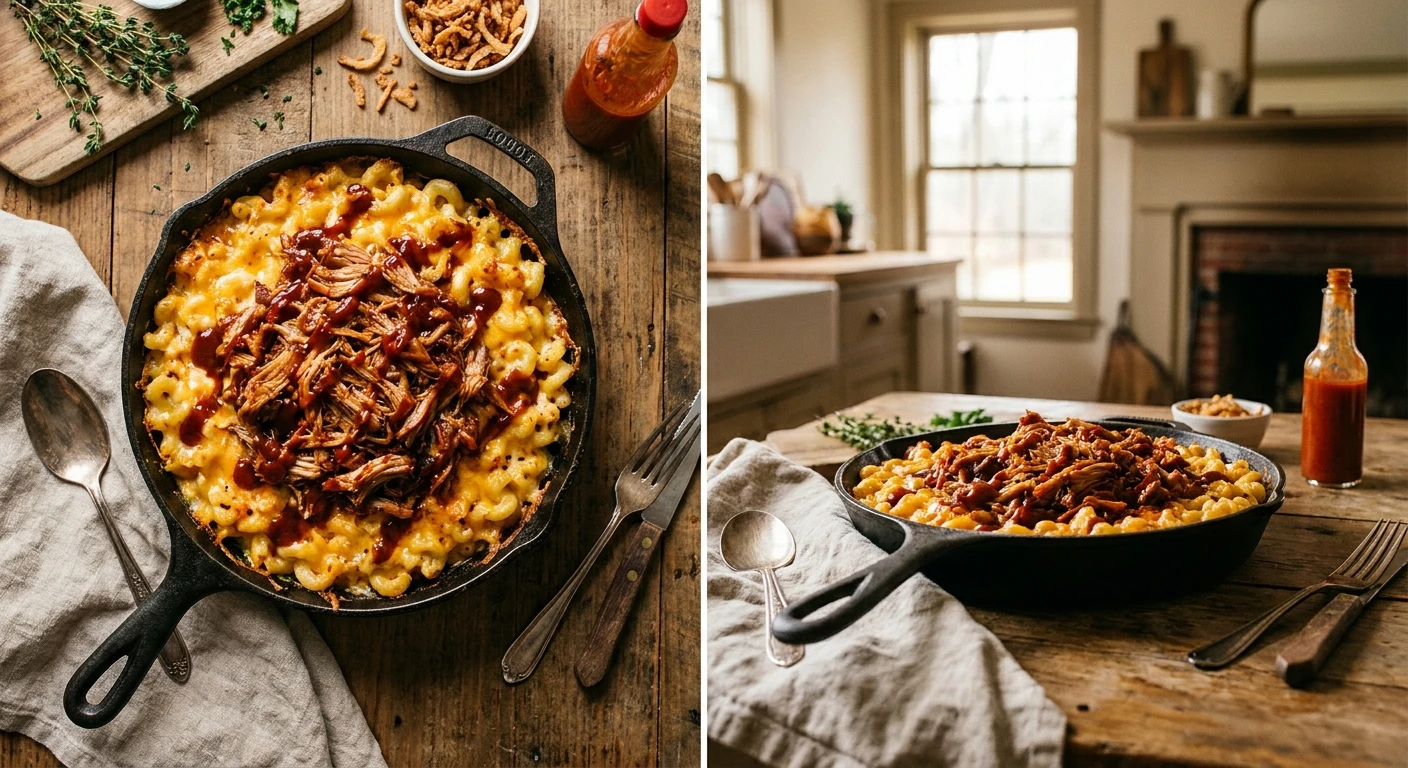
Mastering the Ultimate Mac and Cheese Porc Effiloché
Creating the perfect mac and cheese porc effiloché requires balancing a rich, creamy cheese sauce with savory, slow-cooked pulled pork. You know the drill: standard boxed pasta is fine for a quick weeknight, but when you want true comfort food, you need to elevate the experience. This dish takes the classic, universally loved macaroni base and crowns it with tender, heavily seasoned pulled pork—often braised or smoked until it falls apart at the touch of a fork. The sweet and smoky notes of the pork fat melt directly into the sharp, salty profile of a classic Mornay sauce, creating a complex flavor profile that hits every single craving. You get the crunch of a baked top crust, the rich umami of the meat, and the sharp bite of aged cheddar all in a single forkful. Nailing this combination means understanding exactly how to treat both the pasta and the protein. We are talking about high-end pub food brought straight into your own kitchen, where every single ingredient works overtime to build massive flavor.
Why This Flavor Combination Dominates Comfort Food
The magic of combining these two heavyweight dishes lies in structural contrast. A standard pasta bake can suffer from textural monotony. Every bite feels exactly the same. Adding shredded pork introduces a completely different mouthfeel and an entirely new spectrum of flavors. You are effectively stacking two master recipes into one cast-iron skillet. The pork brings acidity from its marinade or barbecue sauce, which cuts through the heavy butter and dairy fat of the pasta base. This acid-fat balance is exactly why high-end bistros and smokehouses charge premium prices for this exact dish.
Read also: Best chunky chef mac and cheese Recipe Ever; Classic Pork Chop Supreme Recipe Guide.
Consider the core components you need to build this masterpiece:
- The Pasta Base: You need a tubular or corkscrew shape like cavatappi or rigatoni to physically hold the heavy meat and sauce.
- The Cheese Mornay Sauce: A properly thickened bechamel heavily loaded with sharp cheddar, gruyere, and perhaps a touch of smoked gouda.
- The Braised Pork: Shoulder cut, rubbed with spices, and cooked low and slow until the collagen entirely melts.
| Feature | Standard Macaroni | Porc Effiloché Version |
|---|---|---|
| Protein Content | Low (Primarily dairy-based) | High (Generous portions of pork shoulder) |
| Flavor Profile | Mild, salty, creamy, uniform | Smoky, sweet, savory, highly complex |
| Texture & Mouthfeel | Consistently soft throughout | Contrasting tender meat and creamy pasta |
The value here is undeniable. You feed more people with a single pan, the leftovers taste even better the next day as the flavors meld, and the visual appeal of a bubbling, meat-topped skillet is unmatched.
Origins of the Cheese and Pasta Base
The concept of bathing pasta in melted cheese dates back centuries, with early iterations found in 14th-century Italian and English cookbooks. The famous formis of macaroni recorded in the royal courts relied on simple butter and hard cheeses. By the time it reached North America, the dish had evolved into a baked casserole. The introduction of the roux-based sauce secured its place as a heavy, comforting staple meant to stretch dairy and wheat rations into a filling meal for large families.
Evolution of Pulled Pork (Porc Effiloché)
Slow-cooking tough cuts of meat over low heat has roots in Indigenous Caribbean and Southern American barbecue traditions. Pork shoulder, packed with tough connective tissue, requires hours of steady heat to become palatable. The French-Canadian culinary scene adopted the term porc effiloché to describe this exact method of shredding the tenderized meat. What began as a preservation and tenderization technique morphed into a highly sought-after flavor profile, prized for its ability to absorb sweet, spicy, and smoky dry rubs.
Modern State of Fusion Comfort Food
Today, the collision of these two historical dishes represents the peak of modern fusion gastropub culture. Chefs realized that the creamy, neutral canvas of macaroni was the perfect delivery vehicle for aggressive barbecue flavors. You now see this dish dominating food truck menus, craft brewery kitchens, and high-end smokehouses globally. It bridges the gap between traditional Southern barbecue and classic French sauce techniques.
Emulsion Mechanics in Cheese Sauce
Building a flawless sauce is an exercise in basic chemistry. Cheese is a delicate emulsion of dairy fat, water, and protein. If you apply heat too aggressively, the protein matrix tightens, squeezing out the fat and leaving you with a greasy, broken sauce. Creating a roux (butter and flour cooked together) coats the starch molecules in fat. When milk is added, these starch molecules swell and form a stable mesh that holds the melted cheese in perfect suspension, preventing syneresis (weeping).
Collagen Breakdown in Slow-Cooked Pork
Pork shoulder is inherently tough because of its high collagen content. When you cook this muscle, the science of braising takes over. At around 160 degrees Fahrenheit, collagen begins to unwind. By the time the internal temperature hits 200 to 205 degrees Fahrenheit, that tough collagen fully converts into soft, luxurious gelatin. This gelatin coats the muscle fibers, giving the meat that signature melt-in-your-mouth texture.
- Maillard Reaction: Searing the pork before braising creates hundreds of new flavor compounds through the browning of amino acids and sugars.
- Melting Points: Aged cheddar has less moisture and a higher melting point than young cheese, requiring careful heat management to avoid splitting.
- Starch Gelatinization: Boiling pasta hydrates the wheat starch, which then releases into the sauce, acting as a secondary natural thickener.
Step 1: Selecting the Pork Shoulder
Begin by sourcing a high-quality, well-marbled pork shoulder or Boston butt. The fat cap should be thick enough to baste the meat during the long cooking process. Trim away any excessive hard fat, but leave a generous layer to ensure moisture retention. A standard three-to-four-pound cut is ideal for a large batch.
Step 2: The Dry Rub and Marinade
Coat the meat generously with a blend of smoked paprika, brown sugar, kosher salt, black pepper, garlic powder, and a pinch of cayenne. Massage the rub into every crevice. For maximum flavor, wrap the seasoned pork tightly and let it sit in the refrigerator overnight. This dry brine process draws moisture out, dissolves the salt, and pulls the seasoning deep into the muscle fibers.
Step 3: Slow Braising the Meat
Place the seasoned pork in a heavy Dutch oven. Add a splash of apple cider vinegar and chicken broth to the bottom to create a humid environment. Cover tightly and cook at 300 degrees Fahrenheit for about four hours. You will know it is ready when a fork twists easily into the center of the meat with zero resistance. Shred the meat while it is still warm and toss it in its own juices.
Step 4: Boiling the Macaroni to Al Dente
Bring a large pot of heavily salted water to a rolling boil. Drop in your chosen pasta (cavatappi or large elbows work best) and cook strictly to the package’s al dente instructions. The pasta will continue to cook later in the oven, so pulling it out while it still has a slight bite is critical to avoiding a mushy final dish.
Step 5: Crafting the Bechamel and Mornay
Melt half a cup of butter in a saucepan and whisk in an equal amount of all-purpose flour. Cook for two minutes to remove the raw flour taste. Slowly whisk in four cups of warm whole milk until smooth and thickened. Remove from the heat completely before stirring in your grated cheeses—a mix of sharp cheddar and gruyere is optimal. Stir until perfectly smooth.
Step 6: Assembling the Layers
Combine the cooked pasta with the creamy cheese sauce, tossing gently until every noodle is coated. Pour half of this mixture into a greased 9×13 baking dish. Add a generous layer of the warm pulled pork evenly across the middle. Top with the remaining pasta. You can also mix the pork entirely through the dish, but layering prevents the barbecue flavors from completely overpowering the delicate cheese sauce.
Step 7: Baking for the Perfect Crust
Top the assembled dish with a final handful of shredded cheese and a layer of panko breadcrumbs toasted in butter. Bake at 375 degrees Fahrenheit for 25 minutes, or until the edges are bubbling aggressively and the top is a deep golden brown. Let the pan rest for ten minutes before serving so the sauce can set up properly.
Myth: Any cheese works perfectly for the sauce.
Reality: Hard, extensively aged cheeses lack the moisture needed for a smooth melt. If you rely solely on aged parmesan or extra-sharp vintage cheddar, your sauce will break and turn grainy. You must anchor the sauce with excellent melting cheeses like medium cheddar, gruyere, or fontina.
Myth: It is just throwing leftovers together.
Reality: True culinary integration requires balancing the hydration levels. If you just dump dry leftover pork into cold pasta, the dish fails. You must rehydrate the meat and build a fresh sauce to bind the elements together properly.
Myth: You absolutely need an outdoor smoker.
Reality: While smoke adds a lovely dimension, a heavy Dutch oven braise in your kitchen yields incredibly tender, shreddable meat that absorbs the dry rub perfectly.
Myth: Pre-shredded bagged cheese saves time without consequences.
Reality: Bagged cheeses are coated in cellulose or potato starch to prevent clumping. This coating ruins the silky texture of a traditional Mornay sauce, making it gritty.
Myth: This is a light, diet-friendly meal.
Reality: This is unapologetic, calorie-dense comfort food meant to satisfy deep cravings and fuel large gatherings.
Can I freeze this dish?
Yes, you can freeze it securely. Assemble the entire casserole, let it cool completely, wrap it tightly in aluminum foil, and freeze for up to three months. Bake it directly from frozen, adding extra time.
What pasta shape is best?
Cavatappi, rigatoni, or large shells are optimal. These shapes feature ridges and hollow centers that trap the heavy cheese sauce and small bits of shredded meat perfectly.
Which cheeses melt best?
Gruyere, fontina, medium cheddar, and gouda are top-tier melting cheeses. They possess the exact right ratio of moisture to fat, ensuring a velvety texture without breaking.
Should I use BBQ sauce?
Using a light drizzle of high-quality barbecue sauce adds excellent acidity and sweetness, but apply it sparingly. Too much sauce will overpower the delicate dairy notes of the cheese.
How to reheat without drying out?
Reheat individual portions in a saucepan over medium-low heat with a splash of milk. This reconstitutes the starch and fat emulsion, bringing the creaminess back to life.
Is pork loin a good substitute?
No. Pork loin is entirely too lean. It lacks the connective tissue and intramuscular fat required to shred easily, resulting in dry, chalky meat.
Can I make it gluten-free?
Absolutely. Swap the standard pasta for a high-quality rice or chickpea noodle, and use a gluten-free flour blend or cornstarch to thicken your initial sauce base.
Bringing all these elements together creates a meal that commands attention at any dinner table. The contrast of textures, the depth of the slow-cooked meat, and the rich blanket of cheese make this recipe a permanent addition to your culinary rotation. Do not hesitate to fire up the stove and start prepping your dry rub today—your kitchen is about to smell incredible. Grab your ingredients, follow the temperature rules closely, and share this masterpiece with people who truly appreciate elite comfort food!



Leave a Reply