

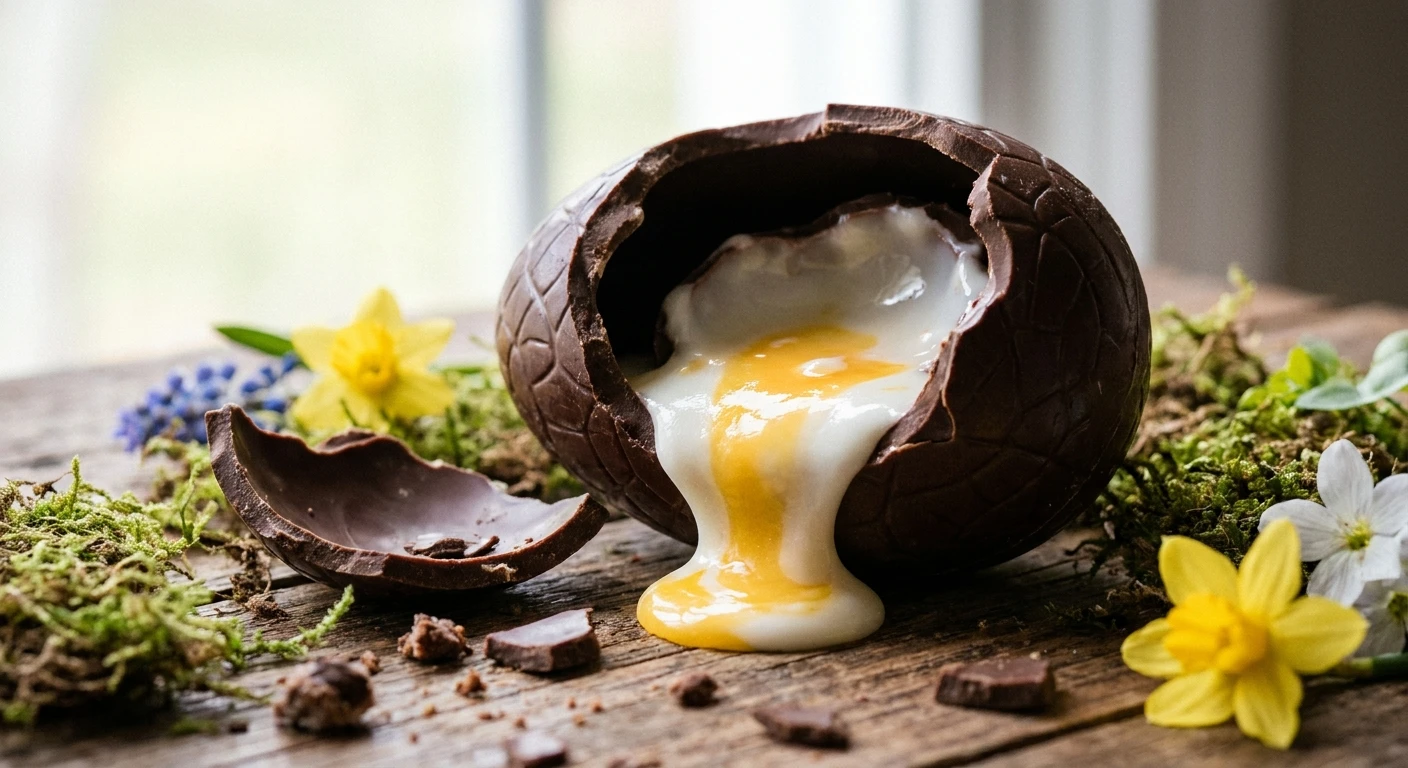
The Magic of Cream Eggs: Everything You Need to Know
If there is one seasonal confection that absolutely dominates the springtime snack aisle, it is undeniably cream eggs. You know the exact experience: peeling back that brightly colored foil, admiring the perfectly molded chocolate exterior, and anticipating the rush of sweet, gooey fondant inside. These chocolate marvels are far more than just a quick sugar rush. They represent a masterclass in confectionery engineering, balancing thick, snappy cocoa walls with a surprisingly liquid center that mimics a real egg yolk and albumen.
You might think they are just another candy, but the sheer volume of these treats consumed globally every year tells a different story. Fans track their arrival in supermarkets months in advance, and entire baking communities dedicate themselves to reverse-engineering the recipe. From rich chocolate brownies stuffed with halved eggs to towering milkshakes garnished with gooey fondant, the culinary applications are endless. The magic lies in the texture contrast. Achieving that perfect snap of tempered chocolate followed by a flood of silky sugar syrup requires highly specific manufacturing techniques. Whether you are a casual fan who simply bites the top off or a serious baker looking to master the fondant chemistry at home, understanding the mechanics of these treats elevates the entire eating experience.
Read also: The Ultimate Crispy Bol Egg Roll Recipe; The Ultimate Homemade Steak Bake Recipe Guide.
Why We Love the Fondant-Filled Chocolate
The appeal of these confections goes far beyond simple sweetness. The structural integrity of the egg combined with the specialized filling creates a distinct sensory journey. The value proposition is clear: you get the richness of a solid chocolate bar paired with the indulgent, melt-in-your-mouth satisfaction of a soft-center truffle, all wrapped in a playful, recognizable shape. This dual-texture profile is exactly what keeps people coming back year after year.
| Cream Egg Component | Texture Profile | Flavor Notes |
|---|---|---|
| Chocolate Shell | Firm, snappy, smooth melting | Rich cocoa, milky, slight vanilla finish |
| White Fondant | Viscous, sticky, smooth | Intensely sweet, pure sugar syrup |
| Yolk Fondant | Thick liquid, gooey | Sweet, mild coloring flavor, sometimes hints of citrus or vanilla |
To truly appreciate the engineering, you have to look at how people consume them. The structural design allows for multiple eating strategies, each providing a different ratio of chocolate to fondant. Fans are famously divided into specific camps based on their consumption methods.
- The Top-Scooper: You carefully bite off the pointed top of the chocolate shell, creating a small bowl. From there, you use your tongue or a tiny spoon to scoop out the sweet fondant before finally eating the remaining chocolate cup.
- The Whole-Biter: You take no prisoners. You bite straight through the middle, experiencing the immediate crunch of the shell and the rapid rush of the liquid center all at once, maximizing the texture contrast.
- The Baker’s Integration: You do not eat them raw at all. Instead, you freeze them solid, wrap them in cookie dough or brownie batter, and bake them until the chocolate slightly melts into the surrounding pastry, creating an ultra-decadent dessert.
These consumption habits highlight why the product design is so successful. The thick chocolate shell must be robust enough to withstand transport and handling, yet delicate enough to yield easily to a bite without shattering completely. Meanwhile, the fondant must maintain its viscosity without crystallizing into a hard lump, ensuring every bite is consistently smooth.
Origins of the Chocolate Shell
The concept of chocolate eggs dates back to the 19th century in Europe, specifically emerging as a luxury item for the wealthy. Early iterations were entirely solid or simply hollow, made from dark, grainy chocolate that lacked the smooth finish we expect today. Confectioners in the United Kingdom, notably the Fry family, began experimenting with molds to create hollow shapes. The technological breakthrough in the late 1800s allowed for thinner, more delicate chocolate shells that could realistically house a soft filling. However, filling a sealed chocolate egg with a liquid center remained a monumental challenge. The earliest filled eggs relied on solid marzipan or hard sugar pastes, which were manually pressed between two chocolate halves before sealing.
Evolution of the Fondant Filling
The transition from a hard paste to the iconic liquid cream center was a gradual process of trial and error. The modern liquid fondant concept truly took shape in the mid-20th century. Food scientists needed a way to insert a liquid into a chocolate shell without the liquid melting the chocolate during production. The breakthrough came with the understanding of specific sugar enzymes. By starting with a relatively firm sugar paste that could be easily handled and encased in chocolate, and then allowing it to liquefy over several days, confectioners revolutionized the candy industry. The addition of the yellow food coloring to the center of the fondant specifically to mimic a real yolk was a marketing stroke of genius, permanently associating the treat with spring.
The Modern State of Seasonal Confections
Today, the production scale is staggering. Major confectionery brands produce hundreds of millions of these eggs annually. The modern manufacturing process is highly automated, utilizing massive cooling tunnels, precision injection nozzles, and rapid foil-wrapping machines capable of processing thousands of eggs per minute. Despite the industrial scale, the core recipe remains heavily guarded and surprisingly close to the mid-century formulations. Fans continue to fiercely debate slight variations in the recipe, the thickness of the chocolate shell, and the overall size, demonstrating the intense cultural footprint these candies maintain in modern snack culture.
The Chemistry of Invertase in Fondant
The secret to the liquid center is a naturally occurring enzyme called invertase. When the eggs are first manufactured, the fondant center is not liquid at all; it is a stiff, dough-like paste made of sucrose (table sugar) and water. If they were filled with liquid from the start, it would be impossible to seal the chocolate halves cleanly. Invertase is mixed into this stiff paste right before it is injected into the chocolate shells. Over the course of a few days to a couple of weeks, the invertase catalyzes the hydrolysis of sucrose, breaking it down into two simpler sugars: glucose and fructose. This chemical reaction significantly lowers the melting point and alters the structure of the sugar matrix, turning the solid paste into the thick, gooey syrup you experience upon opening the foil.
Chocolate Tempering and Structural Engineering
Beyond the fondant, the chocolate shell requires precise structural engineering. The cocoa butter in chocolate can crystallize into several different forms, but only one form (Form V) provides the glossy finish, the satisfying snap, and the resistance to melting in your hands. This is achieved through tempering.
- Cocoa butter must be heated to exactly 45°C to melt all crystal structures completely.
- The mixture is then rapidly cooled to around 27°C to encourage the formation of stable Form V crystals.
- Finally, it is gently reheated to 31°C to melt out any unstable crystals that formed during the cooling phase.
- The thickness of the shell is specifically calibrated to hold the pressure of the expanding liquid fondant as the sucrose breaks down.
- If the tempering is incorrect, fat bloom occurs, leaving white streaks on the egg and a crumbly, unappealing texture.
Step 1: Tempering the Chocolate Shell
If you want to create your own homemade version, the first step is mastering the shell. Start with high-quality couverture milk chocolate. Chop it finely and melt two-thirds of it over a double boiler until it reaches 45°C. Remove from heat and stir in the remaining unmelted third. Stir constantly until the chocolate drops to 27°C, then flash heat it for just a few seconds over the water bath to bring it up to 31°C. This ensures a glossy, snappy exterior.
Step 2: Casting the Molds
Use polycarbonate egg molds for the best shine. Pour the tempered chocolate into the cavities until completely full. Tap the mold firmly on the counter to release trapped air bubbles. Then, quickly invert the mold over a bowl to let the excess chocolate drip out. Scrape the surface clean with a bench scraper and let it set at room temperature until the shells harden and pull away from the plastic.
Step 3: Preparing the Fondant Base
While the shells set, prepare the fondant. Combine powdered sugar, light corn syrup, soft butter, and a splash of vanilla extract in a stand mixer. Beat until you form a thick, dough-like consistency. It should hold its shape completely when rolled into a ball. If it is too wet, add more powdered sugar; if too dry, add a tiny drop of water.
Step 4: Adding Invertase for the Liquid Center
To get that authentic gooey center, you must use invertase, which you can purchase from specialty baking supply stores. Knead exactly one-quarter teaspoon of liquid invertase into your fondant dough. Mix it thoroughly. You must work quickly from this point onward, as the enzyme will immediately start breaking down the sugars.
Step 5: Coloring the Yolk
Divide your fondant into two portions, roughly two-thirds for the white and one-third for the yolk. Add a few drops of yellow or orange gel food coloring to the smaller portion and knead until the color is uniform and vibrant. Roll the yellow fondant into small, marble-sized spheres.
Step 6: Assembling and Sealing
Take a pinch of the white fondant and press it into one half of your set chocolate shells. Press a yellow yolk ball into the center. Fill the other half of the chocolate shell with just white fondant. Pipe a thin line of freshly tempered chocolate around the rim of one half, then quickly press the two halves together. Smooth the seam with a gloved finger.
Step 7: The Curing Process
Do not eat them immediately. For the invertase to do its job, the eggs need to cure. Store them in an airtight container at room temperature (around 20°C) for at least 3 to 5 days. During this time, the enzyme will transform your firm fondant paste into a beautifully thick, sticky syrup.
Myths & Reality
Myth: The eggs are shrinking every year.
Reality: While it feels like they are getting smaller, major manufacturers have maintained roughly the same standard size and weight for decades. The perception of shrinking usually comes from our hands growing larger since childhood and standard packaging redesigns.
Myth: The center contains raw egg whites.
Reality: There are zero actual egg products in the standard commercial fondant filling. The texture and color are purely the result of sugar, syrup, food coloring, and the invertase enzyme reaction.
Myth: You have to keep them in the refrigerator.
Reality: Storing them in the fridge will actually make the chocolate too hard to bite into and will stiffen the liquid fondant. They are designed to be shelf-stable and are best enjoyed at normal room temperature.
Myth: The chocolate shell is dark chocolate.
Reality: The traditional commercial version uses standard milk chocolate, specifically formulated to complement the extreme sweetness of the interior sugar syrup.
Are cream eggs gluten-free?
Most standard commercial versions do not contain gluten ingredients, but they are often manufactured in facilities that handle wheat. Always check the specific brand packaging for cross-contamination warnings if you have celiac disease.
Can you freeze them?
Yes, you can freeze them. Freezing prevents the gooey center from making a mess when baking them into heavy batters like brownies or thick cookies. However, eating them straight from the freezer can easily crack a tooth.
How long do they stay fresh?
Thanks to the high sugar content acting as a preservative, they generally remain fresh for several months. Check the best-by date on the foil, but typically they easily last throughout the spring season.
Why are they only sold in spring?
They are heavily tied to spring holidays. Manufacturers use this limited availability to create scarcity and drive intense seasonal demand, ensuring high sales during a short window.
Is the chocolate milk or dark?
The classic version uses a thick layer of milk chocolate. The milky, creamy flavor profile balances out the sharp, sugary punch of the fondant center perfectly.
How many calories are in one?
A standard 40g commercial egg typically contains around 170 to 180 calories, predominantly from the sugar and cocoa butter fats.
What is invertase?
It is an enzyme derived from yeast that breaks down sucrose into liquid glucose and fructose. It is completely safe to consume and is widely used in the candy industry for liquid-centered chocolates.
Can I microwave a cream egg?
It is highly discouraged. The sugar center heats up incredibly fast and will erupt through the chocolate shell, creating a burning hot, sticky mess in your microwave in just a few seconds.
Understanding the intricate dance of chocolate tempering and sugar chemistry makes the experience of eating these seasonal favorites even better. Whether you are buying them by the box or taking on the challenge of making them from scratch, cream eggs remain an absolute triumph of confectionary design. Grab a whisk, gather your ingredients, and try crafting your own batch today!



Leave a Reply