

Understanding the difference between chop suey and chow mein
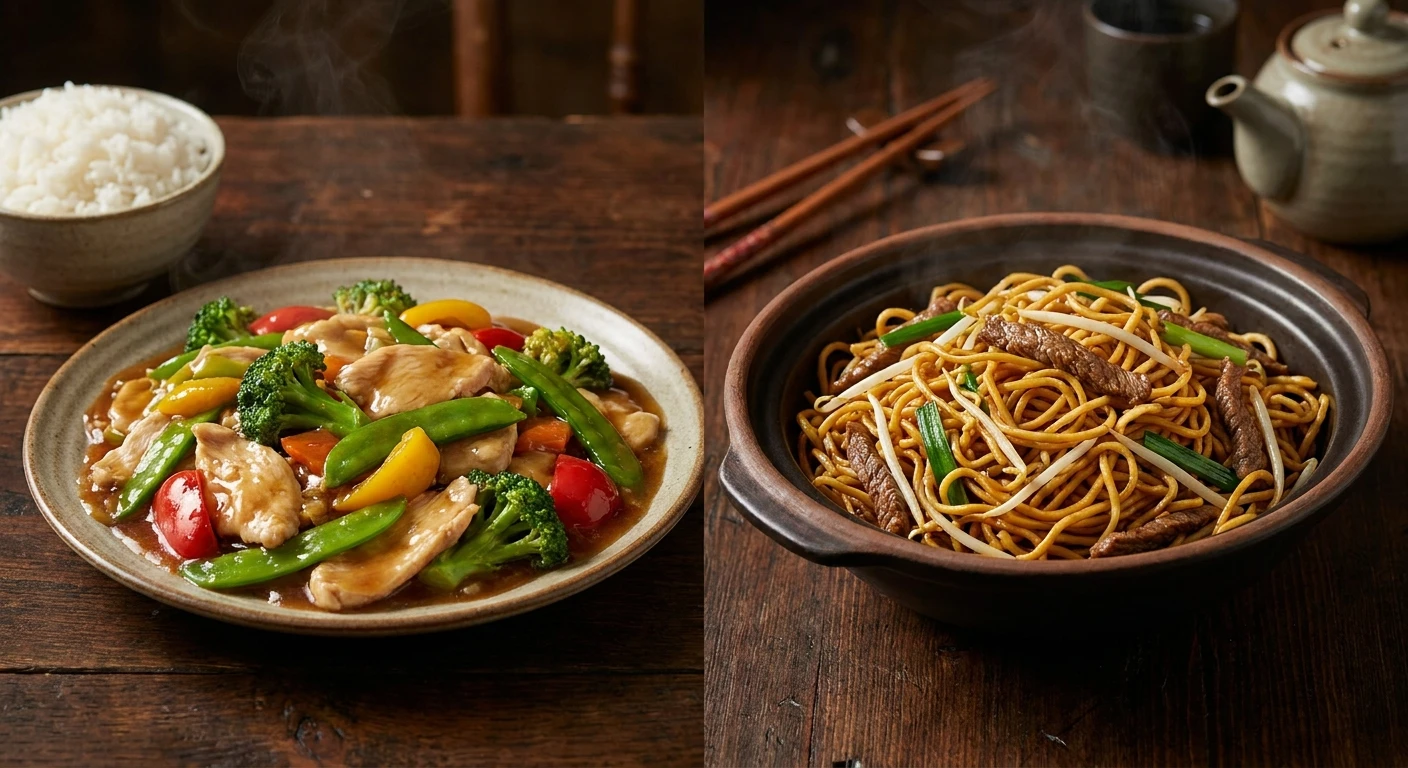
You know that exact feeling when you are staring at a massive takeout menu on a busy Friday night, completely paralyzed by choice. You are hungry, you love savory brown sauces, you want crisp vegetables, and you are desperately trying to remember the precise difference between chop suey and chow mein. It happens to the best of us. Both of these legendary Chinese-American staples look somewhat similar on paper. They both feature a deeply savory, umami-rich flavor profile. They both pack a serious crunch with vegetables like celery, onions, and bean sprouts. They both offer your choice of proteins, whether that is tender chicken, juicy beef, or plump shrimp. Yet, they deliver entirely different dining experiences that cater to very different cravings. Chop suey is fundamentally a stir-fried vegetable and meat medley bound together by a thick, glossy gravy, deliberately designed to be poured over a steaming hot bed of white rice. Chow mein, on the flip side, is a dedicated noodle dish where the starch is cooked directly in the wok, absorbing all those incredible flavors as it fries. Understanding this distinction is the ultimate key to ordering exactly what you want and avoiding that slight pang of takeout disappointment. By knowing exactly what sets these two massive classics apart, you can confidently build your perfect meal.
Defining the Core Characteristics
When you break down the core elements of these two popular meals, the absolute easiest way to remember the distinction is by looking directly at the base carbohydrate. Chop suey translates roughly from Cantonese to mean mixed pieces or odds and ends. By definition, authentic chop suey does not contain noodles. Instead, it relies heavily on a separately prepared side of steamed rice to soak up its abundant, thick gravy. The vegetables in chop suey, almost always a heavy dose of fresh bean sprouts, chopped celery, and cabbage, are stir-fried quickly until just tender-crisp, then completely smothered in a rich, cornstarch-thickened sauce that binds the whole plate together. Chow mein translates directly to stir-fried noodles. Here, the wheat noodles are the absolute star of the show. They are either boiled soft and tossed vigorously with a lighter sauce, or pan-fried until they form a crispy, golden texture that slowly softens as it absorbs the savory juices from the meat and vegetables piled on top. The sauce in chow mein is usually much thinner, purposely formulated to coat every single noodle evenly rather than pooling heavily at the bottom of the takeout container. Here is a clear, definitive breakdown of how they compare.
Read also: The Ultimate Crispy Bol Egg Roll Recipe; The Ultimate Seafood Stir Fry Recipe.
| Defining Feature | Chop Suey Characteristics | Chow Mein Characteristics |
|---|---|---|
| Base Carbohydrate Component | Always served with steamed white rice on the side | Wheat noodles cooked directly into the dish |
| Sauce Profile and Consistency | Thick, heavy, glossy gravy thickened with cornstarch | Lighter, thinner soy-based sauce meant to coat |
| Primary Textural Experience | Heavy crunch from tender-crisp vegetables | Satisfying chew or crunch from egg noodles |
| Preparation Technique | Stir-fried vegetables smothered in binding liquid | Vigorously tossed over high heat to blend flavors |
The real value of knowing this fundamental difference is massive for your dining satisfaction. You get exactly what you want every single time, you avoid soggy noodles, and you can pair your side dishes flawlessly. For example, if you want a hearty, intensely saucy meal to pour over fluffy steamed jasmine rice, chop suey is your absolute best option. If you crave the satisfying, undeniable chew of wheat noodles coated in a savory, smoky glaze, chow mein is the clear winner. Keep these rules in mind:
- Base Ingredient Dominance: Chow mein features noodles as the main structural component, while chop suey is strictly a vegetable and meat medley meant to be eaten with a side of rice.
- Specific Cooking Method: Chow mein requires tossing pre-cooked noodles in a hot wok to absorb flavors, whereas chop suey focuses entirely on stir-frying vegetables and creating a massive amount of thick gravy.
- Sauce Formulation Profile: Chop suey uses a much heavier hand with cornstarch slurries to create a binding sauce, while chow mein uses a lighter soy and oyster sauce base to season the noodles perfectly without making them mushy.
- Overall Texture Balance: Chop suey relies completely on the intense crunch of celery and water chestnuts for texture, while chow mein balances the softness or crispiness of noodles with perfectly cooked proteins.
Origins of Chop Suey
Chop suey has a deeply fascinating history firmly rooted in the Chinese-American immigrant experience. During the mid-nineteenth century, thousands of immigrants from the Guangdong province arrived in California during the Gold Rush, seeking opportunity. They faced incredibly harsh conditions and had to quickly adapt their traditional cooking methods using local, unfamiliar ingredients. Chop suey was essentially born out of pure necessity, throwing together easily available vegetables like celery, onions, and locally grown bean sprouts with affordable scraps of meat in a savory brown sauce. It became a massive, unexpected hit among local miners and eventually spread rapidly across the United States as a definitive staple of early Chinese-American restaurants. It represents culinary survival and brilliant adaptation.
Evolution of Chow Mein
Chow mein has much older, highly traditional roots originating in Northern China, where hearty wheat noodles are a fundamental dietary staple. The dish was brought to North America by early immigrants and slowly evolved to suit local Western palates. The ultra-crispy version, often featuring deep-fried noodles shaped aggressively like a bird’s nest, became particularly popular in Westernized Chinese restaurants along the East Coast, while the soft, stir-fried version remained much closer to its authentic origins. Over decades, chow mein naturally adapted to include ingredients like bell peppers, broccoli, and carrots, which were readily available in standard American supermarkets, creating the vibrant dish we recognize today.
Modern State of Takeout Classics
Today, both of these dishes are beloved, absolutely untouchable fixtures on takeout menus globally. They beautifully represent the ingenuity of culinary adaptation over generations. While strict culinary purists might argue passionately about their authenticity compared to mainland Chinese cuisine, millions of people enjoy them on a weekly basis. They have completely transcended their humble origins to become definitive comfort food staples. Restaurants now offer countless exciting variations, from spicy shrimp and roast pork to completely vegan options, ensuring that these incredibly historic dishes continue to evolve and satisfy modern cravings everywhere.
The Maillard Reaction and Wok Hei
The absolute secret behind the incredible, restaurant-quality flavor of both dishes lies deeply in the precise science of high-heat cooking. When proteins and amino acids hit a blazing hot carbon steel wok, the Maillard reaction rapidly occurs, creating complex, deeply savory flavor compounds that cannot be achieved any other way. This scientific reaction is paired beautifully with wok hei, a traditional Cantonese term translating roughly to the breath of the wok. Wok hei is successfully achieved when microscopic droplets of aerosolized oil catch fire momentarily in the air directly above the wok, imparting a distinct, smoky flavor that is notoriously impossible to replicate in a standard home kitchen skillet.
Starch Gelatinization in Sauces
The thick, beautiful, glossy sauce of classic chop suey relies entirely on a specific scientific process called starch gelatinization. When standard cornstarch is mixed with cold water and then rapidly introduced to boiling hot broth, the individual starch granules absorb the surrounding liquid, swell massively, and eventually burst. This violent action releases amylose and amylopectin molecules into the liquid, which quickly form a highly viscous network that thickens the sauce instantly. Chow mein requires significantly less starch, focusing instead on rapid emulsion, where the cooking oil and soy sauce blend perfectly to coat the noodles evenly without turning them into a sticky paste.
- Thermal Dynamics: A professional commercial wok burner reaches terrifying temperatures exceeding 100,000 BTUs, allowing for rapid, aggressive searing without accidentally boiling the vegetables in their own juices.
- Precise Viscosity Control: The exact ratio of cold water to cornstarch strictly determines the final thickness of the chop suey sauce, requiring exact timing to prevent the sauce from breaking or turning into jelly.
- Moisture Migration Mastery: In crispy style chow mein, the sauce must be perfectly scientifically balanced so it softens the fried noodles slightly without completely destroying their structural integrity.
- Aromatic Flavor Layering: Classic aromatics like minced garlic and fresh ginger release volatile oils extremely rapidly at high wok temperatures, creating the foundational flavor profile required for both distinct dishes.
Day 1: Sourcing Authentic Ingredients
Begin your culinary journey by visiting a local Asian market to gather proper supplies. Pick up the freshest bean sprouts you can find, extremely crisp celery, canned water chestnuts, premium light and dark soy sauce, high-quality oyster sauce, and fresh yellow egg noodles specifically designed for chow mein. Quality ingredients make a massive difference.
Day 2: Perfecting Your Rice Technique
Since authentic chop suey relies so heavily on rice as its base, you must master your rice cooker or stovetop method today. Vigorously rinse your jasmine rice under cold water until the water runs completely clear. This crucial step removes excess surface starch, ensuring you get fluffy, perfectly separate grains that will not turn to mush under the gravy.
Day 3: Mastering the Noodles
Practice properly boiling and draining your fresh egg noodles. For perfect chow mein, the noodles must remain slightly al dente so they have room to absorb the wok sauces. After boiling briefly, shock them in cold water, drain them thoroughly, and toss them in a tiny bit of toasted sesame oil to completely prevent sticking while they rest.
Day 4: Precision Prep and Mise en Place
Chinese wok cooking happens incredibly fast. Spend this day strictly practicing your knife skills. Slice your chosen proteins thinly against the grain for maximum tenderness, and chop all your vegetables into uniform sizes. Having your mise en place completely ready ensures everything cooks at the exact same rate without burning.
Day 5: Wok Temperature Control
Practice heating your wok until it literally smokes. Swirl in cold cooking oil to create a natural, temporary non-stick surface, a traditional technique known as longyau. Practice maintaining incredibly high heat without accidentally burning your delicate garlic and ginger aromatics before adding the heavier ingredients.
Day 6: Cooking the Perfect Chop Suey
Fiercely sear your marinated meat, remove it briefly from the wok, stir-fry the vegetables until brilliantly vibrant, and return the meat. Whisk your prepared cornstarch slurry vigorously, pour it in, and watch the sauce magically thicken into a beautiful, glossy gravy. Serve it immediately over your perfectly steamed jasmine rice.
Day 7: Frying the Ultimate Chow Mein
Pan-fry your prepared egg noodles until they develop a highly satisfying, slight char on the edges. Push them safely to the side of the wok, rapidly cook your aromatics and proteins, and then vigorously toss everything together with your light soy-based sauce until every single noodle is evenly coated and glistening.
Myths vs. Reality
Myth: Chop suey is an ancient, completely authentic dish brought directly from mainland China. Reality: It is widely documented and considered a Chinese-American invention, created out of pure necessity by early immigrants heavily adapting to the specific ingredients available to them in the United States. Myth: Chow mein is always served exclusively with hard, deep-fried noodles that shatter when you bite them. Reality: While crispy chow mein is wildly popular on the East Coast of the US, soft, stir-fried lo mein-style noodles are the standard preparation for chow mein in many other regions and authentically in China. Myth: Both dishes use the exact same master brown sauce ladled from the same pot. Reality: Chop suey sauce is significantly thicker and heavier on cornstarch to act as a proper gravy for rice, while chow mein sauce is dramatically thinner, formulated specifically to coat the noodles evenly without clumping. Myth: You can casually use absolutely any type of pasta noodle for chow mein. Reality: Traditional chow mein strictly requires fresh or dried egg noodles that possess a specific alkaline bounce; Italian pasta will become instantly mushy and completely fail to absorb the wok flavors properly.
Is chop suey healthier than chow mein?
Chop suey often contains slightly fewer calories simply because it heavily features water-rich vegetables and relies on a side of steamed rice rather than oil-tossed egg noodles, making it slightly lighter depending entirely on how much oil is used in the sauce.
Can I make chop suey without meat?
Absolutely. You can easily substitute traditional chicken or beef with extra-firm tofu, or simply load up the wok with extra hearty vegetables like broccoli florets, shiitake mushrooms, and sweet snow peas for an incredibly satisfying vegetarian meal.
What kind of noodles are truly best for chow mein?
Fresh yellow alkaline egg noodles are the absolute best choice. They provide the perfect, signature chewy texture and uniquely hold up well to the intense, punishing heat of vigorous wok frying without breaking apart.
Why is my homemade chop suey sauce watery?
You likely did not use nearly enough cornstarch in your slurry, or you simply did not let the sauce boil long enough in the wok for the starch granules to fully gelatinize, burst, and thicken the liquid properly.
Do I absolutely need a wok to make these dishes?
While a seasoned carbon steel wok provides vastly superior heat distribution and that signature smoky wok hei flavor, a very large, heavy-bottomed cast iron skillet or flat frying pan can work remarkably well for home cooks.
What is the exact difference between lo mein and chow mein?
Lo mein translates roughly to tossed noodles and typically uses much softer, thicker noodles mixed gently with a rich sauce off the direct heat, whereas chow mein means specifically fried noodles and often has a distinctly crisper, pan-fried texture.
Can I freeze leftover chop suey?
It is highly discouraged. The water-heavy vegetables like crisp celery and fresh bean sprouts will become incredibly mushy, completely lose their signature crunch, and leak water into the sauce when thawed and reheated.
How do I get that restaurant-style flavor at home?
The primary secrets are utilizing extremely high heat, thoroughly seasoning your carbon steel wok, generously using savory aromatics, and adding a small, judicious pinch of MSG to deeply enhance the savory umami notes.
Are the vegetables different in both dishes?
They can frequently be identical in casual takeout restaurants, but traditional chop suey leans much more heavily on water-rich, crunchy vegetables to contrast the thick gravy, while chow mein uses vegetables sparingly as an accent to the noodles.
Can I use rice noodles for chow mein?
Using rice noodles would technically make it a completely different regional dish, similar to chow fun or mei fun. However, it is an absolutely delicious, highly recommended gluten-free alternative if you understand the noodles will cook much faster.
Mastering Your Takeout Order
Now you know exactly what to expect when choosing between these two iconic, historically significant dishes. Chop suey consistently delivers a comforting, fiercely saucy, vegetable-packed gravy that is absolutely perfect for pouring over a hot bowl of rice, while chow mein offers the unbeatable, deeply savory satisfaction of vigorously stir-fried noodles. Next time you grab a takeout menu, you can order with absolute confidence and enjoy every single bite. Better yet, grab your wok, head to the kitchen, and try making both of these incredible dishes yourself tonight!



Leave a Reply