

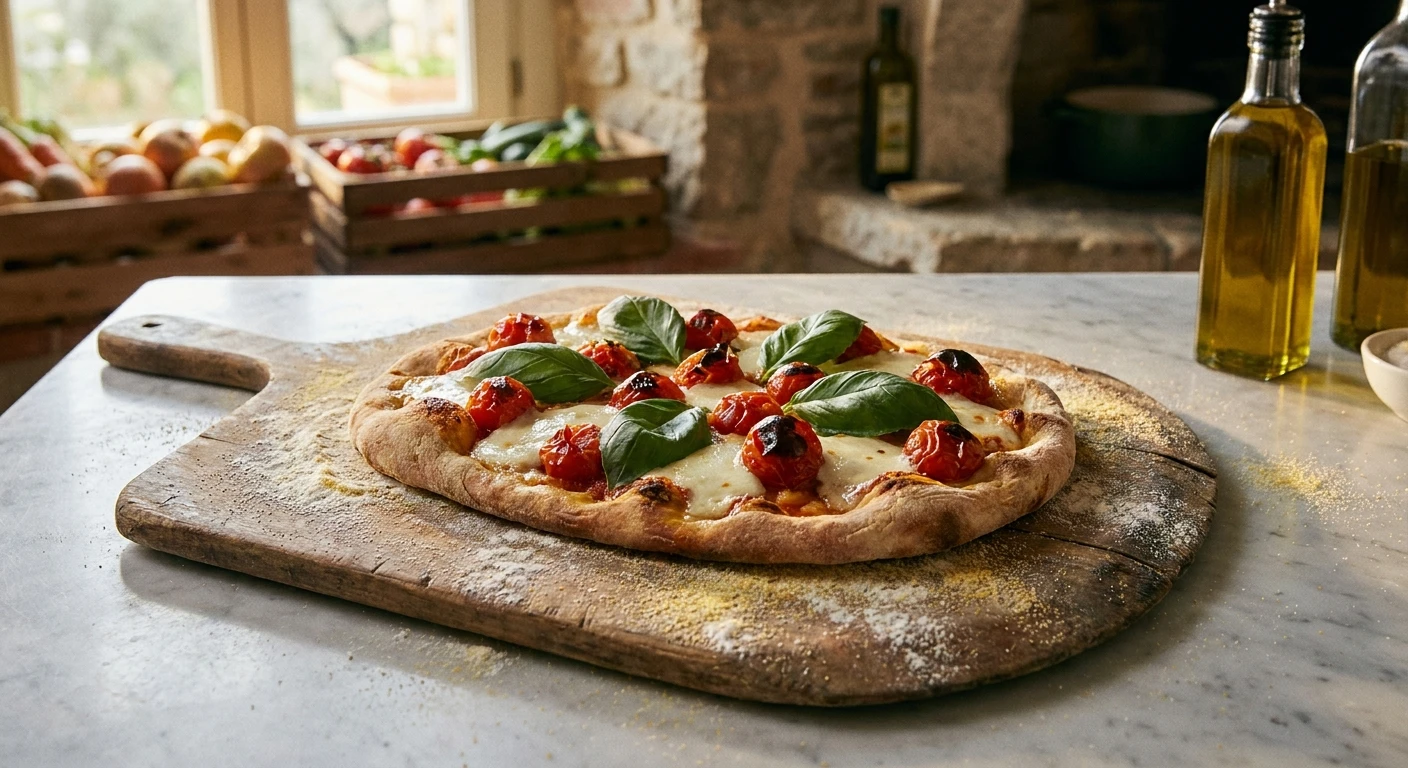
The Absolute Truth About Pinsa Pizza
I still remember the exact moment I tasted my first real pinsa pizza, and honestly, it completely ruined standard delivery pies for me forever. It was late autumn, and I was walking through the streets of Kyiv, right near the historic Golden Gate. The air was biting cold, the kind that makes your cheeks sting, and I ducked into this tiny, unassuming Italian spot run by an eccentric expat. He had imported a massive bag of a very specific flour blend directly from Rome, and what he pulled out of his oven wasn’t just ordinary food; it was an absolute revelation. This ancient-meets-modern oval dough isn’t just another passing culinary fad. It is a functionally superior, incredibly digestible, and impossibly crunchy masterpiece that totally redefines what we should expect from a slice of dough and cheese. If you are exhausted by the heavy, brick-in-your-stomach feeling you get after eating conventional fast-food pies, you are definitely in the right place. We are going to completely break down why this unique cloud-like crust, with its crispy exterior and soft, airy interior, is taking over the culinary scene. By the time we finish chatting about this, you will be sprinting to your kitchen to start your own batch of dough. Seriously, the texture alone is absolutely mind-blowing.
The Core Benefits: Why You Need to Make the Switch
So, what exactly makes this style so special? The secret lies entirely in the hyper-specific chemistry of the flour and the ridiculous amount of water involved. Traditional crusts rely solely on highly refined wheat flour, which can feel incredibly heavy on the digestion system. This style, however, uses a meticulously balanced trinity: wheat flour for the structural gluten network, rice flour to guarantee an earth-shattering crunch, and soy flour, which essentially replaces heavy animal fats and adds a massive punch of plant-based protein. The result is a dough that holds an absurd amount of water—sometimes up to ninety percent hydration! Why should you, as a home chef or a massive foodie, even care about switching up your routine? Here are a couple of prime examples. Example one: health-conscious eaters who absolutely refuse to compromise on taste. Because the complex starches are broken down during a long cold fermentation, the glycemic index is significantly lower, meaning you get all the carb satisfaction without the massive insulin spike and subsequent energy crash. Example two: the practical, busy meal-prepper. Because this crust is par-baked (meaning it is baked naked first without any toppings), it makes the absolute best freezer meal imaginable. You can bake a huge batch of crusts on Sunday, freeze them, and then just add sauce and cheese to finish baking on a Wednesday night for a perfect, restaurant-quality dinner in barely ten minutes.
Here are the core functional advantages of this incredible baking method:
- Unmatched Digestibility: The massive fermentation window essentially pre-digests the complex carbohydrates, meaning your stomach doesn’t have to do the heavy lifting. You feel light even after eating a whole oval!
- The Crispy-Chewy Paradox: The rice flour acts as a binding agent that locks in a brittle, shattered-glass crust on the outside, while the rapidly expanding trapped steam creates a pillowy, soft crumb on the inside.
- Lower Caloric Density: Because there is significantly more water and air trapped inside the cellular structure of the dough, you are physically eating less dense mass per bite, allowing you to enjoy much more volume without any of the usual guilt.
Let us compare the hard facts in this quick breakdown to really show you the difference:
| Characteristic | Pinsa Pizza | Traditional Neapolitan |
|---|---|---|
| Flour Base | Wheat, Rice, and Soy Blend | 100% Highly Refined Wheat (00) |
| Hydration Level | 80% – 90% (Extremely Wet) | 55% – 65% (Moderate to Dry) |
| Shape & Structure | Distinctly Oval, stiff airy crust | Round, floppy center, puffy edges |
| Fermentation Time | 48 to 72 Hours Cold Rest | 8 to 24 Hours Ambient Rest |
Origins of the Oval Wonder
People love a good romantic backstory, and the tale of this dough is definitely a fascinating one. For a long time, marketers pushed the idea that Roman soldiers were baking these exact oval flatbreads on their shields before going into battle. The word itself comes from the Latin term ‘pinsere’, which literally translates to ‘to stretch’ or ‘to press down’. The legend claims that ancient peasants utilized whatever grains they had lying around—millet, oats, spelt—mixed it with water, and stretched it out over hot stones. It sounds incredible, right? It evokes this beautifully rustic, historical image of ancient culinary tradition.
The Evolution of the Dough
But here is the reality check, and honestly, it is even cooler than the myth. The modern version we eat today was actually masterminded in 2001 by an absolute genius Italian miller named Corrado Di Marco. He looked at those ancient stories and decided to reverse-engineer them using advanced modern food science. He realized that the old peasant breads were incredibly hard to digest. So, he spent years tinkering in his laboratory, trying to figure out how to capture that rustic, multi-grain look and feel, but with a profoundly better texture. He swapped the harsh ancient grains for highly refined soy and rice flours, blending them with a high-protein wheat base. He figured out that soy flour naturally lowers the required baking temperature and removes the need to dump a bunch of olive oil into the dough for tenderness.
The Modern State of the Art
Now that we are solidly in 2026, finding a dedicated bakery for this style is incredibly easy, whether you are walking through the trendy streets of Brooklyn, exploring the massive food scene in Berlin, or wandering around Rome itself. It has moved from a closely guarded trade secret to a massive global sensation. Professional pizzaiolos are absolutely obsessed with it because it is so incredibly forgiving once it is mixed. The modern state of this dough is essentially the pinnacle of baking technology meeting traditional artisan craftsmanship. You get the look of an old-world flatbread, but the exact chemical precision of a modern culinary masterpiece.
The Hydration Miracle
Let us get slightly nerdy for a second because understanding the science will drastically improve your baking game. The concept of ‘hydration’ just refers to the amount of water in relation to the amount of flour. If you have 1000 grams of flour and 800 grams of water, you have an 80% hydration dough. Standard bread is usually around 60%. Pushing dough to 80% or even 90% is incredibly difficult because the mixture basically turns into a sticky, unmanageable soup. But the soy and rice flours act like microscopic sponges. They absorb staggering amounts of water without destroying the delicate gluten network created by the wheat flour. When you put that ultra-wet dough into a ripping hot oven, all that trapped water turns violently into steam. The steam pushes the dough upward rapidly, creating massive air pockets (called alveoli), which leaves behind a skeletal structure that is both toweringly high and impossibly light.
Cold Fermentation Breakdown
The other half of the magic equation is the cold fermentation process. When you mix dough and leave it on the counter, the yeast goes absolutely crazy, eating sugars and farting out carbon dioxide, which makes the dough rise quickly. But if you throw that dough in the refrigerator, the yeast essentially goes to sleep. However, the other natural enzymes in the flour stay awake and continue to work. Think of the dough as a living, breathing ecosystem.
- Phytic Acid Degradation: The prolonged resting phase in the fridge allows phytase enzymes to neutralize phytic acid, which naturally exists in grains. This unlocks essential minerals like zinc and iron, allowing your body to actually absorb them instead of passing them through.
- Amylase and Protease Activity: These natural chemical workers systematically dismantle tough, complex gluten proteins and hard starches, converting them into simple, sweet sugars that caramelize beautifully under high heat.
- The Maillard Reaction Optimization: Because of those newly freed simple sugars, the outside of the crust browns at a much faster, more even rate in the oven, creating deeply complex, nutty flavor compounds without risking a burnt interior.
Day 1: Sourcing the Holy Trinity of Flours
If you want to master this at home, you need a solid game plan. Day one is purely about preparation. You absolutely cannot skip the flour blend. You need a strong bread flour (high protein wheat), fine rice flour, and toasted soy flour. The classic ratio to aim for is roughly 80% wheat, 10% rice, and 10% soy. Do not buy cheap, expired flours. Go to a specialty store or order a pre-mixed imported blend online. Grab a digital kitchen scale while you are at it, because cups and spoons will not give you the scientific precision you need for this crazy hydration level.
Day 2: Mixing the High-Hydration Monster
This is where things get messy and incredibly fun. You are going to use a technique called ‘bassinage’. You mix all your flour, yeast, and about 70% of your ice-cold water. Once a shaggy dough forms, you slowly, drop by drop, incorporate the remaining water and salt. You have to be patient. If you dump all the water in at once, the gluten structure will collapse and you will be left with an unsalvageable puddle. Knead it aggressively. The dough will feel sticky, wet, and slightly chaotic, but trust the process. Once it is smooth, put it in an oiled container.
Day 3: The Cold Fermentation Slumber
Day three requires absolutely zero physical work, but it is mentally the hardest part: waiting. Your dough is resting in the back of your refrigerator. Do not open the lid. Do not poke it. Just let the cold fermentation magic happen. This 24-to-72 hour window is exactly when those enzymes we talked about earlier are breaking down the complex starches. If you rush this step, you lose the signature digestibility and the incredible flavor profile. Let it sleep.
Day 4: The Second Rest and Shaping
Pull your dough out of the fridge and divide it into oval-shaped portions. Now, let them sit at room temperature for a few hours until they double in size and get extremely jiggly. Here is the most crucial technique: shaping. You do not use a rolling pin. You do not toss it in the air like a New York slice. You generously dust your counter with rice flour, place the dough down, and aggressively press your fingers into it. You want to push the air around, creating a dimpled, uneven landscape. Gently stretch it from the top and bottom to create that iconic long, oval surfboard shape.
Day 5: The Par-Bake Technique
This is the absolute secret weapon of this entire style. You do not put sauce and cheese on raw dough. You take that stretched, naked dough, drizzle a tiny bit of high-quality olive oil on it, and throw it straight into your screaming hot oven on a pre-heated baking steel or stone. Bake it for about five to seven minutes until it puffs up completely and starts to look slightly blonde and rigid. Pull it out and let it cool on a wire rack. You have just created a perfectly stable canvas.
Day 6: Topping and the Final Bake
Now comes the ultimate reward. Take your par-baked crust and go absolutely wild. Because the crust is already structurally sound, it can handle heavy, wet ingredients without turning into a soggy nightmare. Slather on some crushed San Marzano tomatoes, tear up fresh mozzarella, maybe add some spicy nduja or prosciutto. Throw it back into the oven for another five minutes just to melt the cheese and blister the edges. The contrast between the rigid, crunchy bottom and the molten top is going to blow your mind.
Day 7: Analyzing and Adjusting
Baking is an endless journey. Sit down, eat your masterpiece, and take notes. Was the crust too dense? Maybe you need a bit more water next time. Did it burn too quickly? Maybe your fridge is too warm, causing the sugars to overdevelop. The beauty of this messenger-style approach to baking is that you just keep tweaking and texting your friends about your progress. Every single batch is an opportunity to get closer to absolute perfection.
Myths & Reality: Clearing the Air
Myth: This specific style is an ancient Roman recipe handed down for thousands of years.
Reality: It was completely invented in 2001 by a brilliant modern Italian flour miller who brilliantly marketed his modern soy-rice-wheat blend using historical Roman aesthetics.
Myth: You absolutely need a commercial, 900-degree wood-fired oven to make it correctly.
Reality: Actually, it bakes beautifully in a standard home oven precisely because of the par-baking method and the lower temperature requirements of the soy flour.
Myth: The insanely high water content guarantees the final baked product will be soggy.
Reality: High hydration actually means significantly more steam violently escapes during the baking process, leaving behind a hollow, ultra-crispy skeletal shell.
Myth: It is just a differently shaped version of a standard Italian pizza.
Reality: The triple-flour blend fundamentally alters the chemical composition, creating a totally unique cellular crumb structure and a drastically lower glycemic index compared to traditional wheat-only dough.
FAQ 1: Is pinsa pizza gluten-free?
No, it is not. While it contains rice and soy flour, the main structural ingredient is high-protein wheat flour. However, many people with mild gluten sensitivities find it much easier to digest due to the long cold fermentation process.
FAQ 2: Can I freeze the dough?
Absolutely, but do not freeze raw dough. Par-bake the naked crusts first, let them cool entirely on a wire rack, wrap them tightly in plastic wrap, and freeze them. They will last for months and taste completely fresh when reheated.
FAQ 3: What does the soy flour actually do?
Soy flour acts as a fat replacement. Traditional doughs often use heavy olive oil or lard for tenderness. Soy flour provides that exact same soft, tender crumb structure naturally, while simultaneously adding a massive boost of plant-based protein.
FAQ 4: Why not just use all-purpose flour?
All-purpose flour simply does not have the protein strength required to hold an 80% hydration level. The dough will literally turn into soup and completely collapse in the oven. You need strong bread flour as your base.
FAQ 5: Do I need a fancy stand mixer?
While a spiral mixer is amazing, you definitely do not need one. You can use the ‘stretch and fold’ hand method. It just requires more patience and a bit of elbow grease to build the gluten network properly.
FAQ 6: Can I skip the cold fermentation entirely?
You physically can, but you really shouldn’t. If you bake it on the same day, you completely lose the complex flavor, the signature light-as-air texture, and the incredible digestive benefits that define this style.
FAQ 7: How long do I par-bake it?
In a standard 500-degree Fahrenheit home oven on a preheated pizza stone, par-baking usually takes exactly 5 to 7 minutes. You want the dough to puff up fully and set structurally, but remain pale so it doesn’t burn during the final bake.
FAQ 8: What are the absolute best toppings?
Honestly, keep it incredibly simple to let the crust shine. A classic Margherita is perfect. Another amazing option is baking the crust completely blank, then topping it fresh out of the oven with cold burrata, prosciutto, and hot honey.
The Final Word on the Oval Obsession
Look, I know making high-hydration dough sounds incredibly intimidating at first glance, but I promise you, the payoff is worth every single sticky finger. Once you experience the audible crunch of that rice flour shell giving way to a cloud-like, steaming interior, you will never look at standard delivery pies the same way again. It is a brilliant collision of ancient aesthetics and sharp modern food science. Grab your digital scale, hunt down that magical trinity of flours, start mixing, and absolutely text me to let me know how your first batch turns out! You are about to completely level up your home kitchen.
Leave a Reply