

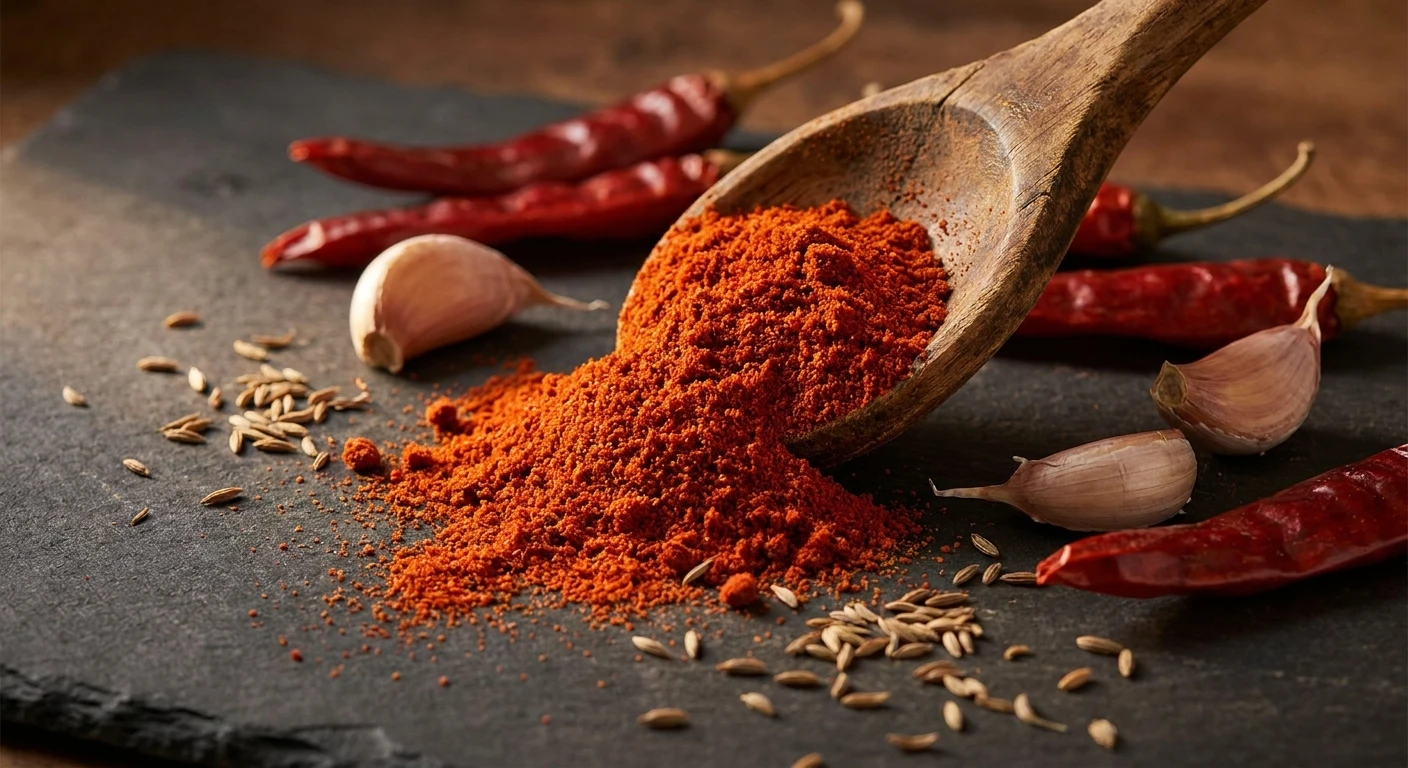
The Big Question: Is Chili Powder Spicy?
If you are staring at a recipe right now and wondering, is chili powder spicy enough to ruin your dinner, you are not alone. The spice aisle is notoriously confusing, filled with countless jars of red dust that range from mildly sweet to blisteringly hot. The short answer? It depends entirely on what kind of jar you are holding. Standard American supermarket chili powder is actually a mild seasoning blend designed specifically for making large pots of chili con carne, meaning it packs far more earthy, savory flavor than actual heat. However, pure ground chilies, such as cayenne pepper or ground habanero, are entirely different culinary beasts that will immediately set your palate on fire if used incorrectly.
This guide breaks down exactly what hides inside those generic jars, how heat levels are meticulously measured by scientists, and the crucial differences between savory spice blends and pure ground peppers. By thoroughly understanding the specific ingredients and regional variations, you can confidently season your meals without unexpectedly overwhelming your taste buds. We provide the facts on capsaicin, the fascinating history of these fiery blends, and a foolproof strategy for mastering spice in your kitchen.
Read also: Best slow cooker butter chicken with jar sauce; Buffalo Ranch Sauce: The Ultimate Spicy Condiment Guide.
People often assume that anything featuring the word chili on the label will automatically burn their mouth. Understanding the immense difference between blended seasonings and pure powders is the ultimate kitchen hack for anyone who loves cooking. The true value of knowing your spices lies in total precision cooking. For instance, using a generic seasoning blend instead of pure cayenne pepper means you can freely add huge, heaping tablespoons of rich, savory flavor to a pot of black beans without making it completely inedible for children or guests who prefer mild food. Conversely, swapping a mild sweet paprika for pure ground ghost pepper by mistake is a fast track to a culinary disaster.
Here is the exact breakdown of common red powders found in typical grocery stores.
| Type of Powder | Primary Ingredients | Heat Level (Scoville Scale) |
|---|---|---|
| Standard Blend | Ancho chilies, cumin, garlic, oregano | 500 – 1,500 SHU (Very Mild) |
| Cayenne Pepper | 100% ground cayenne peppers | 30,000 – 50,000 SHU (Hot) |
| Chipotle Powder | 100% smoked, dried jalapeños | 2,500 – 8,000 SHU (Medium) |
| Ghost Pepper Powder | 100% ground bhut jolokia | 1,000,000+ SHU (Extreme) |
To properly navigate your home spice cabinet, follow these essential steps:
- Check the ingredient list: If the label lists multiple ingredients like salt, cumin, and oregano, it is a mild blend meant for flavoring, not burning. If it lists a single pepper variety, proceed with extreme caution.
- Examine the color and texture: Blends often have a slightly browner, earthier hue and a coarser, chunkier texture due to the added herbs, while pure hot pepper powders are usually brightly colored and finely milled into fine dust.
- Perform a sniff and taste test: Take a tiny pinch on the tip of your finger. A blend will smell savory like a taco stand, whereas a pure hot chili will instantly tingle your nose and deliver sharp, immediate heat to your tongue.
Getting this right ensures your dishes are perfectly seasoned, balancing savory depths with just the right amount of warmth.
The Ancient Origins of Ground Peppers
The story of pulverizing dried peppers dates back thousands of years to the indigenous peoples of Central and South America. Ancient Aztecs and Mayans dried wild chilies in the blazing sun and ground them using heavy stone metates to preserve the harvest for harsh seasons. These early powders were intensely spicy, as they consisted entirely of pure, unadulterated fiery peppers. They were used not only to heavily flavor food and bitter chocolate drinks but also for vast medicinal purposes. The pure heat was celebrated as a life-giving force, and the modern concept of mixing it with non-spicy fillers simply did not exist.
The Evolution of the American Blend
The commercial seasoning blend most Americans know today was actually invented in Texas in the late 19th century. A German immigrant named William Gebhardt wanted to recreate the flavors of traditional Mexican chili con carne for his cafe patrons, but fresh chilies were hard to find year-round. In 1894, he ran dried ancho chilies through a standard meat grinder and aggressively mixed them with cumin, oregano, and black pepper. This created a standardized, shelf-stable seasoning that was incredibly rich in flavor but remarkably mild enough for European-American palates. Gebhardt’s famous Eagle Brand Chili Powder fundamentally changed the culinary landscape, making bold flavors an accessible, everyday dish for millions of people who absolutely could not tolerate extreme heat.
The Modern State of Global Spice Markets
Today, the global spice market is highly specialized and incredibly diverse. You can walk into an average supermarket and find everything from the mildest smoked paprika imported from Spain to the most punishing Carolina Reaper dust cultivated in specialized greenhouses. The globalization of food has directly led to consumers demanding specific regional powders, like Korean gochugaru (which offers a moderate, delightfully fruity heat) or Indian Kashmiri chili (known specifically for its brilliant red color and exceedingly mild warmth). Modern industrial milling techniques preserve the volatile plant oils better than ever before, meaning the commercial powders you buy today retain their distinct heat profiles and complex flavor notes much longer on the shelf.
Understanding Capsaicin and The Scoville Scale
The precise heat you feel when you eat any pepper product comes from a chemical compound called capsaicin. Capsaicin is a highly active chemical component found entirely in the placental tissue of chili peppers (the white spongy pith holding the actual seeds). When you eat it, capsaicin securely binds to specific pain receptors in your mouth called TRPV1 receptors. These tiny receptors are actually responsible for detecting literal, physical heat like scalding hot soup. When capsaicin binds to them, it chemically tricks your brain into thinking your mouth is literally on fire, even though absolutely zero physical tissue damage is actually occurring.
To meticulously measure this chemical trickery, scientists use the famous Scoville Heat Unit (SHU) scale. Developed by pharmacist Wilbur Scoville in 1912, it originally relied on a panel of human testers heavily diluting pepper extract with sugar water until the intense heat was no longer detectable. Today, we rely on High-Performance Liquid Chromatography (HPLC) to scientifically measure the exact concentration of active capsaicinoids. Standard commercial blends register very low on this advanced scale because the pure ancho peppers are heavily diluted with massive amounts of non-spicy cumin and garlic powder.
Chemical Reactions and Heat Management
If you accidentally dump too much spicy powder into a family dish, you absolutely cannot just dilute it with plain water. Here are the hard scientific facts about managing capsaicin:
- Capsaicin is strictly hydrophobic: It completely repels water. Drinking a giant glass of ice water will only aggressively spread the spicy oils around your entire mouth, making the burning sensation significantly worse.
- Capsaicin is fat-soluble: Dairy products contain casein, a miraculous protein that chemically binds to capsaicin molecules and effectively washes them away from your screaming pain receptors. This is the exact scientific reason why rich sour cream is heavily served with spicy Mexican food.
- Acids vigorously neutralize the burn: Squeezing fresh lime juice or adding a heavy dash of white vinegar can quickly alter the pH balance of a ruined dish, slightly dulling the perceived sharpness of the floating capsaicin molecules.
- Sugar effectively masks the heat: Sucrose does not physically remove the capsaicin, but sweet flavors fiercely compete for your brain’s limited attention, effectively masking the sheer intensity of the chemical burn.
To master the use of various red powders in your everyday cooking, vigorously follow this 7-Day Spice Exploration Plan. Each specific day fiercely focuses on a completely different aspect of identifying, using, and managing chili heat.
Day 1: The Pantry Audit
Pull every single red spice jar out of your dark cabinet. Read the labels incredibly carefully. Ruthlessly separate the pure ground peppers (cayenne, paprika, chipotle) from the blended seasonings (chili powder, taco seasoning, fajita mix). Throw away absolutely anything that has been continuously open for more than two years, as the essential oils have definitively evaporated, leaving only a dusty, flat heat.
Day 2: The Baseline Taste Test
Take a ridiculously tiny pinch of your standard blended chili seasoning and gently taste it directly on your tongue. Notice the deeply savory notes of garlic and earthy cumin before the incredibly mild, warm chili flavor slowly kicks in. Memorize this baseline taste so you fully understand what standard recipes expect when they aggressively call for a heaping tablespoon of the stuff.
Day 3: Exploring Mild Sweetness
Cook a very simple dish, like thickly roasted potato wedges, using absolutely nothing but sweet Hungarian paprika or mild Kashmiri chili. This exercise definitively teaches you how ground peppers can boldly add immense bright color, profound sweetness, and rich fruity flavor to food without contributing any actual burning sensation whatsoever.
Day 4: Introducing Smoky Heat
Add a conservative half-teaspoon of pure chipotle powder or heavy smoked paprika to a fresh batch of homemade mayonnaise or a simmering pot of black beans. This critical step properly introduces you to the magical combination of medium heat and intense wood-smoke flavor, a hugely crucial profile in robust Southwestern cooking.
Day 5: The Pure Heat Challenge
Extremely carefully measure exactly one-eighth of a teaspoon of pure cayenne pepper into a massive pot of chicken soup or creamy pasta sauce. Notice how such an incredibly small amount forcefully distributes a sharp, lingering heat throughout the entire massive dish. This single test definitively proves exactly why precision measuring is absolutely critical with pure powders.
Day 6: Building Your Own Blend
Create a fantastic custom seasoning mix from scratch. Vigorously combine two tablespoons of sweet paprika, one heavy teaspoon of cumin, one teaspoon of pure garlic powder, half a teaspoon of crushed oregano, and a ridiculously tiny pinch of cayenne. You have just successfully made a vastly fresher, incredibly brighter version of standard store-bought chili mix.
Day 7: The Rescue Mission
Intentionally over-spice a very small, cheap bowl of basic tomato sauce with pure cayenne. Practice aggressively fixing it using hard science: vigorously stir in a generous splash of heavy cream, a massive squeeze of fresh lemon juice, and a heavy pinch of white sugar. Taste exactly how the rich fat, sharp acid, and sweet sugar brilliantly tame the wildly aggressive capsaicin burn.
Myth: All red chili powder is incredibly spicy and will instantly ruin a mild family dish.
Reality: Standard American blends are predominantly made of incredibly mild ancho chilies heavily mixed with cumin and garlic, making them wildly earthy and profoundly savory rather than purely fiery.
Myth: The small seeds are the spiciest part of the pepper, so powders containing ground seeds are aggressively the hottest.
Reality: The heat resides exclusively in the white placental pith heavily holding the seeds, absolutely not the seeds themselves. The highest concentrated amount of capsaicin is entirely inside that spongy membrane.
Myth: Cooking the red powder significantly longer makes the dish wildly spicier.
Reality: Capsaicin is an incredibly stable molecule that absolutely does not multiply when heavily heated. However, as cooking liquids massively reduce during long simmers, the sheer concentration of the spice vigorously increases, making the final bite feel far punchier.
Myth: You can slowly build up an absolute biological immunity to wildly spicy powders.
Reality: While your specific pain receptors can certainly become mildly desensitized over vast amounts of time, pure capsaicin will absolutely always trigger a harsh chemical reaction; you just mentally learn to tolerate the aggressive sensation better.
Is chili powder the same as cayenne pepper?
Absolutely not. Standard blends contain massive amounts of garlic, oregano, and cumin, while cayenne is completely 100% pure, aggressively hot ground pepper.
Why does my chili powder look dull brown instead of bright red?
The deeply brown hue purely comes from the heavy addition of ground cumin and the natural oxidation of significantly older, thoroughly dried ancho peppers over time.
Can I easily substitute paprika for chili seasoning?
You certainly can, but you will massively miss the savory herbs. Paprika boldly offers the bright red color and sweet pepper flavor without the aggressive cumin and garlic punch.
How long does ground chili stay aggressively spicy in the pantry?
Whole dried spices firmly last far longer, but processed ground powders massively lose their intense potency and volatile spicy oils after about six to roughly eight months sitting in the pantry.
Is Mexican chili powder vastly different from the American version?
Yes, traditional Mexican recipes almost exclusively call for completely pure ground chilies like pure ancho or bright guajillo rather than pre-mixed, heavily herbal American blends.
What is the absolute mildest pepper powder commercially available?
Sweet Spanish paprika, entirely made from incredibly mild red bell peppers, contains virtually zero Scoville Heat Units, making it completely heatless.
Can wildly spicy powders cause literal physical burns on my tongue?
While they certainly cause a wildly intense burning sensation via nerve receptors, they absolutely do not cause actual chemical or thermal tissue damage to your mouth.
Does heavily roasting chili powder make it vastly spicier or milder?
Briefly toasting the powder gently releases the deeply trapped essential oils, vastly increasing the immense aromatic flavor, but it absolutely does not alter the scientific Scoville heat level.
To clearly wrap up, firmly knowing the exact contents of your various spice jars is the ultimate absolute key to flawless culinary success. Standard commercial blends offer incredibly rich, wildly savory warmth, while pure ground peppers aggressively deliver highly concentrated fire. Always meticulously check the label, do a very quick finger taste test, and measure incredibly carefully. Ready to massively upgrade your everyday kitchen skills? Subscribe to our newsletter right now for more weekly cooking tips, ultimate spice guides, and incredible flavor hacks!



Leave a Reply