

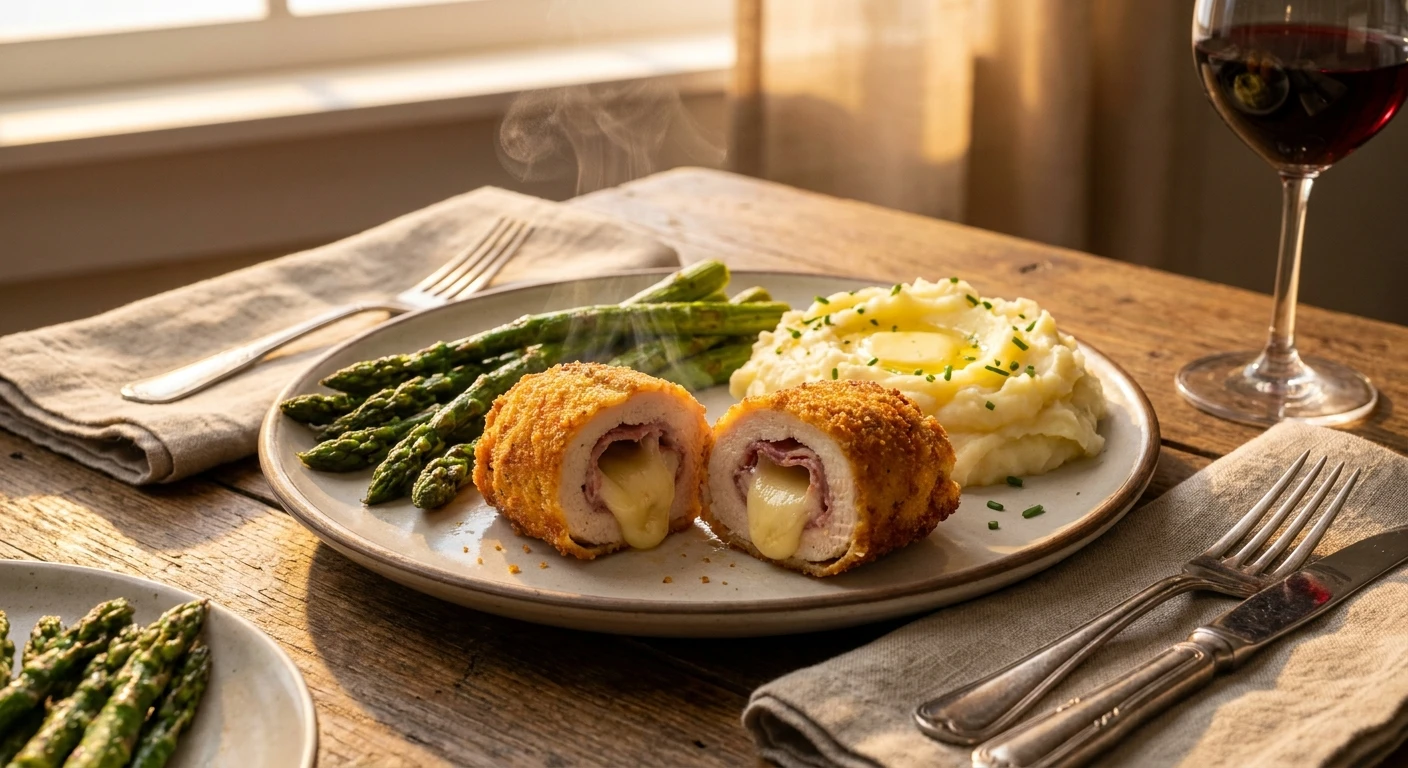
The Ultimate Guide on What to Serve with Chicken Cordon Bleu
Deciding exactly what to serve with chicken cordon bleu can turn a standard weeknight dinner into a truly spectacular gourmet dining experience. This legendary dish features tender poultry wrapped tightly around savory cured ham and melting Swiss cheese, all coated in crispy, golden breadcrumbs. Because the main entree is incredibly rich and savory, it strictly demands side dishes that complement its heavy profile without entirely overpowering it. When you actively balance the dense textures of the breaded meat and gooey cheese with bright, acidic, or highly herbaceous sides, you instantly create a complete culinary masterpiece. A well-planned menu actively enhances the flavors of the classic creamy Dijon mustard sauce that is so frequently drizzled right over the chicken, effectively cutting through the inherent richness to cleanse your palate between every single bite. Whether you are prepping for a formal holiday feast or simply upgrading a standard Tuesday night supper, selecting the precise accompaniments is absolutely crucial. You need reliable options that provide contrasting textures, deeply complementary flavors, and a massive pop of color to the plate. Finding that sweet spot between comfort food and refined elegance is the secret to a memorable meal.
Balancing Flavor Profiles and Textures
Finding the absolute perfect pairing is all about balancing the macro-elements of your dinner plate: richness, acidity, texture, and visual appeal. Because the stuffed meat is inherently heavy, pan-fried or baked, and packed with molten dairy, your side dishes must work actively to refresh your mouth. A super crisp, highly acidic salad or a batch of lightly steamed vegetables offers a sharp, much-needed contrast to the dense, meaty center. Think about building a complete flavor ecosystem on the plate.
Read also: The Ultimate Crispy Bol Egg Roll Recipe; Crispy Mozzarella Cheese Balls: The Ultimate Snack Recipe.
| Side Dish Category | Ideal Example | Flavor Profile & Texture |
|---|---|---|
| Crisp Vegetables | Garlic Butter Green Beans | Snappy, heavily garlicky, exceptionally bright |
| Heavy Starches | Roasted Garlic Mashed Potatoes | Deeply creamy, buttery, cloud-like soft |
| Fresh Salads | Arugula and Shaved Lemon Salad | Sharply peppery, highly acidic, crunchy |
| Grains & Pasta | Herbed Lemon Orzo | Chewy, citrus-forward, satisfyingly dense |
Pairing a high-fat protein with the right sides ensures proper digestion and a significantly more enjoyable eating experience. For example, a sharp Dijon vinaigrette poured over mixed organic greens cuts directly through the heavy Swiss cheese fat, while roasted asparagus spears provide a charred, earthy bite that perfectly complements the salty cured ham. Here is exactly how to build the perfect plate from scratch:
- Select a robust starchy foundation: Choose fluffy rice pilaf, herb-roasted potatoes, or simple buttered noodles to soak up any extra creamy Dijon mustard sauce that pools on the plate.
- Add a remarkably bright vegetable: Incorporate crisp green beans, aggressively roasted Brussels sprouts, or tender broccolini to bring essential vitamins and a massive crunch factor that contrasts the soft cheese.
- Finish with a sharp acidic component: A quick side salad with a heavy lemon-based dressing or a scoop of quick-pickled red onions helps entirely reset your taste buds after every single rich bite of meat.
Origins of the Classic Stuffed Poultry
The culinary origins of the stuffed and perfectly breaded poultry dish we know and love today trace directly back to Switzerland in the 1940s. It initially started as a clever variation of traditional veal schnitzel. Resourceful cooks desperately needed a practical way to stretch highly expensive meat while simultaneously incorporating abundant local staples like aged Gruyère cheese and deeply cured ham. Because the dish was born directly in the freezing alpine regions, the earliest side dishes were robust, cold-weather agricultural staples designed specifically to fuel hard-working laborers and local farmers. Think incredibly heavy root vegetables, dense potato gratins, and hearty roasted cabbage preparations that provided maximum caloric intake.
Evolution of Side Dish Pairings
As the original recipe successfully traveled from rural Europe directly to bustling North America in the late 1960s, the corresponding side dishes evolved dramatically. High-end, sophisticated restaurants in New York and Chicago quickly began serving the breaded poultry with much lighter, far more elegant accompaniments. Tender asparagus bundles neatly tied with fresh chives, delicate wild rice blends, and butter-glazed baby carrots quickly became the new industry standard. The kitchen focus rapidly shifted from mere caloric survival to genuine culinary artistry, prioritizing plate aesthetics and a highly refined balance of contrasting flavors.
Modern State of Gourmet Plating
Today, the modern state of gourmet plating enthusiastically embraces a beautiful fusion of rustic charm and contemporary elegance. Professional chefs now focus intently on hyper-seasonal, locally sourced side dishes that elevate the main event. Instead of massive, heavy potato casseroles, a modern dinner plate might feature a toasted quinoa pilaf packed with fresh herbs, charred heirloom tomatoes, or a delicate micro-greens salad dressed generously with a tart yuzu vinaigrette. This ongoing evolution highlights exactly how versatile the main dish truly is, easily adapting to modern dietary trends like low-carb lifestyles by simply swapping traditional heavy starches for whipped cauliflower mash or fresh zucchini ribbons.
The Maillard Reaction and Flavor Pairing
To truly understand the deep science of what makes a side dish work so well, we must look closely at the complex mechanics of the Maillard reaction. When the breaded poultry aggressively hits the hot pan oil or the high-heat oven, natural amino acids and reducing sugars react violently to form hundreds of entirely new, distinct flavor compounds. This scientific process creates the beautiful golden-brown crust and complex, deeply savory aromas. Because this crispy crust is loaded heavily with umami and toasted flavor notes, your chosen side dishes absolutely must possess enough chemical complexity to stand up to it without getting totally lost on the palate. Aggressively roasting vegetables like sweet carrots or Brussels sprouts directly triggers their own distinct Maillard browning, creating a harmonious, invisible bridge of flavor compounds entirely across the dinner plate.
Lipid Palate Cleansing Mechanics
Furthermore, the heavily melted cheese and savory ham inject significant lipids, or fats, directly into the palate. Heavy fats completely coat the human tongue, which can very quickly lead to severe sensory fatigue, notoriously making the third bite taste significantly less impactful than the first bite. To actively counteract this biological phenomenon, food scientists and chefs rely heavily on lipid palate cleansing mechanics, utilizing astringency and high acidity to rescue the meal.
- Astringent culinary compounds: Natural tannins found abundantly in certain robust red wines, brewed teas, and dark leafy greens like raw kale physically bind to your salivary proteins, mechanically clearing heavy fats right off the tongue.
- Strategic acidity and pH balance: Strong acids, such as the citric acid in fresh lemon juice or the acetic acid in strong vinegar, rapidly stimulate massive saliva production, organically washing away residual dairy fats and entirely refreshing your sensory receptors.
- Intentional thermal contrast: Serving a heavily chilled, incredibly crisp salad directly alongside hot, melting cheese creates a massive temperature differential that severely heightens trigeminal nerve stimulation, drastically enhancing the overall biological perception of freshness.
Day 1: The Classic Bistro Spread
If you want a highly traditional culinary experience, serve the stuffed meat with buttery haricots verts, which are slender French green beans, tossed quickly with toasted slivered almonds. Pair this directly with a generous side of creamy, heavily whipped potato purée heavily enriched with butter and cream. This combination provides a profoundly comforting, restaurant-quality texture that absorbs sauces beautifully.
Day 2: The Low-Carb Alternative
When watching carbohydrates, swap out all the traditional heavy starches for highly seasoned garlic-mashed cauliflower. Pair the mash with long roasted asparagus spears generously seasoned with cracked black pepper, coarse sea salt, and a dash of olive oil. The cauliflower mimics the comforting texture of potatoes without the heavy carb load, keeping the entire meal feeling incredibly light and energizing.
Day 3: The Comfort Food Feast
For a night of pure, unadulterated indulgence, pair the crispy meat directly with rich, baked homemade macaroni and cheese. Use a remarkably sharp cheddar to fiercely contrast the mild Swiss inside the poultry. Add a massive side of sweet, sticky honey-glazed baby carrots to introduce a necessary touch of sweetness that cuts right through the intense wave of savory dairy.
Day 4: The Mediterranean Twist
Bring some massive coastal brightness to the heavy meal by offering a beautiful orzo pasta salad aggressively packed with salty feta cheese, briny kalamata olives, chewy sun-dried tomatoes, and a highly acidic lemon-oregano dressing. The intense, bright Mediterranean flavors effortlessly slice through the heavy, fried elements of the stuffed meat, creating a wildly refreshing dinner experience.
Day 5: The Autumn Harvest
Embrace cold-weather comfort by aggressively roasting large, cubed butternut squash and halved Brussels sprouts. Drizzle them heavily with pure maple syrup and toss them generously with crispy, salty pancetta bits. The sweet squash perfectly balances the salty, cured ham hidden deeply inside the poultry, while the intense heat of the oven creates a gorgeously caramelized vegetable exterior.
Day 6: The Quick Weeknight Rush
When time is incredibly tight, immediately opt for lightning-fast cooking couscous boiled in rich chicken broth. Serve this alongside a highly simple, pre-washed bagged mixed greens salad violently tossed in a sharp, ready-made balsamic vinaigrette. This method fiercely saves time while still strictly adhering to the crucial rule of pairing a heavy protein with a sharp, acidic palate cleanser.
Day 7: The Elegant Dinner Party
To massively impress your dinner guests, meticulously prepare a wild mushroom risotto featuring deeply earthy truffle oil, requiring constant stirring until perfectly creamy. Serve it accompanied closely by lightly steamed broccolini brilliantly finished with fresh lemon zest and a pinch of red pepper flakes. The luxurious risotto matches the elegance of the stuffed meat perfectly.
Myth: Heavy Pasta is the Best Pairing
Reality: Serving massively heavy, cream-based pastas directly alongside heavily breaded, cheese-stuffed poultry almost always severely overwhelms the palate. Lighter, more delicate grains like fluffy quinoa, chewy farro, or a highly simple, brightly dressed green salad offer a much better textural balance, preventing the diner from feeling sluggish and overly full.
Myth: Cheese-Based Sides are Necessary
Reality: Doubling down aggressively on cheese makes the entire meal far too rich to enjoy properly. Since the main dish already contains massive amounts of gooey Swiss or Gruyère, it is scientifically and culinarily much better to entirely avoid cheese-heavy sides like cauliflower cheese, heavy au gratin potatoes, or creamy mac and cheese unless you are intentionally seeking extreme comfort food.
Myth: You Need Complex Sauces for the Vegetables
Reality: The stuffed meat itself, along with its traditional, highly rich Dijon cream sauce, already provides plenty of necessary moisture and intense flavor. Simply roasting or lightly steaming your vegetables with highly basic kosher salt, cracked black pepper, and premium olive oil is usually the absolute most effective preparation method.
What is the absolute best vegetable for this dish?
Aggressively roasted asparagus or blistered garlic green beans remain the undisputed top choices due entirely to their robust crispness and earthy flavor profiles.
Can I serve rice with it?
Yes, a deeply aromatic wild rice pilaf packed with fresh herbs adds a remarkably nutty flavor that perfectly complements the melting Swiss cheese.
Does mashed potato work well?
Absolutely. Deeply creamy, buttery mashed potatoes act as a truly fantastic, highly absorbent base to soak up the signature creamy Dijon mustard sauce.
What salad dressing pairs best?
A highly acidic lemon vinaigrette or a sharply pungent balsamic dressing cuts directly through the dish’s intense richness beautifully, refreshing the mouth instantly.
Are roasted potatoes a good side?
Yes, heavily herb-roasted potatoes provide an excellent, shattered textural crunch that perfectly matches the crispy, golden breaded exterior of the meat.
Can I serve pasta?
Yes, but you absolutely must keep it light. Think delicate angel hair pasta tossed quickly in raw garlic and olive oil rather than a heavy, dairy-laden Alfredo.
What wine pairs with these sides?
A highly crisp, fruit-forward Sauvignon Blanc or a dry, unoaked Chardonnay pairs wonderfully with both the rich poultry and the bright vegetable sides.
How do I keep the meal from feeling too heavy?
Always prioritize serving at least one highly acidic or notably raw component, like a bitter greens salad or pickled vegetables, to actively combat the heavy fats.
Mastering the Perfect Dinner Plate
Building the absolute perfect plate basically comes down entirely to understanding bold contrast and deliberate balance. By actively mixing highly acidic salads, deeply earthy roasted vegetables, and intensely comforting starches, you effortlessly elevate the entire dining experience from basic to extraordinary. The secret lies in never letting the incredibly rich, cheese-stuffed meat overwhelm your palate. Ready to finally start cooking? Grab your favorite apron, heat up your oven, and boldly test out one of these amazing, chef-approved side dishes tonight for a truly unforgettable meal!



Leave a Reply