

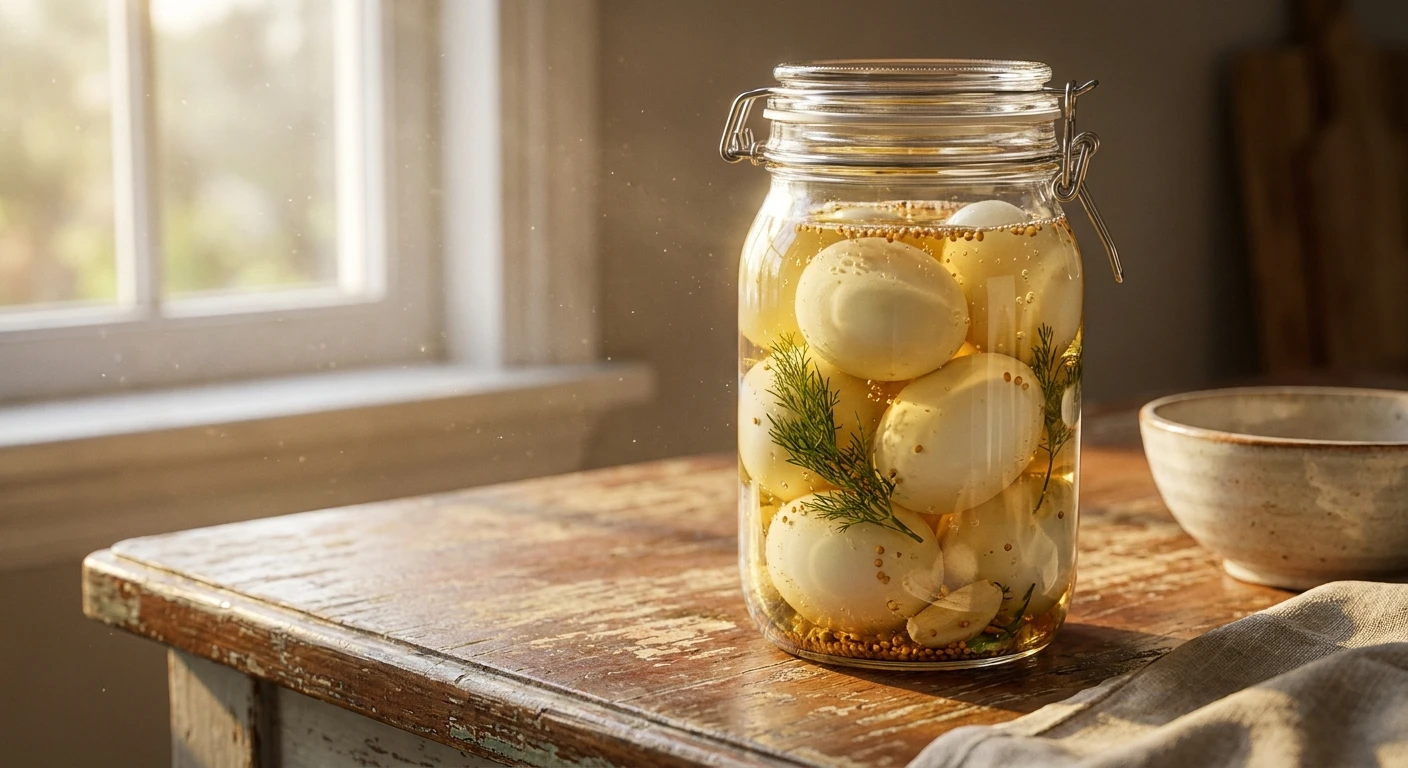
Why fermented eggs Are the Ultimate Culinary Secret
When you hear about fermented eggs, your first thought might be skepticism, but this ancient preservation method offers unbelievable depth of flavor and serious gut-health benefits. By definition, fermenting involves submerging peeled, hard-boiled eggs in a precisely measured saltwater brine fueled by beneficial bacteria, turning a basic protein into a probiotic powerhouse. You get an intensely tangy, umami-packed snack that safely lasts for weeks in your refrigerator. We are looking at a culinary practice that brilliantly blends old-world food preservation with modern nutritional science.
The core thesis is simple: mastering this craft gives you an affordable, nutrient-dense ingredient that completely elevates your daily meals. Many food enthusiasts and home chefs are currently realizing that standard pickling with harsh white vinegar is not the only way to achieve that satisfying sour bite. Lacto-fermentation utilizes only natural salt and filtered water, cultivating lactic acid bacteria that naturally preserve the food without any artificial additives. This biological method is incredibly reliable and completely alters the physical texture and taste profile of both the egg white and the yolk. If you want to level up your snack game, understanding the mechanics, historical context, and daily process behind this food will change how you view food storage forever.
Read also: The Ultimate Crispy Bol Egg Roll Recipe; Authentic tortellini in brodo Recipe Guide.
Let’s break down exactly what happens when you decide to take control of your kitchen and prepare this superfood. The value proposition of making them at home is massive: you gain an extended shelf life, significantly enhanced digestibility, and a serious boost to your gut microbiome. For example, endurance athletes use them for quick, easily digested protein immediately post-workout, while high-end culinary chefs grate the cured, dense yolks over fresh pasta for a massive umami hit that rivals aged parmesan cheese. However, there are strict biological rules to follow. If you fail to use the correct salt ratio, harmful bacteria can take over the environment.
| Aspect | Standard Boiled Egg | Lacto-Fermented Egg |
|---|---|---|
| Shelf Life | Up to 7 days refrigerated | 1 to 2 months refrigerated |
| Probiotic Content | Zero | Extremely High (Lactobacillus) |
| Taste Profile | Neutral, mild | Deeply tangy, salty, umami-rich |
| Texture | Soft, yielding | Dense, springy, firm |
To guarantee success and safety, you must adhere to a few foundational rules.
- Select the highest quality ingredients: Pasture-raised options generally yield much richer, darker yolks and hold their physical structure significantly better during the long brine phase.
- Perfect the hard boil: You want a fully cooked, solid yolk. Soft-boiled, runny yolks can easily break apart and instantly ruin the delicate brine ecosystem.
- Calculate the salt brine exactly: A 2% to 3% salt by water weight ratio is absolutely mandatory to keep dangerous pathogens out while letting the beneficial lactic acid bacteria thrive.
- Maintain total submersion: Any part of the food exposed to oxygen above the brine line is highly susceptible to mold growth.
Origins of Egg Preservation
Long before modern refrigeration existed, human civilizations desperately needed reliable ways to store essential proteins for harsh winter months and long nomadic journeys. Ancient Asian cultures pioneered various sophisticated methods of preserving proteins, ranging from packing them in dense clay and wood ash to burying them deep in coarse salt. While century eggs and salted duck eggs use alkaline and curing methods respectively, these early survival techniques laid the intellectual foundation for what we now understand as controlled microbial food preservation.
Evolution Through the Centuries
As global trade routes expanded and cultures intermingled, so did food preservation technologies. Western European cultures heavily relied on harsh vinegar pickling, but Eastern European and certain Asian communities leaned heavily into lacto-fermentation. By submerging raw vegetables and cooked proteins in saline solutions, early homesteaders discovered that naturally occurring lactobacillus bacteria would produce lactic acid. This process effectively cooks the food a second time through high acidity. This biological evolution meant merchants and sailors could safely carry nutrient-dense protein sources that simply would not spoil for months at sea.
The Modern State of Fermentation
Fast forward to the year 2026, and we are witnessing a massive, widespread resurgence in traditional food preparation methods. People are consciously stepping away from ultra-processed, factory-made snacks and returning to their home kitchens to cultivate their own bacterial ecosystems. Trendy farm-to-table restaurants proudly feature these tangy delicacies on expensive charcuterie boards, and fitness enthusiasts systematically meal-prep them for gut-friendly protein hits. The modern approach brilliantly combines precise digital food scales for exact salt measurement with classic heavy glass mason jars, perfectly blending ancestral culinary wisdom with exact scientific consistency. The accessibility of digital pH meters has also made home fermenting safer and more predictable than ever before.
The Microbiology of the Brine
When you carefully place a peeled, fully hard-boiled egg into a properly measured saline solution, a fascinating microbiological shift immediately occurs. The salt creates a strong osmotic gradient, slowly pulling moisture out of the whites while simultaneously drawing salt inward. More importantly, this specific salinity entirely inhibits harmful, dangerous pathogens like Clostridium botulinum from surviving. Meanwhile, salt-tolerant lactic acid bacteria (LAB) begin to consume whatever trace carbohydrates are present in the jar. Since eggs contain almost zero carbs, you must introduce carbohydrates via added garlic cloves, sliced onions, or a splash of raw whey. The bacteria feast on these carbs and quickly convert them into lactic acid. This drops the pH level of the entire liquid below 4.6, creating a highly acidic environment where the food is safely and naturally preserved.
Structural Changes in Proteins
The rapid acidification does not just keep the food biologically safe; it fundamentally alters the physical structure. The proteins present in the egg white denature much further under these acidic conditions, which directly results in a noticeably firmer, slightly rubbery texture that literally snaps when you bite into it. The yolk absorbs the salt over time and becomes incredibly rich, dense, and deeply savory, losing its dry, chalky texture.
Here are the critical scientific facts driving this reaction:
- Lactobacillus bacteria replicate optimally at ambient room temperatures hovering between 65°F and 72°F.
- A strict pH level below 4.6 is scientifically required to halt the growth of dangerous spoilage organisms and ensure absolute food safety.
- The fermentation process directly increases the bioavailability of specific nutrients, making the dense amino acids much easier for the human digestive tract to break down and absorb.
- Cloudy brine is a standard biological indicator of active, healthy lactic acid production, not a sign of rot or spoilage.
Day 1: Preparation and Submersion
Start by boiling a dozen high-quality eggs. Cool them rapidly in a freezing ice bath for ten minutes to make peeling absolutely flawless. Mix your baseline brine using pure filtered water and non-iodized sea salt, aiming precisely for a 3% ratio by weight. Add your raw flavor agents like smashed garlic cloves, fresh dill sprigs, and yellow mustard seeds to a thoroughly sterilized heavy glass jar. Pack the peeled eggs tightly inside, and pour the saltwater brine over them until everything is completely submerged below the liquid line.
Day 2: The Acclimation Phase
Leave the sealed jar on your kitchen counter, positioned away from direct, hot sunlight. Right now, the salt is slowly penetrating the outer protective layers of the egg whites. You will not see much physical action yet, but the microbial environment inside the glass is rapidly stabilizing.
Day 3: First Signs of Life
You might start to notice a few tiny, active carbon dioxide bubbles forming at the top of the liquid surface or clinging around the edges of the garlic cloves. This microscopic activity means the lactic acid bacteria have officially begun their metabolic work. The brine will begin to look very slightly hazy.
Day 4: The Clouding Effect
The liquid will become noticeably and heavily cloudy today. Give the entire jar a gentle, sweeping swirl to ensure the protective brine is evenly distributed around every egg. Open the lid slightly to burp the jar, releasing any tightly accumulated carbon dioxide gas that has built up inside.
Day 5: The Aroma Shift
When you burp the jar today, you will immediately smell a distinct, pleasantly sour aroma escaping. It should smell exactly like fresh, vibrant pickles, absolutely not like rotting sulfur. If it smells like a clean, tangy, salty brine, everything is proceeding perfectly according to plan.
Day 6: Texture Development
The whites are now absorbing the produced acids and herbal flavors deeply into their core. They will feel noticeably firmer when pressed against the side of the glass. The acidity level is dropping rapidly, firmly securing the long-term preservation of the food.
Day 7: Taste Test and Cold Storage
It is time to officially sample your culinary work. Pull one out with clean tongs and slice it directly in half. The internal texture should be distinctly dense, and the flavor sharply tangy and savory. Move the entire jar into the refrigerator immediately. The cold temperature will effectively halt the active bacteria, keeping your snack perfect for weeks.
Myth: You can easily get botulism from lacto-fermenting eggs sitting out at room temperature.
Reality: As long as you rigorously use the correct salt concentration (2% to 3% by weight) and ensure the pH predictably drops below the 4.6 safety threshold, the environment becomes far too acidic and salty for botulism spores to survive, germinate, or produce any harmful toxins.
Myth: Pickled eggs and fermented eggs are the exact same culinary thing.
Reality: Traditional pickling relies on pouring harshly heated, commercial vinegar over the food to preserve it instantly. Fermentation relies on living, beneficial bacteria creating their own natural lactic acid slowly over a week, resulting in a completely different, highly complex flavor and a massive probiotic profile.
Myth: You desperately need to buy an expensive chemical starter culture to begin the process.
Reality: The robust bacteria you need already exist naturally on the raw, organic ingredients you add directly to the jar, like fresh garlic, dill stems, or even raw cabbage leaves. Wild fermentation requires absolutely no commercial starters.
How long do they last?
Properly completely submerged in brine and securely stored in the refrigerator, they easily maintain peak quality for up to a full month.
Why did my garlic turn blue?
This is a completely harmless, natural enzymatic reaction occurring between the sulfur in the garlic and the highly acidic brine environment.
Can I use soft-boiled eggs?
It is highly discouraged because a ruptured, runny yolk will instantly cloud and ruin the delicate brine ecosystem.
Do I need to sterilize the jar?
Yes, washing thoroughly with scalding hot, soapy water prevents unwanted, dangerous mold spores from forming on the surface.
What kind of salt is best?
Always use pure, non-iodized sea salt or pure kosher salt for optimal, healthy bacterial growth.
Are they safe for kids?
Yes, they serve as a fantastic, highly digestible, probiotic-rich snack for virtually all ages.
Can I reuse the leftover brine?
Absolutely, you can use it as a powerful starter liquid for your very next batch or whisk it into fresh salad dressings.
Making this superfood right at home is surprisingly simple and deeply rewarding. Grab a jar, carefully mix your saltwater brine, and start experimenting with these incredible techniques today!



Leave a Reply