

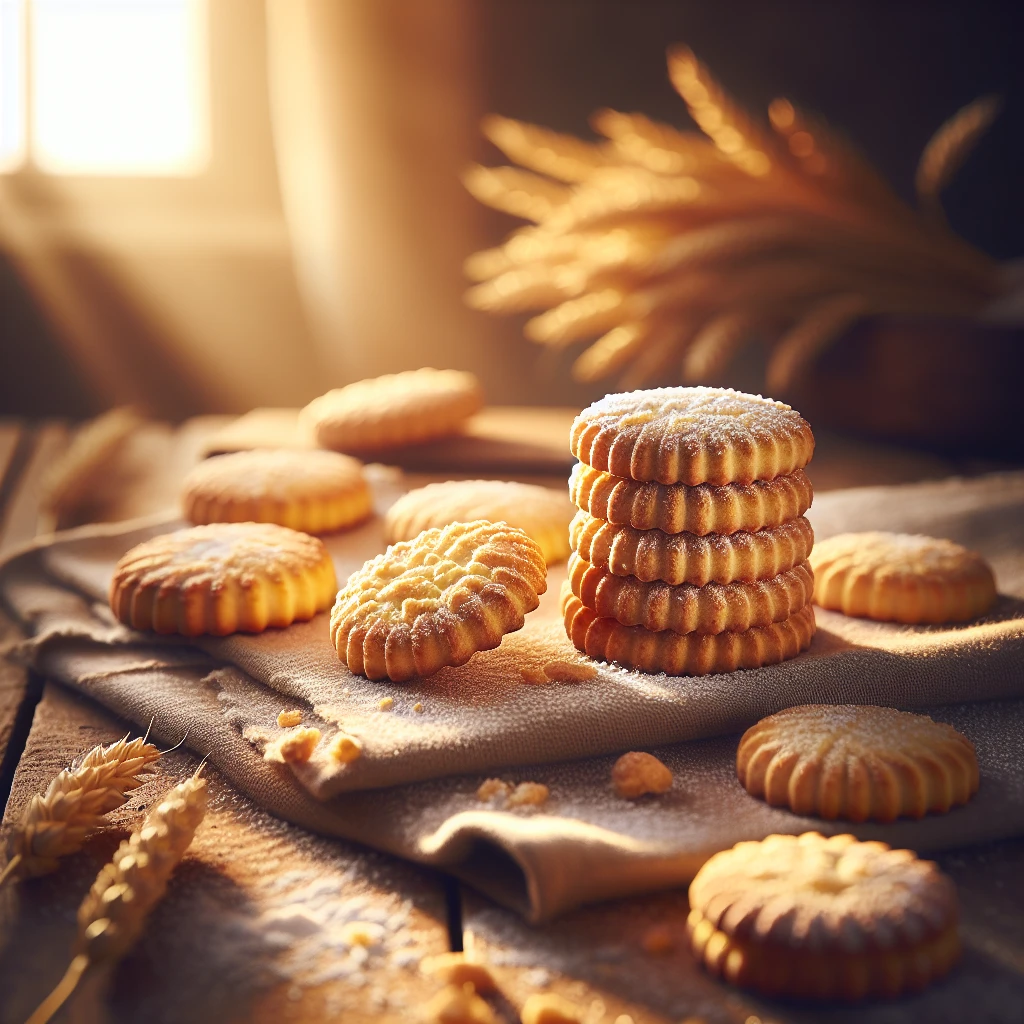
Why Everyone is Obsessed with Sable Cookies Right Now
Have you ever wondered why simple sable cookies can completely outshine the most complex, multi-tiered cakes at any artisan bakery? You know exactly what I mean. You walk into a high-end patisserie, entirely bypass the flashy macarons and the glossy mirror-glazed mousse cakes, and your eyes lock onto those unassuming, perfectly round, golden discs stacked neatly in a vintage glass jar. They just have a massive gravitational pull. Last winter in Kyiv, during the rolling power outages, I found myself manually whisking together butter and sugar by candlelight. I had a sudden, undeniable craving for that quintessential French shortbread. Sitting in a chilly apartment near the historic Podil district, baking a batch of classic sable cookies became my ultimate comfort ritual. It proved to me that true culinary magic doesn’t require electricity, just excellent European butter, a generous pinch of sea salt, and a little patience. The profoundly buttery, tender crunch of a true Sablé Breton is something absolutely anyone can achieve in their home kitchen, provided you understand the specific ratios of fat to flour. We are about to completely break down exactly what makes this biscuit a phenomenal global favorite, from its delightfully sandy texture to the exact scientific baking parameters you need. No fluff, no unnecessary jargon, just pure, straightforward baking mastery.
The Core Anatomy of the Perfect Biscuit
Let’s look at the actual anatomy of sable cookies and what sets them completely apart from the rest of the cookie tin. The word “sablé” literally translates to “sandy” in French. That distinct, sand-like texture is the absolute hallmark of the biscuit. Unlike standard sugar cookies that often rely on baking powder or baking soda for artificial lift, or basic Scottish shortbread that is purely butter, sugar, and flour, the classic sable dough always incorporates egg yolks. This creates a much richer, vastly more tender bite that shatters beautifully when you bite into it. You get that irresistible, melt-in-the-mouth sensation that confidently makes them the king of all biscuits.
Why should you dedicate your weekend to mastering this specific dough? There are two incredibly compelling value propositions here. First, they are the ultimate homemade gifting cookie because they hold their exact shape perfectly in the oven and possess a truly excellent shelf life of several weeks. Second, this very same dough doubles as the absolute most phenomenal tart crust you will ever use for zesty lemon or fresh berry fruit tarts. It acts as a brilliantly crisp, buttery shell that refuses to get soggy.
Here is exactly how sable cookies structurally stack up against other widely popular bakes:
| Cookie Type | Key Fat and Liquid Ratios | Texture and Flavor Profile |
|---|---|---|
| Sable Cookies | Extremely High Butter + Rich Egg Yolks | Sandy, intensely crumbly, rich, melts instantly. |
| Shortbread | High Butter (Strictly No Eggs) | Dense, noticeably snappy, heavy buttery finish. |
| Sugar Cookies | Moderate Butter + Whole Eggs | Noticeably soft, slightly chewy, primarily sweet. |
To get that highly coveted authentic Parisian bakery result right at home, you have to follow strict protocols. Keep in mind these three completely non-negotiable rules for success:
- Uncompromising temperature control: Your butter must be ice cold from the moment you start, and the final shaped dough must rest extensively in the fridge before it ever sees the heat of an oven.
- Premium butter quality: Opt exclusively for European-style butter possessing at least 82% to 84% butterfat. This guarantees maximum flavor and that coveted crumbly texture.
- Minimal gluten development: Once the wet ingredients hit the dry flour, you must stop mixing the exact second the dough comes together to aggressively avoid forming tough gluten networks.
Origins in Sablé-sur-Sarthe
The fascinating story of sable cookies traces all the way back to the year 1670 in the picturesque town of Sablé-sur-Sarthe, beautifully located in the Pays de la Loire region of western France. The legendary Marquise de Sablé reportedly presented a massive batch of these distinctively round, crumbly biscuits to the brother of King Louis XIV at a lavish societal gathering. The discerning royal court was instantly captivated by the immensely rich, buttery flavor and the highly unique texture that seemed to disintegrate beautifully on the tongue without chewing. This prestigious royal stamp of approval rapidly catapulted the humble biscuit into absolute French culinary stardom. The exact recipe was closely and jealously guarded by local bakers for decades, who adamantly insisted that their highly specific, physical method of rubbing the cold fat into the local flour was the absolute secret to their immense success.
Evolution of the French Biscuit
As the centuries rolled on, the classic recipe inevitably traveled far beyond the strict borders of the Sarthe region. By the dawn of the 19th century, ambitious patisseries across the bustling streets of Paris were proudly putting their own unique spin on the versatile dough. Pastry chefs eagerly began incorporating high-end, imported ingredients like scraped vanilla bean caviar, vibrant citrus zest, and finely ground toasted almonds. The widely beloved Breton version, famously known worldwide as the Sablé Breton, boldly introduced aggressively salted butter sourced directly from the coastal region of Brittany. This brilliant addition created that iconic, highly addictive sweet-and-salty flavor profile that heavily dominates modern pastry cases everywhere. The steady evolution clearly showed that the basic base dough was an incredibly forgiving canvas, wonderfully allowing countless generations of passionate bakers to endlessly experiment without ever losing that fundamental sandy crumb.
The Modern State of Sable Cookies
Fast forward to the year 2026, and the once-humble sablé has completely taken over high-end artisan bakeries on a truly global scale. We are currently seeing brilliant pastry chefs aggressively infusing the dough with vibrant green matcha powder, roasted black sesame paste, tangy freeze-dried raspberry powder, and even decidedly savory elements like deeply aged parmesan cheese and fresh rosemary. Yet, despite all these magnificent, avant-garde modifications pushing the boundaries of flavor, the strictly traditional vanilla bean and flaky sea salt version firmly remains the undisputed bestseller everywhere. It stands as a brilliant testament to the completely timeless nature of utilizing nothing but good butter, sugar, and flour. Walking through any major European capital today, you will invariably spot them neatly stacked in massive glass jars, patiently waiting to be perfectly paired with a strong afternoon espresso.
The Science of the Sablage Method
If you genuinely want to understand why sable cookies are scientifically superior, you need to look very closely at the actual chemistry of the traditional “sablage” technique. Sablage is the highly specific physical process of meticulously coating raw flour particles heavily with cold fat long before any sort of liquid (like the egg yolks) is ever introduced to the mixing bowl. When you rapidly rub rock-cold, cubed butter into the dry ingredients using your fingertips, you are essentially waterproofing the microscopic flour proteins. This brilliant mechanical action firmly prevents the proteins from quickly absorbing water and consequently forming long, elastic, highly chewy gluten strands. The glorious result? A baked biscuit that is short, remarkably tender, and distinctly crumbly rather than unpleasantly tough or chewy. The inherent friction of your bare fingers warms the butter slightly, but crucially, not enough to melt it entirely. This delicately leaves behind microscopic pockets of pure fat that will eventually steam and create a delicate lift during the high-heat bake.
Fat and Gluten Interaction
Water is the absolute enemy of a tender biscuit. Standard cookie recipes frequently use whole eggs, inherently bringing a very significant amount of pure water into the delicate mix directly from the clear egg whites. By strictly utilizing only the fatty egg yolks, sable dough brilliantly introduces massive fat and powerful emulsifiers with virtually zero water. Let’s look at some strict scientific baking facts regarding this magnificent dough:
- Lecithin magic: The abundant natural lecithin found heavily in egg yolks acts as a brilliant emulsifier, perfectly binding the massive amount of butterfat and the tiny amount of residual water present into a highly stable matrix, ensuring a beautifully smooth, uniform crumb structure.
- Butterfat percentage matters: Standard, mass-produced American butter legally contains around 80% fat and a whopping 16-18% water. Premium European butter confidently hits 82-84% fat. Less water mathematically means less gluten development.
- Starch gelatinization: During the intense baking phase at 170°C (340°F), the raw starches heavily present in the flour aggressively absorb the actively melting butter and firmly set, perfectly locking the cookie into its perfectly round, signature shape without any dreaded spreading.
- Maillard reaction: The extraordinarily high sugar and protein content, especially when the exterior is cleanly finished with a double egg wash, quickly triggers extreme Maillard browning in the oven, heavily giving the baked cookies their gorgeous signature deep golden color and intensely nutty flavor profile.
Step 1: Precise Ingredient Prep and Sifting
Start your baking session by meticulously weighing absolutely everything using a highly accurate digital kitchen scale. You will need exactly 250 grams of high-quality all-purpose flour, 100 grams of fine powdered sugar, and a generous, heavy pinch of high-quality fine sea salt. Meticulously sift them together into a large metal bowl to aerate the dry mix and completely remove any hard clumps of sugar.
Step 2: The Cold Butter Incorporation
Take exactly 150 grams of very cold, high-fat European butter securely cut into perfectly small, uniform cubes. Immediately toss them directly into the sifted flour mixture. Using only the very tips of your fingers to avoid transferring excess body heat, rapidly rub the cold butter into the dry ingredients until the entire mixture heavily resembles coarse, damp, yellowish sand.
Step 3: The Yolk Emulsion
Carefully drop two room-temperature, beautifully vibrant egg yolks directly into the center of your newly formed sandy mixture. Firmly use a strong metal fork or a plastic dough scraper to gently, repeatedly fold the yolks heavily into the waiting crumbs. Absolutely do not knead the mixture aggressively; just toss it until the moisture is evenly distributed.
Step 4: The Fraisage Technique
Quickly turn the highly crumbly, loose mess directly onto a clean, completely un-floured kitchen counter. Confidently use the firm heel of your hand to aggressively push small sections of the dough away from you, fiercely smearing it against the hard surface. This iconic French technique, called fraisage, perfectly blends the remaining fat into the flour without developing a single strand of tough gluten.
Step 5: Shaping the Perfect Log
Once the dough finally comes together cohesively, firmly shape it into a very tight, highly uniform cylindrical log measuring exactly about two inches in total diameter. Wrap it incredibly tightly in high-quality parchment paper or thick plastic wrap, fiercely twisting the ends in opposite directions to firmly compact the delicate dough even further.
Step 6: The Mandatory Chill Session
Immediately place the tightly wrapped dough log directly into the coldest part of your refrigerator for a minimum of two solid hours, though resting it completely overnight is highly recommended for optimal flavor development. The butter must completely, solidly re-harden, and the raw flour desperately needs this time to heavily hydrate evenly.
Step 7: Slicing and Baking
Preheat your standard oven strictly to 170°C (340°F). Lightly brush the exterior of the fully chilled, solid log evenly with a simple egg wash and firmly roll it entirely in coarse turbinado sugar for a spectacularly crunchy outer edge. Slice it into precise 1/2-inch thick rounds, space them evenly on a heavy baking sheet lined with a silicone mat, and bake for exactly 15 to 18 minutes until deeply, gorgeously golden brown.
Debunking Baking Myths
There is a truly massive amount of bizarre misinformation floating heavily out there regarding classic French pastry techniques. Let’s aggressively clear the air right now and heavily debunk some incredibly persistent, annoying misconceptions about sable cookies.
Myth 1: You can easily use standard vegetable margarine to make these authentic cookies completely vegan.
Reality: Margarine contains entirely different, highly volatile water and fat ratios, invariably resulting in flat, remarkably greasy puddles instead of beautiful distinct cookies. The entire fundamental flavor of the biscuit is heavily, entirely reliant on the complex compounds found only in real dairy butter.
Myth 2: Soft, room-temperature warm butter is significantly easier to mix and works absolutely fine.
Reality: Using warm butter will instantly turn your delicate dough into a horrific, extremely heavy, greasy paste. Rock-cold butter is an absolute, non-negotiable necessity to successfully achieve the highly coveted sandy, crumbly texture.
Myth 3: You drastically need a highly expensive stand mixer to properly make a professional sablé dough.
Reality: Actually, making it entirely by hand utilizing the traditional rubbing and fraisage methods confidently yields a vastly far superior texture precisely because it heavily minimizes the massive risk of aggressively overworking the flour.
Can I freeze sable cookie dough?
Yes, absolutely. The completely unbaked dough log can be tightly wrapped in double layers of plastic and frozen completely solid for up to three full months. You can safely slice and immediately bake them straight from their frozen state, simply adding roughly two extra minutes to your standard baking time.
Why did my cookies suddenly spread out in the oven?
Aggressive spreading almost always happens strictly because the vital butter wasn’t intensely cold enough when the tray finally went into the hot oven, or the raw dough was heavily over-mixed, damaging the delicate fat structure.
Can I add chocolate chips to the recipe?
Absolutely, yes. High-quality mini chocolate chips or fiercely finely chopped, premium dark chocolate chunks fold beautifully into the delicate dough right before the final chilling phase.
How long do baked sable cookies actually last?
Stored carefully in an entirely airtight container strictly at standard room temperature, they reliably remain remarkably fresh, highly fragrant, and fiercely crisp for up to two full weeks.
Can I just use regular granulated sugar instead of powdered?
Powdered sugar is highly recommended exclusively because it dissolves practically instantly and heavily contributes to the delicate, incredibly tender crumb. Standard granulated sugar will absolutely leave a noticeably gritty, unpleasant texture.
What if I absolutely do not have access to European butter?
Standard, supermarket American butter certainly works in a pinch, but your final cookies will understandably be slightly less intensely rich and may frustratingly spread a fraction more solely due to the noticeably higher natural water content.
Should I specifically use salted or strictly unsalted butter?
Traditional, highly authentic Breton recipes rigidly demand heavily salted butter, but utilizing strictly unsalted butter simply allows you absolute, precise control over the final sodium levels of your bake.
Making the absolute perfect batch of sable cookies is an immensely rewarding culinary journey that constantly proves simple, straightforward baking is entirely often the absolute pinnacle of high-end elegance. By heavily respecting the strict cold temperatures and executing the delicate sablage technique, you can easily produce a massive tray of bakery-quality treats right in your own kitchen. Ready to drastically elevate your pastry game? Head straight into the kitchen, grab your absolute best butter, and start aggressively baking right today! Don’t forget to tell me exactly how your massive batch uniquely turns out.
Leave a Reply