
The Secret to the Best Hashbrown Patties
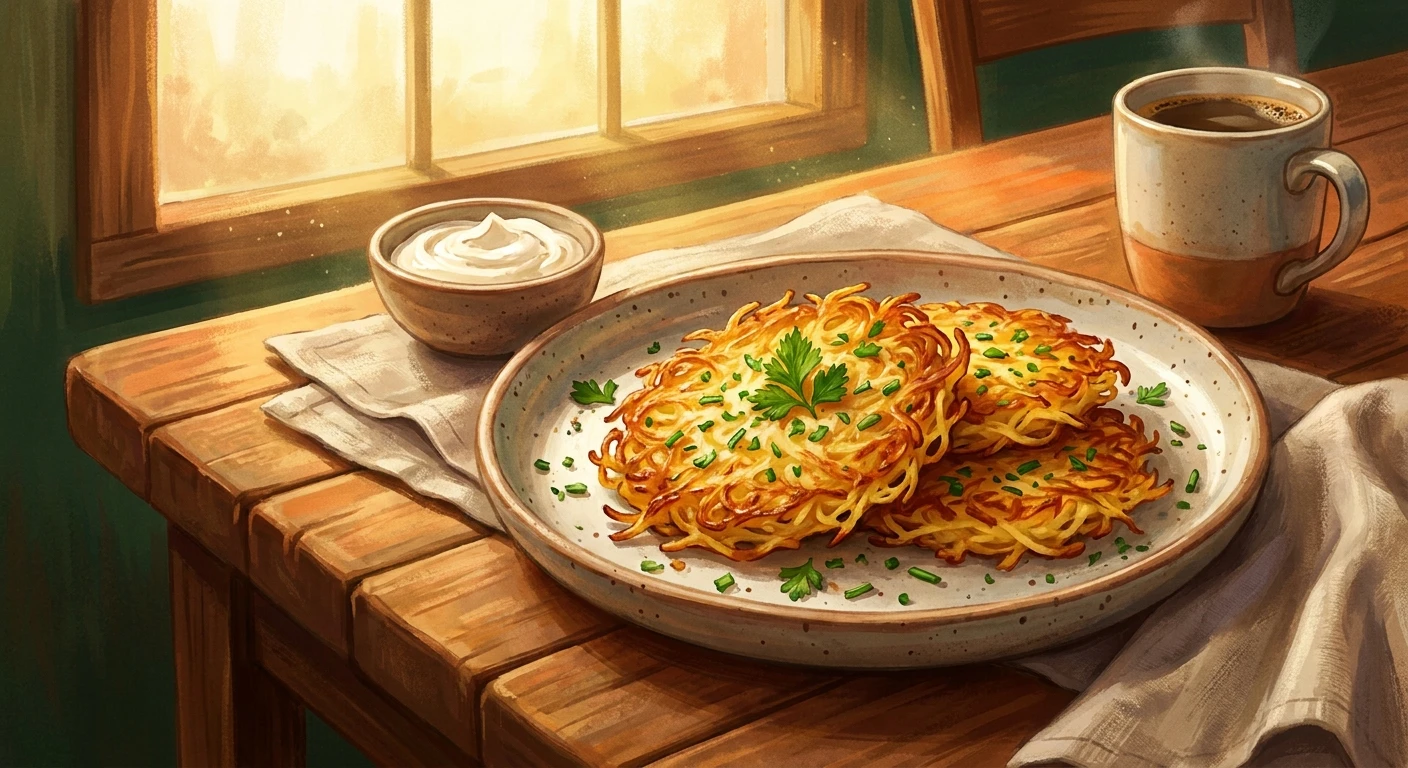
Ever wonder why those frozen hashbrown patties you get at the local diner or fast-food drive-thru are just so unbelievably addictive? I certainly have. Growing up in Kyiv, my grandmother made deruny—traditional Ukrainian potato pancakes—every single Sunday. They were rich, savory, and packed with onion. But when I first visited North America and tasted a classic commercial breakfast potato patty, my mind was entirely blown. I literally called her from a diner booth to explain this crispy, golden brick of pure potato perfection. It was like our beloved deruny, but massively thicker, featuring an outer crust that shatters when you bite into it, protecting a steaming, fluffy interior.
Now that we are solidly in 2026, breakfast culture has exploded globally. We don’t just want to eat good food; we want to master it in our own kitchens without relying on the freezer aisle. Mastering the art of the perfect potato patty isn’t merely about tossing some shredded spuds into hot oil. It requires a deep understanding of starch mechanics, moisture elimination, and precise temperature control. Stick with me, and I’ll walk you through exactly how to achieve that drive-thru quality crunch right at your own stove.
Listen, getting that elite-level crunch can be incredibly frustrating if you don’t know the ground rules. The absolute biggest enemy of a crispy potato is moisture. If your shreds carry too much water, they basically steam themselves from the inside out, turning your breakfast into a sad, oily pile of mush. On the flip side, if you wash away all the starch and don’t replace the binding capability, your beautiful creation will disintegrate the second it hits the frying pan.
Why should you bother making these from scratch instead of just buying a bag? Two massive reasons. First, the cost efficiency is insane. You can make a dozen patties for the price of one fast-food order. Second, the customizability is off the charts. Want to mix in sharp cheddar cheese? Do it. Craving some finely diced jalapeños or crispy bacon bits inside the patty? Nobody is stopping you. You simply cannot get that level of personalization from a cardboard box.
Take a glance at how homemade stacks up against the alternatives:
| Potato Source | Crunch Factor | Customizability |
|---|---|---|
| Drive-Thru Fast Food | High (but greasy) | Zero |
| Supermarket Frozen Aisle | Medium (often bakes soggy) | Very Low |
| 100% Homemade | Epic (shattering crust) | Infinite (add cheese, spices) |
To dominate the breakfast game, you absolutely must follow the Holy Trinity of Potato Preparation. Skip even one of these, and you are destined for failure:
- Precision Shredding: The shreds must be thick enough to hold their shape but thin enough to cook through rapidly. A standard box grater’s large holes are your best friend here.
- The Great Rinse: Washing away the surface sugars and loose starches prevents the outside from burning black before the inside is cooked.
- Extreme Dehydration: Squeezing the water out of the potatoes until they are bone dry is non-negotiable. If you think they are dry enough, squeeze them one more time.
Origins of the Shredded Potato
To truly appreciate what we are cooking, we have to talk about where the concept of hashed browned potatoes came from. Back in the late 19th century, breakfast cooks needed a clever way to repurpose leftover boiled potatoes from the previous night’s dinner. They would literally “hash” (chop) the cold spuds and brown them in a skillet with whatever leftover fat was available, usually bacon grease or beef tallow. The result was a messy, loose pile of crispy and soft potato bits that became a staple of American diner culture.
Evolution into the Handheld Brick
The loose shredded pile was phenomenal, but it wasn’t exactly portable. As car culture took over and fast-food chains began dominating the landscape in the 1970s, breakfast needed to be eaten with one hand on the steering wheel. Food engineers figured out that by par-cooking the shreds, forming them into an oval or rectangle, and flash-freezing them, they could create a stable structure. When deep-fried, the natural starches acted like a high-temperature culinary glue, holding the entire handheld brick together. This innovation changed morning commutes forever.
Modern State of Breakfast Potatoes
Fast forward to our current culinary landscape, and the humble potato patty is getting the gourmet treatment. High-end brunch spots are swapping standard frying oil for duck fat or wagyu beef tallow. Home chefs are experimenting with truffle salt, smoked paprika, and elaborate dipping sauces that go way beyond standard ketchup. The base technique remains exactly the same, but the canvas has been totally upgraded for a more sophisticated palate.
The Maillard Reaction Explained Simply
Let’s get slightly nerdy for a minute because understanding the science makes you a significantly better cook. That glorious golden-brown color and complex savory flavor comes from something called the Maillard reaction. This is a chemical reaction between amino acids and reducing sugars that occurs when food is heated above 285°F (140°C). When you drop a perfectly dry potato patty into hot oil, the rapid evaporation of surface moisture allows the exterior temperature to skyrocket, triggering this reaction. If your potato is wet, the temperature stalls at the boiling point of water (212°F), meaning you get steaming instead of browning. Moisture is the enemy of Maillard.
Starch Gelatinization and Binding
So, how does a pile of loose shreds stick together without adding a bunch of flour or eggs? The magic word is gelatinization. Potatoes are packed with starch granules. When you expose these granules to heat and a tiny bit of internal moisture (par-cooking), they swell up and burst, releasing starch molecules that tangle together. As they cool, they form a sticky, glue-like matrix. This is exactly why we par-cook the shreds before forming them into shapes.
- Russet potatoes are mandatory because they contain extremely high levels of amylose starch, which creates the best fluffy interior texture.
- Waxy potatoes (like red or yellow) lack enough starch to bind properly and will result in a gummy texture.
- Par-cooking at a precise temperature activates the natural starches without completely breaking down the cellular structure of the shred.
- Dropping the formed patty into 350°F (175°C) oil creates an instant crust, sealing the potato matrix before it can fall apart.
Step 1: Selecting the Ultimate Spud
Do not even think about using Yukon Golds or red potatoes for this. You need large, dusty, thick-skinned Russet potatoes. Their low moisture and high starch content are exactly what we need for maximum crispiness. Grab about two pounds for a decent batch. Peel them completely to avoid bitter earthy flavors from the skins.
Step 2: The Grating Strategy
Grab a sturdy box grater and use the largest holes. Shred all your peeled potatoes. Do this relatively quickly, as raw potatoes begin to oxidize and turn a nasty shade of gray when exposed to air for too long. If you have a food processor with a grating attachment, now is the time to use it to speed up the process.
Step 3: The Crucial Cold Water Rinse
Immediately transfer your freshly grated pile into a large bowl of ice-cold water. Swish them around aggressively. You will see the water turn cloudy almost instantly—that is the surface starch and excess sugar washing away. Drain the water and repeat this process two or three times until the water remains reasonably clear. This prevents the outside from burning during the final fry.
Step 4: Par-cooking for Structural Integrity
Bring a large pot of water to a rolling boil. Drop your rinsed shreds into the boiling water for exactly three minutes. Not five, not one. Three minutes. This partially cooks the potato, triggering that beautiful starch gelatinization we talked about earlier. Drain them immediately and shock them by running cold water over them to stop the cooking process.
Step 5: The Drying Phase (No Moisture Allowed)
This is where most people mess up. Lay out a clean, lint-free kitchen towel or a double layer of cheesecloth. Put a handful of the cooled potatoes in the center, twist the top, and squeeze like your life depends on it. You will be shocked by how much water comes out. Squeeze until absolutely no more liquid drips. Place the dried shreds into a dry mixing bowl. Toss them with a heavy pinch of salt, some black pepper, and optionally, a tiny dusting of cornstarch just for extra insurance.
Step 6: Forming the Iconic Shape
Take about a half cup of your dried, seasoned mixture. Using your hands, press the shreds together very firmly into an oval or rectangle shape, about half an inch thick. You need to pack them tight so the gelatinized starches lock together. Place the formed shapes onto a parchment-lined baking sheet. For the absolute best results, pop this tray into the freezer for 30 minutes. Freezing firms up the structure so they don’t break apart in the oil.
Step 7: The Double Fry Technique
Fill a heavy-bottomed skillet or Dutch oven with about an inch of high-smoke-point oil (canola, peanut, or beef tallow if you want to get crazy). Heat it to 350°F (175°C). Carefully lower the chilled patties into the oil, away from you to avoid splashing. Fry for about 4-5 minutes per side until deeply golden and insanely crunchy. Transfer to a wire rack—never paper towels, which trap steam and cause sogginess—and hit them with a final pinch of flaky salt while they are still hot.
Myth: You need raw potatoes to fry a patty.
Reality: If you use raw shreds, the outside will burn to a crisp while the inside remains crunchy and raw. Plus, raw potatoes oxidize and turn gray. Par-cooking is absolutely mandatory for a fluffy center.
Myth: Waxy potatoes work just as well as starchy ones.
Reality: Waxy potatoes like Yukon Gold or red potatoes have a higher moisture content and lower starch. They will never yield that shatter-glass crust and often turn out greasy and limp. Russets are king.
Myth: You need egg or flour to bind them.
Reality: The potato’s natural starch is the only glue you need if par-cooked and formed correctly. Adding flour makes them taste doughy, and eggs make them taste like an omelet instead of a pure potato treat.
Myth: Baking is just as good as frying.
Reality: Baking is obviously healthier, but let’s be totally honest with ourselves—you will never replicate the true deep-fried diner texture in an oven. The oil contact is necessary for maximum crunch.
Can I freeze homemade patties?
Absolutely. After forming the shapes in Step 6, freeze them solid on a baking sheet, then transfer to a ziplock bag. You can fry them directly from frozen; just add a couple of extra minutes to the cooking time.
Why are my patties falling apart in the oil?
Three potential reasons: you didn’t par-cook them long enough to activate the starches, you didn’t squeeze out enough water, or your oil wasn’t hot enough when you dropped them in, causing them to absorb grease and disintegrate.
What is the best oil for frying?
You need a neutral oil with a high smoke point. Canola, vegetable, peanut, or avocado oil work perfectly. If you want diner-style authentic flavor, beef tallow is incredible.
Can I use sweet potatoes instead?
You can, but the technique changes slightly. Sweet potatoes have different starch structures and much higher sugar levels, meaning they burn much faster. You will need to fry them at a slightly lower temperature (around 325°F).
How do I reheat leftovers?
Never use the microwave, or they will become sad and soggy. Toss them into an air fryer at 400°F for about 4 minutes, or place them in a hot oven on a wire rack until they crisp back up.
Why did my potatoes turn gray?
Oxidation. When cut potatoes are exposed to oxygen, enzymes react and change the color. Always keep your shreds submerged in cold water until you are ready to boil them.
Can I make these in an air fryer?
Yes. Spray them generously with oil and air fry at 400°F for about 15-20 minutes, flipping halfway. They won’t be quite as rich as deep-fried, but they still deliver a highly respectable crunch.
There you have it—the uncompromising, scientifically sound method for creating legendary potato creations in your own kitchen. It takes a little bit of elbow grease to shred and squeeze, but the first time you hear that deafening crunch, you will know the effort was worth it. Stop settling for subpar freezer-aisle breakfast sides. Grab some Russets, heat up some oil, and show your family what a real breakfast looks like!
Leave a Reply