

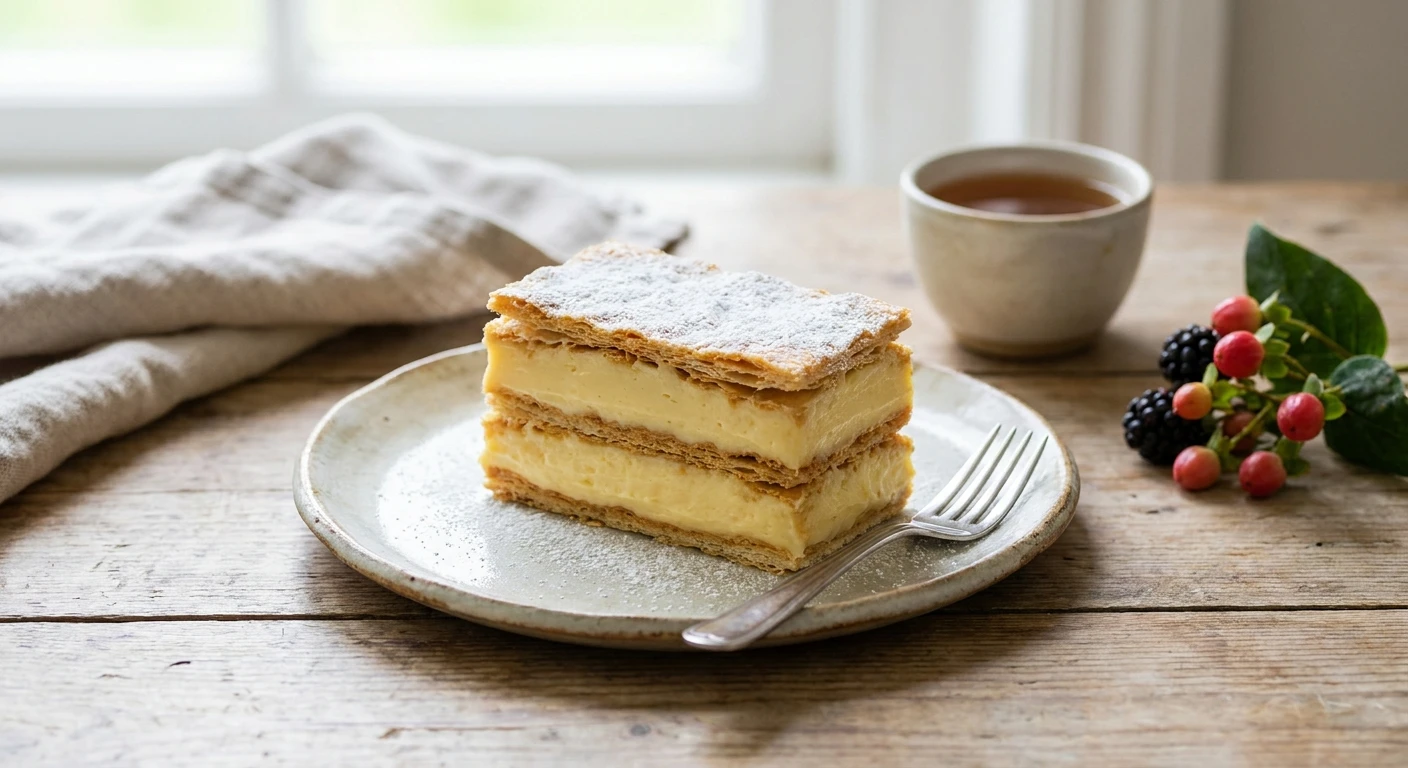
The Ultimate Guide to the Perfect Diplomat Cake
Let me tell you a secret about a diplomat cake that changed my baking life completely. It was a freezing evening in Kyiv, the power was out, and I was baking by candlelight just to keep myself busy and warm. A good friend had sent over her grandmother’s handwritten recipe for this classic dessert, promising me it was the ultimate comfort food. I was honestly a bit skeptical at first, but the combination of incredibly flaky puff pastry and rich, silky vanilla custard cream felt exactly like a warm hug from a loved one. Seriously, if you have never tried making this specific dessert, you are missing out on a profoundly satisfying pastry experience. It is delightfully light, remarkably creamy, and surprisingly forgiving even if your old oven’s temperature fluctuates a bit.
This dessert is basically a masterpiece of layers, balancing sweet and crunchy textures flawlessly. Making it at home is so much easier than you might think, and I am going to walk you through exactly how to do it. You don’t need a fancy culinary degree or expensive equipment. Just some patience, high-quality butter, and a serious craving for something sweet. I have baked it countless times since that first blackout evening, and now it is my absolute go-to treat whenever friends drop by for coffee. Let’s get right into the sweet, buttery details of this incredible bake!
Why You Need to Bake This Masterpiece
Why should you bother assembling this layered wonder when you could just buy a simple chocolate bar? First off, the value proposition of this dessert is totally unmatched. Example one: it looks like you bought it from an elite, high-end Parisian patisserie, yet it costs a mere fraction of the price to make at home. Example two: it scales perfectly. Whether you are hosting an intimate dinner for two or a massive family reunion, you can simply double the layers and still get that perfect, crispy-creamy bite every single time. The stunning contrast between the rich custard and the airy puff pastry is an absolute joy. It is practical, visually impressive, and downright delicious.
| Component | Texture | Flavor Profile |
|---|---|---|
| Puff Pastry | Flaky, highly crispy, delicate | Buttery, deeply toasted, lightly salted |
| Diplomat Cream | Smooth, exceptionally airy, light | Rich vanilla, sweet milk, creamy |
| Powdered Sugar Dusting | Soft, powdery, melt-in-the-mouth | Pure sweetness, visual appeal |
To get the absolute best results, you need to keep a few crucial things in mind:
- Gather premium ingredients: Quality European-style butter and real vanilla beans will elevate the flavor immensely. Skip the cheap artificial extracts.
- Chill your bowls and tools: When folding the whipped cream into the pastry cream, temperature is everything. Keep things as cold as possible to maintain the airy structure.
- Let it rest patiently: The assembled dessert needs plenty of time in the fridge so the baked pastry softens just enough to slice beautifully without shattering into a million messy pieces.
I always tell my friends that the true magic happens during the resting phase. If you try to cut it immediately after assembling, you will just end up with a very delicious, sloppy mess on your plate. The pastry needs to absorb just the right amount of moisture from the cream, creating a sturdy cake-like structure that still holds a wonderful hint of a crisp edge. It is the kind of dessert that actually gets better the next day, making it perfect for preparing ahead of time. The preparation is straightforward, and the payoff is absolutely huge. It really is a highly forgiving recipe, provided you respect the temperatures and the resting times.
Origins of the Recipe
Where did this creamy, layered goodness actually come from? Culinary historians generally trace its roots back to classic French pastry traditions, though several European countries, including Italy and Germany, claim their own beloved version of it. Some historical accounts say it was originally created to honor visiting foreign diplomats, serving as a grand symbol of hospitality, wealth, and refined taste. The core concept—layering meticulously baked dough with a rich, dairy-heavy custard—is centuries old. It is firmly rooted in a time when fine sugar and exotic vanilla were rare luxuries reserved almost entirely for royalty and the ultra-wealthy elite.
Evolution Through the Decades
As the recipe naturally traveled across borders, it evolved significantly to match local tastes and economies. In Eastern Europe, particularly during the Soviet era and immediately following, similar layered cakes emerged out of sheer necessity and resourcefulness. Clever bakers adapted the French classic using locally available, less expensive ingredients. The intricate, butter-heavy puff pastry was sometimes swapped for much simpler sponge cakes, graham crackers, or shortbread cookie layers, but the soul of the dessert—the thick, creamy filling—always remained intact. By the late 20th century, home bakers began heavily experimenting with instant vanilla puddings and pre-made frozen dough, making the dessert incredibly accessible to the masses. However, true pastry purists and lovers always returned to the traditional, from-scratch method. The fierce commitment to real butter, heavy cream, and carefully tempered egg yolks never truly faded away.
The Modern State of the Dessert
Here we are in 2026, and the classic, old-school recipe is experiencing a massive and well-deserved revival. Food bloggers, home cooks, and professional pastry chefs alike are eagerly stripping away the quick shortcuts of the 90s and returning to the authentic, slightly labor-intensive methods that make the pastry so incredibly special. My social media feed is constantly flooded with satisfying ASMR videos of people cracking a fork through the top layer of perfectly baked, golden puff pastry. It has genuinely become a symbol of slow living—taking the quiet time to craft something beautiful and delicious with your own two hands. You will easily find modern, trendy variations featuring matcha powder, freeze-dried raspberries, or whipped salted caramel, but the classic vanilla bean version still reigns supreme in bakeries everywhere.
The Anatomy of the Filling
Let’s talk about the actual science of what makes the filling so incredibly light yet remarkably stable. The secret lies entirely in a specific culinary creation known as crème diplomate. In very simple terms, this is just a classic, heavy pastry cream (crème pâtissière) expertly folded together with freshly whipped cream (crème chantilly), and stabilized with a tiny, calculated amount of gelatin. When you heat the milk and egg yolks on the stove, you are essentially denaturing the complex proteins, causing them to physically unfold and form bonds that trap water. This molecular reaction creates that thick, luscious texture we all love. The added gelatin acts as an invisible scaffolding system. It sets firmly as it cools in the fridge, ensuring that when you finally slice the cake, the filling doesn’t just immediately ooze out onto the serving plate. It holds its gorgeous shape perfectly while still melting instantly in your warm mouth.
The Physics of Laminated Dough
The crispy layers are just as scientifically fascinating as the cream. Traditional puff pastry is what we call a laminated dough, which is just a fancy baker’s way of saying it features hundreds of alternating, paper-thin layers of dough and solid butter. When you put this raw dough into a blistering hot oven, the water trapped inside the butter rapidly turns into steam. This powerful steam pushes the thin dough layers far apart, creating those beautiful, signature flaky gaps.
- Starch Gelatinization: The cornstarch inside the pastry cream absorbs liquid and violently swells at around 160°F (71°C), effectively thickening the entire mixture.
- Emulsification: Egg yolks contain a natural compound called lecithin, which helps smoothly bind the fat from the butter with the water in the milk, creating a totally smooth, unseparated cream.
- Steam Expansion: The sudden water vapor from the melting butter in the hot pastry layers can forcefully lift the dough up to eight times its original raw height.
- Gelatin Setting: Gelatin cleverly forms a reversible hydrocolloid network, meaning it sets completely firm when cold but melts precisely at human body temperature for optimal mouthfeel.
Step 1: Prep the Pastry Cream Base
Start your baking journey by making the rich custard base. In a large bowl, whisk your fresh egg yolks, white sugar, and fine cornstarch together until the mixture turns pale yellow and thick. In a separate saucepan, heat your whole milk with a split, scraped vanilla bean until it just barely begins to simmer around the edges. Do not let it boil vigorously.
Step 2: Temper the Eggs
Slowly and carefully pour a small ladle of the steaming hot milk into the egg yolk mixture while whisking furiously without stopping. This crucial step brings the temperature of the delicate eggs up gently so they don’t accidentally scramble into an omelet.
Step 3: Thicken the Custard
Pour the newly tempered egg mixture straight back into the saucepan with the remaining hot milk. Cook this over medium heat, whisking constantly and scraping the bottom of the pan, until the cream loudly bubbles and becomes remarkably thick and glossy.
Step 4: Bloom and Add Gelatin
Sprinkle your powdered gelatin evenly over a small bowl of cold water and let it sit undisturbed for a few minutes. Stir this bloomed, rubbery gelatin directly into the hot pastry cream until it is completely dissolved. Cover the surface with plastic wrap and chill the cream thoroughly in the fridge.
Step 5: Bake the Puff Pastry
While the cream cools down, roll out your high-quality store-bought or homemade puff pastry on a floured surface. Prick it all over heavily with a fork to prevent wild rising, sandwich it flat between two heavy baking sheets, and bake until it is deeply golden brown and perfectly crispy.
Step 6: Fold in the Whipped Cream
Whip some cold heavy cream in a mixer to soft, billowy peaks. Take your fully chilled, firm pastry cream out of the fridge and beat it vigorously to loosen it up. Gently fold the whipped cream into the heavy pastry cream in three batches to create your wonderfully airy filling.
Step 7: Assemble and Chill
Place a perfectly baked layer of pastry in the bottom of a rectangular dish. Spread your luscious, thick cream completely evenly over the top. Add the second layer of crispy pastry on top, press down very gently to secure it, and refrigerate the whole thing overnight.
Debunking Baking Myths
Myth: You absolutely must make your own puff pastry from scratch for this dessert to taste authentic and delicious.
Reality: High-quality, all-butter store-bought puff pastry works beautifully and saves you hours of highly stressful lamination work in your home kitchen.
Myth: The cream will completely collapse into a puddle if you don’t use a massive amount of gelatin powder.
Reality: A very small, precise amount of gelatin is plenty. The cooked cornstarch in the pastry cream does most of the heavy structural lifting. Using too much gelatin makes it unpleasantly rubbery.
Myth: You should serve the cake immediately after assembling it to keep the pastry at its maximum crispiness.
Reality: It is actually crucial to let the assembled dessert rest undisturbed in the fridge for at least 8 to 12 hours so the intense flavors meld and the pastry softens just enough for clean slicing.
Can I freeze the cake?
No, freezing will completely ruin the delicate texture of the cream and make the baked pastry extremely soggy once it thaws out.
What if my cream is lumpy?
Pass the warm pastry cream through a fine mesh wire sieve before chilling it to catch any accidentally cooked egg bits or unmixed cornstarch lumps.
Can I use extract instead of vanilla beans?
Yes, high-quality vanilla paste or pure extract works decently well, but actual vanilla beans give the absolute best authentic flavor and look.
How long does it keep in the fridge?
Covered tightly, it is best eaten within 3 days before the pastry becomes too soft.
Can I add fresh fruit to the filling?
Absolutely, slicing fresh strawberries or tossing in whole raspberries layered inside the cream tastes incredibly fantastic and adds a nice acidity.
Do I have to weigh my ingredients?
For the best and most highly consistent results in French pastry, utilizing a digital kitchen scale is highly recommended over using volume cups.
Why did my pastry shrink in the oven?
You likely did not let the rolled dough rest long enough in the fridge before baking, causing the activated gluten strands to violently snap back.
A Sweet Final Thought
Making a proper diplomat cake at home might seem incredibly intimidating at first glance, but as you can plainly see, breaking it down into simple, manageable steps makes it totally doable for anyone. It is a highly rewarding baking project that yields a visually stunning, bakery-quality treat right in your own kitchen. I really hope you gather your ingredients and give this recipe a try soon! Drop a comment below if you have any lingering questions, and definitely share this guide with your baking buddies so you can all enjoy a slice together!
Leave a Reply