

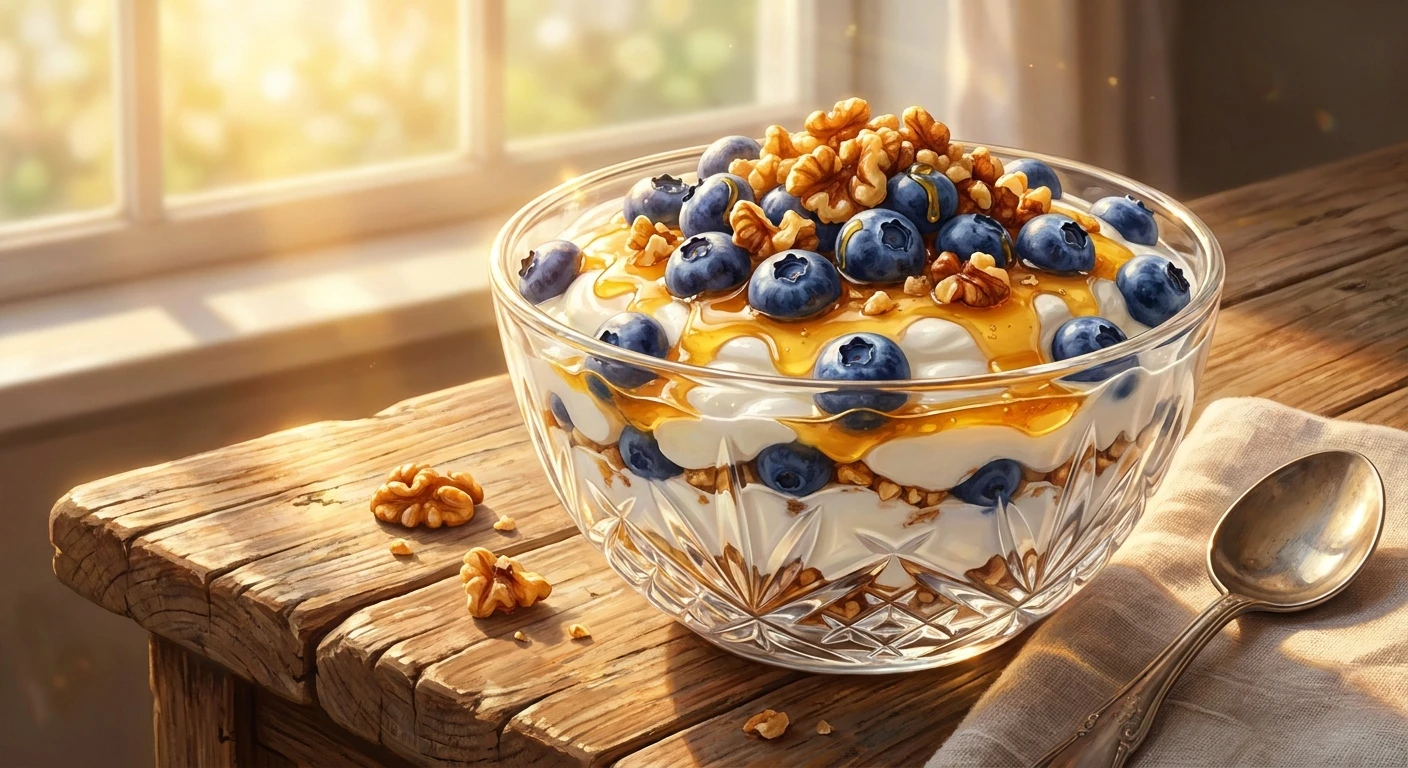
Why a Yogurt Dessert is Exactly What You Need Today
Listen, if you haven’t tried making a proper yogurt dessert lately, you are seriously missing out on the absolute easiest sweet treat imaginable. I still remember a blazing hot July afternoon back in Kyiv, wandering down the steep cobblestones of the Andriyivskyy Descent. Exhausted and melting from the summer heat, I ducked into a tiny, unassuming cafe near Podil just to catch my breath. The barista handed me a chilled glass filled with a stunning, multi-layered concoction. It wasn’t heavy ice cream or a dry pastry. It was a velvety, rich creation layered with wild Carpathian blueberries and crushed walnuts. That single bite completely changed my perspective on what sweets could be. It felt indulgent but incredibly light, hitting that perfect sweet spot between a decadent treat and a genuinely refreshing snack.
Ever since that day, I’ve been completely obsessed with recreating that magic in my own kitchen. You don’t need a pastry degree or expensive equipment to pull it off. You just need a few basic ingredients and a willingness to mix things up. By simply swapping out heavy creams and artificial sugars for cultured dairy, you instantly upgrade your snacking game. I promise you, once you get the hang of balancing the natural tanginess with the right sweet accents, you will never look at ordinary sweets the same way again. It is simply the ultimate hack for anyone who loves sweets but still wants to feel great afterward.
Let’s talk about the absolute core benefits of shifting your sugar cravings toward cultured dairy. The beauty of a yogurt dessert lies in its extreme versatility and its nutritional profile. You get a solid punch of protein, calcium, and gut-friendly probiotics, all while satisfying that nagging sugar craving. The sheer value proposition here is massive. Think about it: you can whip up a Greek yogurt parfait with fresh strawberries and a drizzle of local honey in under three minutes. Or, if you have a bit more patience, you can spread a thick layer of vanilla-infused dairy on a baking sheet, top it with dark chocolate chips and pistachios, and create a frozen bark that tastes exactly like premium ice cream but costs a fraction of the price.
| Dessert Type | Key Ingredient Match | Guilt-Free Rating |
|---|---|---|
| Layered Parfait | Fresh Berries & Granola | 10/10 |
| Frozen Bark | Dark Chocolate & Nuts | 9/10 |
| Baked Cheesecake Alternative | Eggs & Vanilla Bean | 8/10 |
Mastering this type of treat is honestly child’s play, but there are a few golden rules you need to follow if you want it to taste like it came from a high-end bakery. I’ve ruined enough batches to know exactly what works and what fails miserably.
- Always choose full-fat or 2% varieties: Fat-free versions lack the necessary structure and mouthfeel. The fat is what gives you that luxurious, creamy texture that mimics traditional heavy desserts.
- Strain out excess moisture: If you are making anything that needs to hold its shape, like a tart or a thick mousse, line a sieve with cheesecloth and let the dairy drain for a few hours in the fridge. The result is almost like a soft cheese.
- Balance the acid: Cultured dairy is naturally tart. Always pair it with complementary sweeteners like pure maple syrup, agave, or dates to round out the flavor profile without completely masking the signature tang.
Origins of Cultured Milk Sweets
If we look back, humanity’s relationship with cultured milk stretches far beyond modern grocery store aisles. Thousands of years ago, nomadic tribes across Central Asia and the Middle East carried milk in animal stomachs. The natural enzymes and warm climates caused the milk to ferment, inadvertently creating the world’s first tart, thick dairy products. These ancient communities quickly realized that not only did this process preserve the milk, but adding honey or crushed fruits turned it into an incredibly appealing treat.
The Evolution of Healthy Treats
Fast forward a few centuries, and the concept traveled heavily through the Ottoman Empire and into Eastern Europe. The legendary Bulgarian bacilli strain, isolated by scientists in the early 20th century, popularized the health benefits of the food globally. However, it wasn’t until the late 1970s and 1980s that the American and Western European markets really started sweetening the deal. Suddenly, frozen varieties exploded onto the scene. Frozen treat shops became hangout spots, though they often pumped their products full of artificial sugars, moving quite far away from the humble, healthy origins of the dish.
The Modern State of Guilt-Free Snacking
Now that we are deep into 2026, the culinary scene has aggressively swung back to basics. People are rejecting hyper-processed foods. The modern approach honors the tart, authentic flavor of the dairy. We are seeing high-end restaurants using labneh and strained skyr as the base for incredible, sophisticated sweets. It is no longer just a diet food; it is a respected culinary medium. Chefs and home cooks alike are utilizing its unique texture to create masterpieces that rival any traditional heavy cream-based dish.
What Happens During Fermentation
Okay, let’s get slightly nerdy for a second because understanding the science actually makes you a better cook. The magic starts with specific bacteria—usually Lactobacillus bulgaricus and Streptococcus thermophilus. When these microscopic workers are introduced to warm milk, they consume the lactose (the natural milk sugars) and excrete lactic acid. This acid drops the pH of the milk, causing the protein structures, specifically casein micelles, to unfold and bond together. This forms a three-dimensional mesh that traps water and fat, turning a liquid into that glorious, spoonable solid we all love.
Textural Chemistry in the Kitchen
When you use this base for sweets, you are playing with this delicate protein mesh. If you heat it too aggressively without a starch to stabilize it, the mesh tightens and squeezes out the water—a process called syneresis, which leaves you with a curdled, watery mess. But when handled gently, especially when freezing or chilling, the lactic acid acts as a brilliant flavor enhancer, cutting through heavy sweetness and cleaning the palate. Here are a few scientific facts that make this ingredient a powerhouse:
- Probiotic survival: If you freeze the base gently, a large percentage of the beneficial bacteria simply go dormant rather than dying, meaning your frozen treat is still actively good for your gut.
- Protein coagulation: Straining removes whey, drastically increasing the protein-to-water ratio, which is why strained varieties feel so much richer on the tongue without adding extra calories.
- Flavor perception: The lactic acid lowers the threshold for detecting sweetness, meaning you can use significantly less sugar to achieve the same perceived level of sweetness compared to a neutral base like heavy cream.
Day 1: The Basic Berry Parfait
Let’s kick things off with the absolute classic. Grab a tall glass and drop in two spoonfuls of thick Greek-style dairy. Add a layer of fresh raspberries, a drizzle of agave, and a handful of toasted oats. Repeat until the glass is full. It takes literally two minutes, but the contrast between the creamy base and the sharp, acidic burst of the berries is a perfect introduction to your new daily habit.
Day 2: Chocolate Swirl Freeze
Time to elevate the game. Take a cup of your base and mix it thoroughly with a tablespoon of unsweetened cocoa powder and a dash of vanilla extract. Swirl in a teaspoon of melted dark chocolate, spread it roughly on a piece of parchment paper, and freeze it for two hours. Break it into shards when you are ready to eat. It melts in your mouth exactly like an expensive fudgesicle.
Day 3: Honey and Walnut Bliss
We are going back to Eastern European roots with this one. Roast some walnuts in a dry pan until they smell incredibly fragrant. Mix a generous dollop of your cultured base with a thick spoonful of raw, unfiltered honey. Top it with the warm, toasted walnuts. The heat from the nuts slightly softens the dairy, creating a mind-blowing temperature contrast.
Day 4: Tropical Mango Tango
Blend half a cup of fresh mango chunks until they form a smooth puree. Fold this puree gently into a bowl of your base. Don’t mix it completely; leave some bright orange streaks for visual appeal. Top it with a sprinkle of toasted coconut flakes. This transports you straight to a beach, delivering pure sunshine in a bowl.
Day 5: Matcha Green Tea Infusion
Sift one teaspoon of ceremonial grade matcha powder into your bowl. Whisk it vigorously to avoid any clumps. The earthy, slightly bitter notes of the matcha pair beautifully with the tang of the dairy. Sweeten this delicately with a touch of maple syrup and top with a few sliced almonds for texture. It is a highly sophisticated, cafe-level dish.
Day 6: Spiced Cinnamon Apple Bowl
Dice half an apple and sauté it briefly in a pan with a tiny bit of butter and a massive pinch of cinnamon until soft. Let it cool slightly, then spoon it over a thick bed of your cultured base. The caramelized apple juices bleed into the white cream, creating a cozy, comforting bowl that tastes exactly like autumn.
Day 7: The Ultimate Weekend Cheesecake
Let’s finish the week strong with a baked masterpiece. Mix two cups of strained dairy with two eggs, a splash of vanilla, and half a cup of your preferred sweetener. Pour it over a simple crushed graham cracker crust and bake at a low temperature until just set. Chill it overnight. I guarantee your friends won’t believe it is practically guilt-free.
Myth: It is always healthier than ice cream.
Reality: Not always! Commercial varieties packed with artificial syrups and candy toppings easily surpass the calorie and sugar count of premium ice cream. The health benefits only apply when you control the ingredients yourself at home.
Myth: You can’t bake with it because it curdles immediately.
Reality: You absolutely can bake with it! The trick is to stabilize the proteins. Mixing in a bit of cornstarch or egg before introducing it to heat prevents the proteins from tightening up and separating, allowing for smooth, baked textures.
Myth: Freezing it kills all the good bacteria.
Reality: It actually just puts the bacteria into a state of hibernation. While extreme commercial flash-freezing might reduce the bacterial count, typical home freezers leave a massive amount of the beneficial probiotics alive and ready to wake up in your digestive system.
Myth: It doesn’t satisfy a real sugar craving.
Reality: Craving satisfaction is about mouthfeel and fat as much as sugar. The thick, creamy texture of full-fat cultured dairy tricks your brain into feeling heavily indulged, especially when paired with natural sweet elements like dates or honey.
Can I use plant-based alternatives for these recipes?
Yes, absolutely. Almond, coconut, and oat-based cultured options work brilliantly. Just be aware that coconut-based ones are much higher in fat and will set much firmer when chilled or frozen.
How long do these treats last in the fridge?
Most mixed bowls and parfaits should be eaten within 24 hours before the fruit starts to break down and release too much water. Baked versions will comfortably last up to four days.
What is the best fat percentage to use?
Honestly, aim for at least 2%, but whole milk (around 4% to 5%) is the gold standard. It provides the necessary richness to make the dish feel like a genuine treat rather than a sad diet meal.
Can I use artificial sweeteners?
You can, but they often leave a metallic aftertaste that clashes with the natural lactic acid. Stevia or monk fruit are better options, but natural sugars like honey or maple syrup provide a much better flavor profile.
Why did my frozen bark turn out icy?
Water content is the enemy of creamy frozen treats. If you use a thin, watery base, it freezes into ice crystals. Always use strained, thick varieties, and mixing in a little nut butter can help keep the texture smooth.
Can I mix citrus fruits into it?
Yes, but with caution. The high acid in lemons or oranges can cause the base to curdle if left sitting too long. It is best to add citrus right before serving.
Is it safe to give these treats to kids?
It is one of the absolute best things you can give them! It is packed with calcium and protein. Just keep an eye on the added sugars, and rely mostly on fresh fruit purees to keep it sweet.
At the end of the day, whipping up a yogurt dessert is about taking control of your sweet tooth without feeling deprived. It is fun, fast, and endlessly customizable. I seriously encourage you to grab some bowls, hit the grocery store for some fresh berries and local honey, and start experimenting in your own kitchen tonight. Trust me, your taste buds—and your gut—will thank you! Grab a spoon and get mixing!
Leave a Reply